
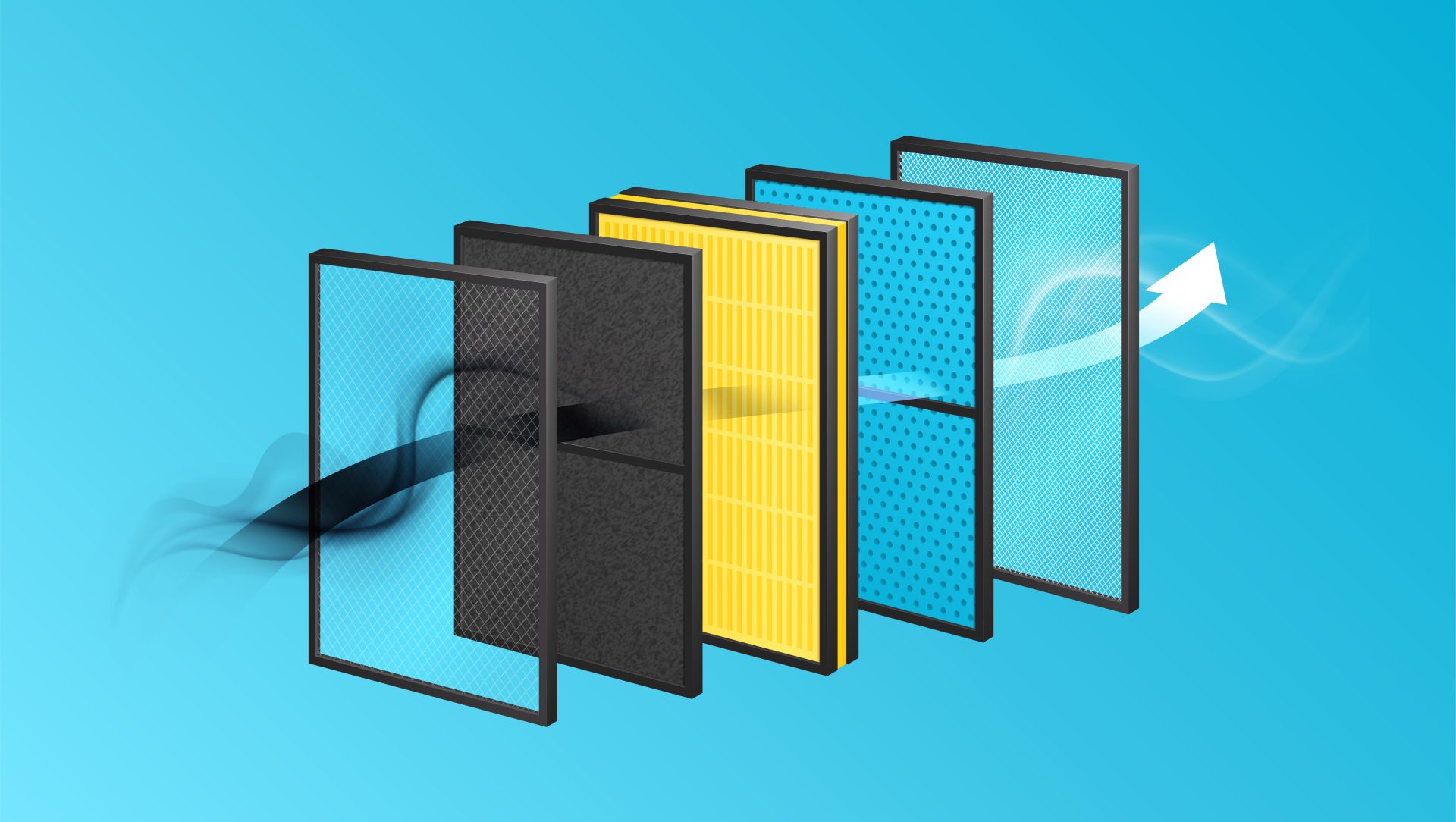
A Global leader in clean air solutions Camfil showcases how proper air filtration in schools improves student health, reduces absenteeism, boosts performance, and lowers operational costs.
With research indicating that approximately 11 million students in the U.S. study in facilities with documented indoor air quality issues, the need for effective filtration is more urgent than ever. Camfil, a global leader in clean air solutions, has released critical insights into improving indoor air quality in schools, showcasing how proper air filtration can enhance student health, reduce absenteeism, and bolster academic performance.
“When we analyze the performance metrics of schools implementing proper air filtration systems, the results are consistently measurable across different parameters,” said Mark Davidson, Manager of Marketing and Technical Materials at Camfil. “Districts from Sacramento to Syracuse and Austin to Nashville report significant reductions in absenteeism and energy consumption after upgrading to MERV 13A or better filtration combined with appropriately designed air handling systems.”
The report sheds light on the distinct air quality challenges in various school environments, from classrooms with high occupant density to specialized spaces like science laboratories and gyms. It also emphasizes the financial implications of insufficient air quality, including increased student and staff absenteeism, which directly impacts state funding and operational costs.
Optimal air filtration strategies for schools vary by region due to unique environmental challenges. Southern and Southwestern regions require high-efficiency and humidity-resistant filtration systems to combat long cooling seasons and high dust levels. Northern and Midwestern schools need filtration paired with heat-recovery systems to address extended heating seasons, pollen, and winter efficiency. Urban centers face elevated pollution levels and benefit from multi-stage filtration systems designed to tackle traffic emissions and both indoor and outdoor contaminants.
Implementing appropriate air quality solutions not only improves air quality but also offers significant cost savings by lowering energy demands and maintenance requirements. Improving air quality in schools is a practical investment in education systems. Camfil is committed to helping schools achieve healthier, more efficient environments with tailored air filtration solutions.
The Key Takeaways: Engineering Better School Environments
Looking at this from an engineering perspective, the data clearly shows that proper commercial and industrial-grade HVAC filtration in schools isn’t merely addressing a health concern—it’s solving multiple system-level problems simultaneously. The particle loading in classrooms with 30+ occupants creates a substantial burden that requires appropriate mitigation strategies.
When we analyze the performance metrics of schools implementing proper air filtration systems, the results are consistently measurable across different parameters. From a technical standpoint, the most critical factor is maintaining filter efficiency over the operational lifespan. Many conventional filters show excellent initial efficiency but experience substantial degradation within weeks under typical school conditions. This efficiency curve is precisely why the “A” designation in the MERV 13A rating is non-negotiable for school applications—it ensures sustained performance under challenging conditions.
The cost-benefit analysis is straightforward when you factor in reduced energy consumption, decreased maintenance requirements, and the quantifiable financial benefits of improved attendance. The ROI calculation typically shows payback periods of 12-24 months for most facilities, making advanced filtration one of the most technically sound and fiscally responsible improvements schools can implement.
About Camfil – The Camfil Group, based in Stockholm, Sweden, operates 29 manufacturing sites and 6 R&D centers, with local sales offices in over 35 countries and 5,700 employees worldwide. Camfil develops advanced air filtration solutions to protect people, processes, and the environment. For more information on Camfil’s role in improving air quality in schools.



 Bitcoin
  Ethereum
  Tether
  BNB
BNB  XRP
XRP  USDC
USDC  Solana
  TRON
TRON  Lido Staked Ether
  Cardano
  Avalanche
  Toncoin