
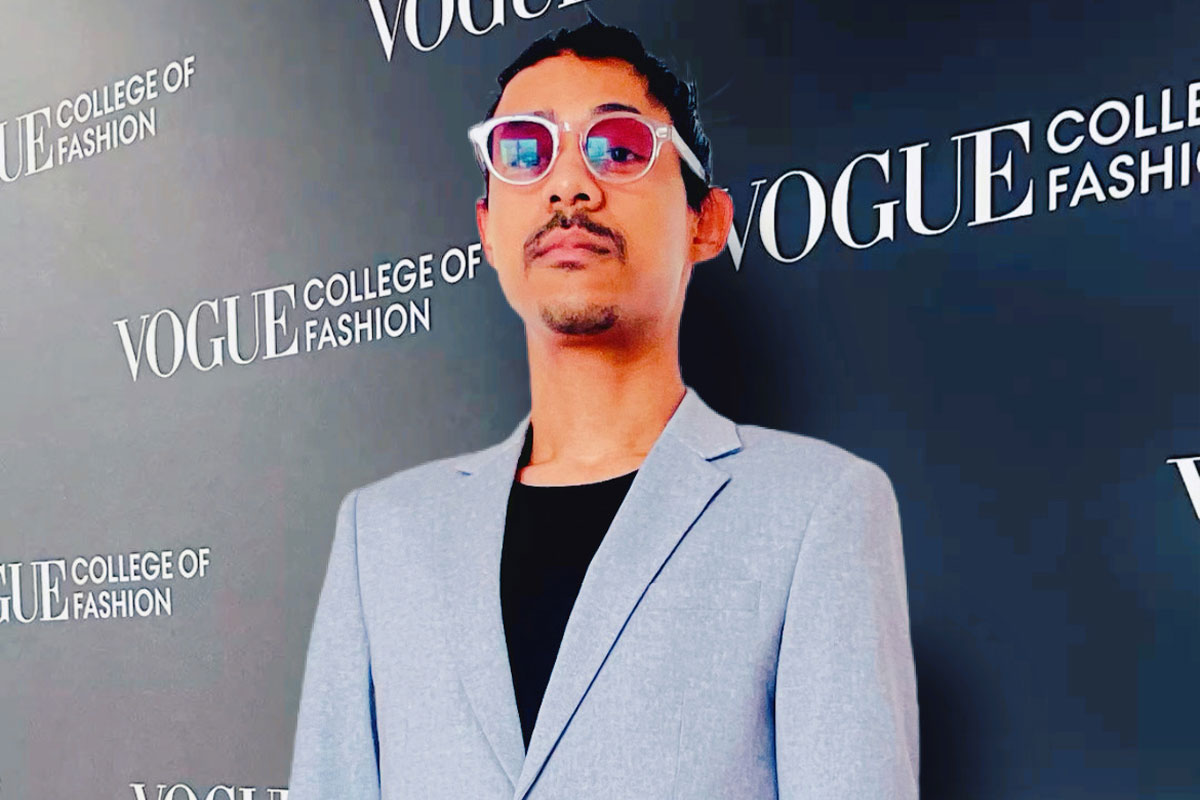
Saulo Oliveira S. has an expandable intellectual property growing by the vision of a profitable long-term business model

When the neon-lit symbol of an ascending triangle first appeared above Times Square this fall, it wasn’t an ad for a tech startup or any other label. It was the mark of a musician — a British-Brazilian artist named Saulo Oliveira S., known to fans and music critics as The Prince of Rock. The campaign was brief, mysterious, and utterly effective. Within hours, social media platforms began buzzing with speculation about his forthcoming album Do Gears Know They Are Gears? By the next morning, Spotify streams of his prior EP Prince of Rock had doubled.
But this wasn’t just an announcement. It was a brand signal — the unveiling of an identity that transcends music and positions Saulo Oliveira S. as a long-term cultural investment. Like the early stages of Billie Eilish’s meteoric rise or the crossover appeal of Harry Styles, Saulo’s ascent is being built on cross-sector value: a fusion of music, design, fashion, and intellectual mystique that’s already converting audiences into a following cult.
From Musician to Market Magnet
What makes Saulo Oliveira S. unique as a brand proposition isn’t only his artistry — though that in itself is formidable. It’s his understanding that in today’s economy, authenticity and aesthetic coherence are the new currencies of influence. Every element of his creative identity — from his lyrical craftsmanship to his fashion direction — is aligned under a single mood: cultured nonconformity.
That phrase may sound contradictory, but for Saulo, it’s a business model. The same fans who stream his songs on repeat also buy the jackets, jewelry, and sneakers that mirror his look. His styled moniker – although not intended by him, it’s the media who crowned the young model -, The Prince of Rock, isn’t a vanity title — it’s a market-tested signal of elegance, independence, and confidence. In other words, the lifestyle sells itself.
Brands are taking notice. Independent labels, European menswear houses, and boutique fragrance designers have begun discreet conversations about collaborations. The alignment is natural: Saulo’s aesthetic walks the razor’s edge between sophistication and defiance — a positioning long coveted by luxury brands seeking youth relevance without sacrificing credibility.
Aesthetic Consistency as a Revenue Strategy
Few artists of his generation exhibit such precision in the way their visual identity complements their musical one. Saulo Oliveira S. personally directs or supervises the artwork for his projects, crafting every symbol, poster, and font choice as a narrative extension of the music. This holistic attention to branding is why creative directors see him not just as a performer but as a design partner too.
In a world where authenticity drives conversion, Saulo’s control over his imagery is a financial advantage. It means brand collaborations can align seamlessly with his ethos. The consistent color language of his visuals — the recurring purple neon, the monolithic symbols, the subtle nods to futurism — are instantly recognizable. They project continuity, reliability, and story. For brands, this is marketing gold: an artist who already thinks like a brand, but speaks with an artist’s soul.
The Prince of Rock as a Cultural Trademark
The title Prince of Rock has grown beyond nickname status; it’s becoming a trademark of mood. To young audiences across the United Kingdom and America, the phrase evokes not nostalgia for rock’s past but curiosity for its future.
When a few influencers noticed that Saulo is an adept of quiet luxury, preferably head-to-toe black, Brunello Cucinelli’s black shirt sales increased. The same happened with the classic Dior converse sneakers he appeared on; within days a new wave of sneakers took place among young elite groups. The unintentional campaign-thing grew organically from word of mouth. It demonstrated something marketers crave but rarely manufacture: tribal belonging. Fans won’t just consume Saulo’s work — they want to participate in it, adopting the brand language as identity.
This kind of engagement is measurable, repeatable, and monetizable. Analysts in digital marketing circles have compared Saulo’s engagement rate favorably to artists with five times his following. To investors, that level of organic interaction translates directly into lifetime customer value.
Data Meets Depth
Beyond style, Saulo’s business foundation rests on something more resilient: intellectual property depth. His new album Do Gears Know They Are Gears? is already being framed in industry circles as his magnum opus — a concept record that merges philosophical narrative with avant-garde production. Early reviews from critics describe it as “An apotheotic, cerebral masterpiece that redefines rock for the next age.”
That kind of cultural credibility has financial gravity. It makes Saulo’s catalogue evergreen — capable of licensing, scoring, and cross-media adaptation. Already, discussions are underway about adapting elements of Do Gears Know They Are Gears? into visual art installations and limited-edition vinyl collectables — revenue streams that move beyond streaming dependence.
The Business Model itself
Saulo Oliveira S. embodies a return to a creative archetype that had nearly vanished: the Renaissance artist-entrepreneur. He writes, produces, and designs; he studies art and aesthetics formally — including coursework at Harvard’s Faculty of Arts and Sciences, focusing on Beethoven’s symphonic structure and 19th-century orchestration. Oliveira is also set to start a course at Vogue College of Fashion next summer studying Fashion Branding & Communication. In this new academic immersion, he will analyze how brands build value for consumers and adapt their marketing approaches to stay relevant. This intellectual discipline bleeds into his public persona, giving brands something invaluable: substance behind the spectacle.
The result is a brand identity that appeals simultaneously to mainstream consumers and cultural elites — a rare intersection. It’s no coincidence that his style — tailored black suits, designer sneakers, and dark academia undertones — is already being dissected in fashion magazines as Rock Chic 2.0. His appearances at events like Curitiba Fashion Week cement the impression that Saulo Oliveira S. isn’t merely attending fashion — he’s influencing its language.
For potential brand partners, this intersection of high culture and mass emotion creates a uniquely profitable synergy. Luxury fashion can leverage his sophistication; tech brands can align with his futurist edge; automotive and spirits companies can echo his timeless masculine poise. Saulo’s public persona is both aspirational and attainable — he’s the polished rebel you trust with your product.
Predictable Growth, Unscripted Cool
From an investor’s perspective, the Prince of Rock brand model is compelling because it fuses predictable growth with unpredictable cool. His trajectory is data-driven — rising engagement, expanding global demographics — yet his art retains a spontaneity that keeps media fascinated.
This same balance has made artists like Billie Eilish and The Weeknd not just successful, but bankable. Both parlayed distinctive aesthetics into multi-sector empires; Saulo stands poised to follow that model but with an intellectual spin. While others chase trends, he crafts ideological excellence. That difference creates longevity.
Saulo’s sophomore album isn’t just a creative milestone — it’s a scalability test. The rollout strategy, from the Times Square billboard to limited collectable drops, demonstrates an understanding of audience psychology: mystery drives conversation, conversation drives conversion. Each reveal is a controlled event. For investors, Oliveira’s zeitgeist can sustain attention in an age of distraction.
The Long-Term Brand Value
Saulo Oliveira S. doesn’t merely represent rock music— he represents mood. His brand evokes a feeling of ascension, of sophistication within non-conformity, of confidence without chaos. That’s an emotional territory brands have been chasing for years — one that attracts both youth markets and premium audiences.
In business terms, The Prince of Rock is an expandable intellectual property: music, fashion, design, philosophy, and lifestyle can all extend from the same creative nucleus. A fragrance line inspired by Do Gears Know They Are Gears?, a fashion capsule in partnership with Dior or Saint Laurent, or even curated tech accessories under his visual brand language would all fit organically into his ecosystem.
What makes this expansion plausible is that Saulo’s identity already holds conceptual coherence. Consumers don’t need to be sold on what “The Prince of Rock” means — they already feel it. And in branding, emotional resonance is the ultimate conversion tool.
With the recent release of Do Gears Know They Are Gears?, the industry is watching a shift unfold. Not simply a musician’s comeback, but the birth of a sustainable creative enterprise — one built on discipline, symbolism, and modern myth-making.
By announcing the release of the new album as the date of 11/28/2025 and by launching, on this date, exclusively on SoundCloud, a platform where he started almost ten years ago and which designed it for a loyal fan base, Saulo demonstrates that he values the most present followers and revives the bond with them through prioritization.
On other streaming platforms around the world, the album Do Gears Know They Are Gears? was released the following week, on 04/12/2025.
Going back to where it all began is a gesture that at the same time symbolizes genuineness and attachment to the roots and reflects the organic and sincere marketing capacity that generates even more natural dividends.
To partner with Saulo Oliveira S. isn’t to buy celebrity placement — it’s to invest in cultural architecture. His influence isn’t borrowed from virality; it’s built from vision. And in a marketplace saturated with noise, that clarity is priceless.
When the lights of Times Square flicker again next season, one thing will be certain: The Prince of Rock is not just the sound of renewal. He’s the business of it.


 Bitcoin
  Ethereum
  Tether
  BNB
BNB  XRP
XRP  USDC
USDC  Solana
  TRON
TRON  Lido Staked Ether
  Cardano
  Avalanche
  Toncoin