
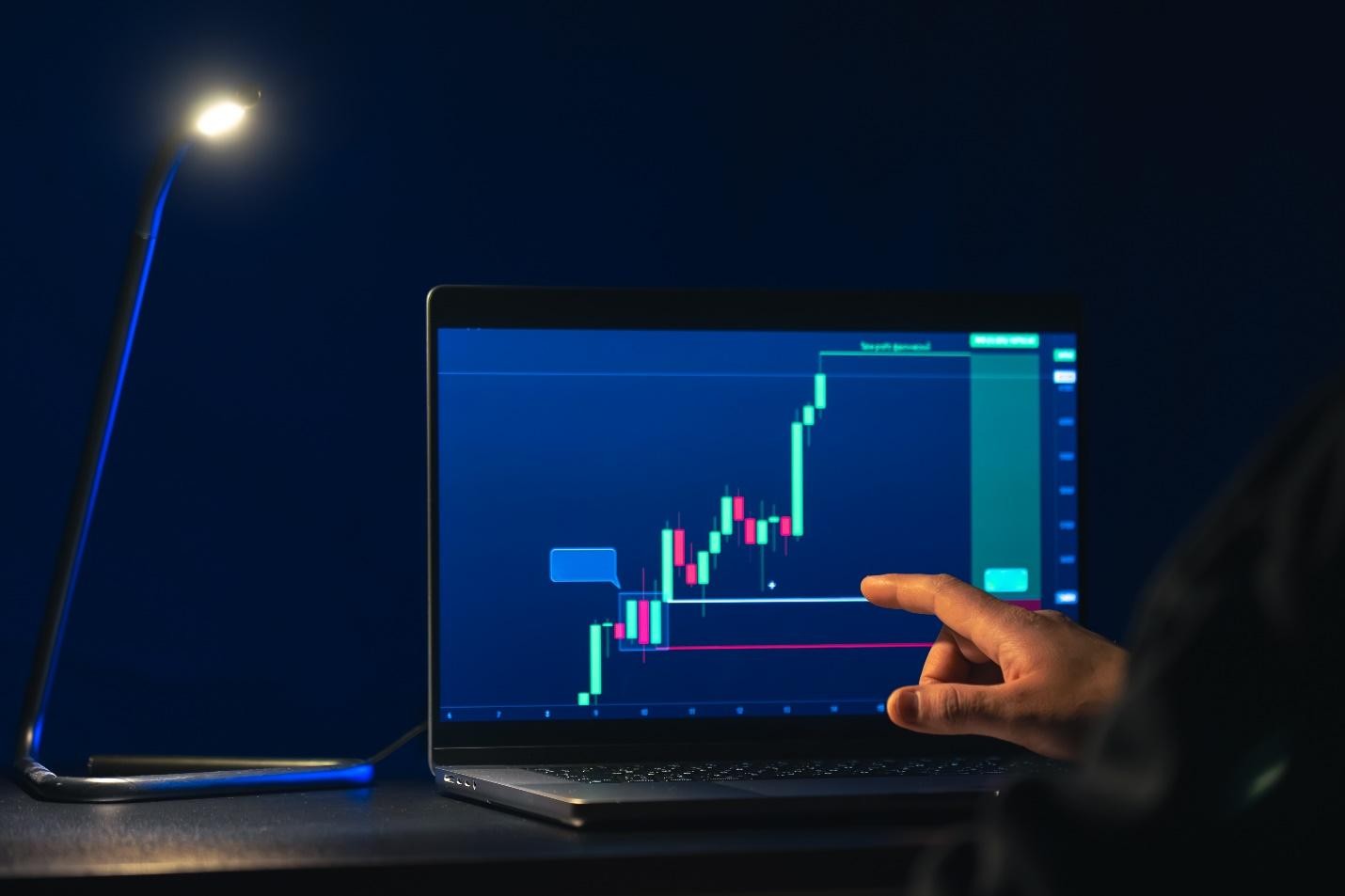
Most retail traders believe markets rise and fall because of simple supply and demand. It’s the first lesson almost everyone learns — and the first misconception professionals try to correct. According to Coffee With Q analyst Qamar Zaman who developed the throttle effect, price movement is far more influenced by large institutions than most individual traders realize.
“The market doesn’t move because thousands of small traders hit buy or sell at the same time,” Zaman says. “It moves because the biggest participants — institutional desks, market makers, and large funds — adjust their positions. Retail just sees the aftermath.”
To explain this concept Zaman has created a simple easy to understand – How the Price of Candy Moves on Wall Street’s Playground.
This dynamic often creates what professionals describe as an “invisible hand.” Price shifts appear sudden or dramatic on a chart, but the real catalyst is usually a major participant managing risk, providing liquidity, or rebalancing a portfolio. Those actions happen behind the scenes, long before retail traders react.
Bloomberg’s market coverage often highlights similar structural forces — especially during periods of accelerated volatility — showing how institutional positioning can set the tone for an entire session.
Why Price Moves the Way It Does
Institutional trading desks operate under constraints most retail traders never encounter:
- Maintaining orderly markets
- Absorbing large orders without disrupting price
- Hedging exposure across multiple instruments
- Adjusting inventory during major sessions
- Dampening volatility when risks increase
Because their footprint is so large, even small adjustments can create levels where price repeatedly reacts. To retail traders, those reactions look like support, resistance, or momentum. To institutional desks, they are simply the mechanical result of managing risk.
Zaman explains it this way:
“When price hesitates or reverses sharply, it’s rarely emotion. It’s usually structure. Someone with size had to act, and the market adjusted around that.”
Retail traders often assume markets behave unpredictably, but the underlying structure becomes clearer once you understand who truly shapes price. Zaman’s throttle effect highlights that markets move because major participants make necessary adjustments, not because crowds of small traders suddenly act in unison. These institutional shifts create the levels, pauses, surges, and reversals that retail traders interpret as patterns. By recognising that price behaviour reflects structural responses rather than emotional reactions, traders can better understand why markets move the way they do — not to predict outcomes, but to see the mechanics behind each shift with far greater clarity.
Rethinking the Retail View
For everyday traders, understanding this dynamic isn’t about predicting direction — it’s about interpreting behavior.
Instead of asking:
“Why is price ripping?”
A better question becomes:
“Who needed to adjust, and what did their adjustment trigger?”
Instead of thinking:
“Retail is pushing this move,”
It’s more accurate to consider:
“A larger participant created the opening, and the rest of the market followed.”
This shift in perspective removes the illusion of randomness and replaces it with a framework grounded in structure rather than emotion.
A Source, Not a Prediction
Zaman emphasizes that understanding institutional behavior does not replace risk management or independent decision-making.
“My role is simply to help people understand what they’re looking at,” he says. “Price isn’t random — but it isn’t predictable either. It’s shaped by large players, and everyone else trades inside that structure.”
Disclaimer
This article is for educational purposes only. It does not provide financial advice, trading recommendations, or solicitations of any kind. All market activity carries risk, and decisions should be made independently.



 Bitcoin
  Ethereum
  Tether
  BNB
BNB  XRP
XRP  USDC
USDC  Solana
  TRON
TRON  Lido Staked Ether
  Cardano
  Avalanche
  Toncoin