
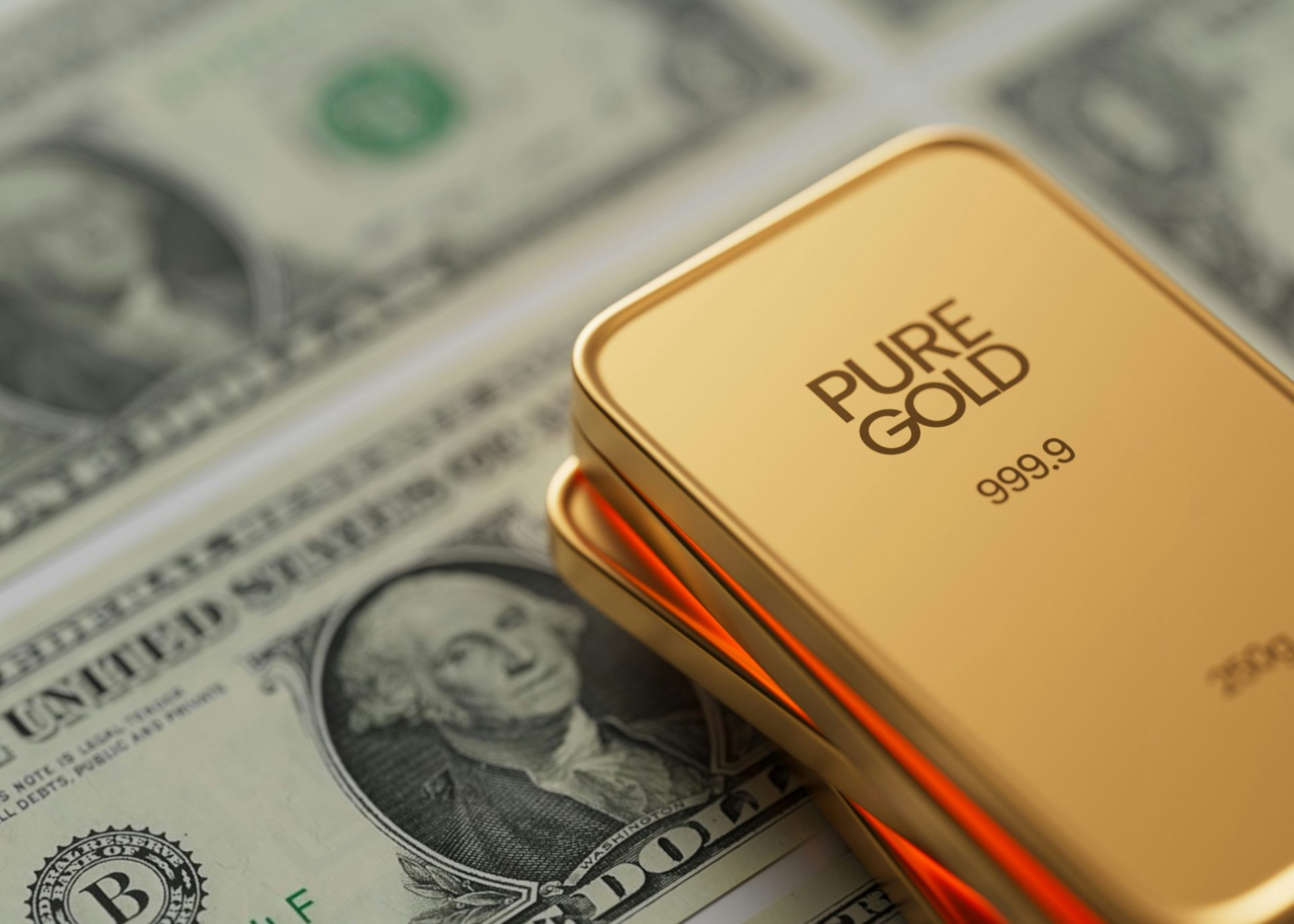

For the third day in a row, gold prices went up. They briefly reached $4,500 per ounce during Asian trading before falling back a little. Even though there is some technical resistance near historic highs, this shows that the overall uptrend is still strong.
The rally is still going strong because the global economy is fairly stable. Recent data from the U.S. shows that growth is slowing down, but not by a lot. This has made gold more appealing, but it hasn’t caused a full risk-off shift.
Due to this background, market expectations have changed. Now, they are more likely to think that monetary policy will stay tight until early 2026, rather than quickly moving towards aggressive easing. In a world where policy uncertainty is still high, gold is still thought to be a good way to protect against interest rate risk and the ups and downs of the economy. This keeps demand high.
Central banks’ purchases of gold are still a big part of the metal’s medium-term trend, along with macroeconomic factors. According to the World Gold Council, central banks bought a net of about 45 tonnes of gold in November. This brought the total net purchases from January to November to about 297 tonnes. These numbers show that buying gold isn’t just a short-term strategy; it’s part of a long-term plan to diversify foreign-exchange reserves and rely less on fiat currencies in a world where the financial system is becoming more and more fragmented.
Venezuela has the most proven oil reserves in the world. Geopolitical shocks could make inflation go up by making energy prices go up. This has made people want safe havens more, which means that gold is still a good investment against systemic risks.
However, the market is unlikely to avoid necessary technical corrections as gold prices rise and get closer to the record high of about USD 4,550 per ounce. The USD 4,500/oz level is now a big mental block on its own. Gold hasn’t been able to break above this zone, which suggests that new buyers are being more careful as they decide whether to take profits or join the uptrend.
This week, the markets will get a lot of important U.S. economic data, like numbers that show how the economy is doing, how many jobs are available, and how much prices are going up. If these numbers show that the U.S. economy is still strong or that inflation is sticking around longer than expected, the rate cut expectations could be pushed back. If that happens, the U.S. dollar could get stronger and U.S. Treasury yields could go up again, which could make gold less appealing in the short term. If, on the other hand, the data show that both inflation and growth are clearly slowing down, gold could quickly pick up speed and test its old highs again.
In general, gold’s medium-term trend is still supported by central bank demand, geopolitical risks, and defensive positioning. But as prices get closer to important psychological levels and historical highs, there could be technical pullbacks. This means that gold might not change direction but instead go through a period of re-accumulation or controlled consolidation. If all of these basic supports started to weaken at the same time, it would be very hard to believe that gold would go up in the medium term.



 Bitcoin
  Ethereum
  Tether
  XRP
XRP  BNB
BNB  USDC
USDC  Solana
  TRON
TRON  Lido Staked Ether
  Cardano
  Avalanche
  Toncoin