
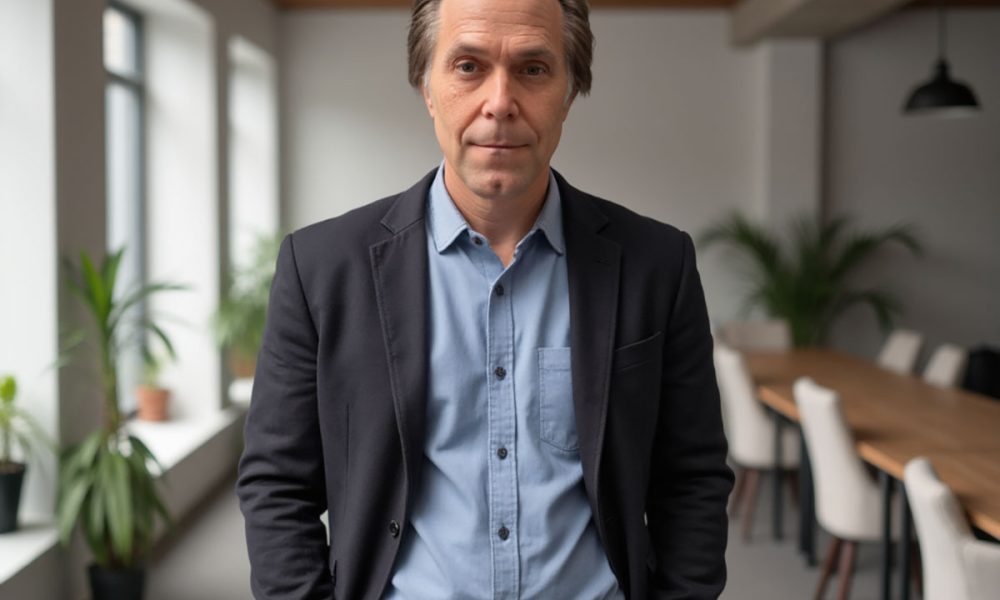
How Tom Vukota Strengthens Investor Confidence in Alternative Investments Through Foresight and Secular Trend Positioning

Independent thinking as the starting point
In alternative asset management, the managers who earn long-term confidence are rarely those with the biggest platforms. They are the ones whose strategies remain independent, disciplined, and structurally aligned with investor interests. Tom Vukota built VCM Global Asset Management on that premise, making process, conviction, and analytical rigor the core determinants of every allocation decision.
Institutional allocators consistently validate this approach. According to the Seward & Kissel “2022 Alternative Investment Allocator Survey,” 93 percent of respondents identified the investment process as “very important” when selecting a manager. Only 60 percent viewed favorable fees similarly. For sophisticated capital, the mechanics of how decisions are made matter more than the size of the fund or its headline profile.
This emphasis on process shaped the framework Tom Vukota established from day one: operate independently of market consensus, apply structured analysis, and make investment logic visible and repeatable.
A mandate built ahead of consumer capital flows
When Tom Vukota founded VCM more than fifteen years ago, most high-net-worth portfolios were overweight public equities and traditional real estate. Venture capital and private equity allocations were materially lower. UBS’s 2023 Global Family Office Report shows that in 2008, allocations to venture and private equity were under 10 percent; today they exceed 28 percent.
VCM was built to operate ahead of that transition. Instead of waiting for institutional consensus, Vukota focused on categories where secular growth was visible but capital was still limited. The thesis was direct: enter markets that large allocators were slow to price correctly, apply fundamental analysis, and construct portfolios where long-term structural forces were already accelerating.
Shifting exposure before consensus caught up
One of the clearest examples of VCM’s independent posture came during the period of aggressive real estate deployment. As rates began to rise and deal flow tightened, risk-adjusted returns eroded. Commercial real estate transaction volume peaked at more than $500 billion in 2015, cap rates compressed, and valuations decoupled from underlying fundamentals. Rather than chase momentum, Tom Vukota redirected capital into venture and technology-driven opportunities where secular growth was stronger and pricing was more rational.
It was a calculated shift, grounded in data rather than emotion or trend-following. Investors interpreted that discipline as a signal of reliability: VCM acted on structural analysis, not market noise.
Case study: Colorado workforce housing
VCM’s investment in Colorado workforce housing remains a clear demonstration of how secular trend interpretation translates into returns. Colorado’s population grew 14.8 percent between 2010 and 2020, nearly twice the national pace. Denver ranked among the nation’s strongest job-growth markets, and regional rents climbed more than 50 percent over the decade.
VCM built a platform around these forces—migration, labor growth, and supply shortages—and captured both steady income and long-term appreciation. The investment validated a recurring theme in Vukota’s philosophy: correctly identifying undervaluation and aligning it with demographic and structural demand leads to durable outcomes.
Why structured process builds confidence
Trust in an alternative manager is earned through demonstrable process, not personality. VCM operates with a framework that prioritizes due diligence, downside protection, risk management, and genuine alignment of interests. The firm invests its own capital alongside its clients, reducing the distance between manager and investor and sharpening internal discipline.
“Investing alongside our investors ensures incentives are aligned,” explains Vukota. He also emphasizes the importance of maintaining an open mindset and continuously expanding and refining the firm’s investment universe.
Principles as operational constraints
Five principles shape VCM’s internal architecture:
- disciplined due diligence
- risk management with real downside protection
- a culture built on integrity
- manager–investor alignment
- continuous process improvement
These are not abstract ideals. They function as operating constraints that influence every step of evaluation and execution. The result is a system designed to adapt without sacrificing discipline.
Where structural forces are accelerating
Looking ahead, Tom Vukota identifies two sectors reshaping institutional interest. Artificial intelligence is no longer a category reserved for early adopters; it is rapidly integrating into logistics, enterprise systems, and automation. McKinsey estimates AI could contribute up to $4.4 trillion annually to the global economy. For investors, that scale positions AI as a long-term structural engine, not a trend.
The second area is global payments and fintech. Open banking, cross-border settlement, and technology adoption across India and Latin America are transforming the mechanics of how money moves. Boston Consulting Group projects cross-border payment volumes to exceed $250 trillion annually by 2027, driven heavily by these innovations.
These themes require managers who can interpret long-term shifts without reacting to short-lived cycles or hype.
Reputation as capital in multi-year investment cycles
Alternative investments lock capital for extended periods. Investors therefore rely on managers whose thinking remains stable across market conditions. Tom Vukota has earned that confidence through a combination of disciplined analysis, consistent execution, and meaningful alignment. For many allocators, this reliability is as critical as performance itself.
Maintaining an advantage through independent strategy
As allocations to private markets expand, capital concentration creates pressure on returns. Preqin reports that global private equity dry powder surpassed $2.5 trillion in 2023, a record high later confirmed by S&P Global. With more capital pursuing a limited set of opportunities, consensus-driven strategies face compressed outcomes.
VCM maintains its edge by grounding its process in secular trend analysis rather than crowd behavior. This independence reinforces to investors that outcomes are driven by strategy, not luck.
“Looking back at the last 15 years at VCM, one of my proudest achievements was in the execution of our investment philosophy where we applied the notion of investing in undervalued situations alongside applying secular trend analysis,” says Tom Vukota.
Consistency through multiple cycles
VCM’s philosophy remains intact fifteen years after its founding:
- identify secular shifts early
- allocate where trend and value intersect
- reduce exposure when returns compress
- maintain aligned incentives
The consistency of these principles is what strengthens investor confidence. They signal that the firm’s process is durable, repeatable, and grounded in disciplined judgment rather than market enthusiasm.
Tom Vukota’s approach shows that investor confidence in alternative markets is built through foresight, independent analysis, and the ability to understand structural forces before they become consensus. For investors committing capital across multi-year cycles, that reliability and discipline are what transform allocation decisions into long-term partnerships.



 Bitcoin
  Ethereum
  Tether
  BNB
BNB  XRP
XRP  USDC
USDC  Solana
  TRON
TRON  Lido Staked Ether
  Cardano
  Avalanche
  Toncoin