
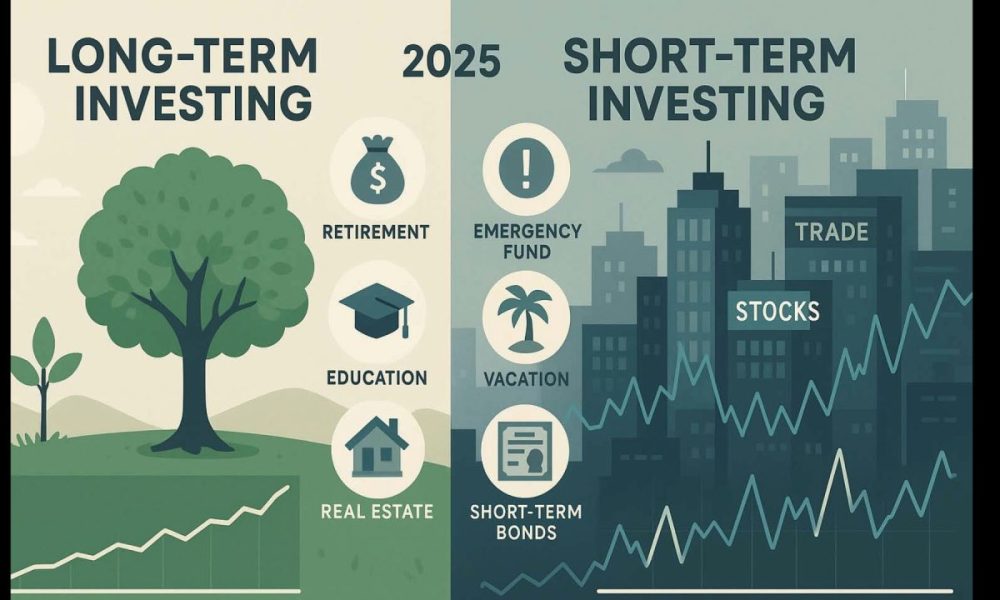

Markets have a way of testing patience without announcing that this is what they are doing. In the UK, investing has long been framed as a sensible, steady affair, something undertaken quietly through pensions, ISAs, and the occasional buy-to-let property. Yet over the past decade, short-term thinking crept in almost unnoticed. Apps refreshed in seconds. Headlines updated by the hour. Gains and losses felt immediate, personal, almost conversational.
Long-term investing in the UK was once guided by institutions that moved slowly and spoke cautiously. Workplace pensions arrived in envelopes. Annual statements were read once and filed away. The distance between action and consequence allowed space for restraint. Today, that distance has collapsed. A market dip before breakfast can prompt a decision by lunchtime. The temptation to respond is ever-present.
Short-term thinking thrives on urgency. It feeds off narratives that suggest something must be done now, before opportunity disappears. In the UK context, this has often surfaced around political events, interest rate announcements, or sudden swings in the pound. Each moment feels exceptional, yet collectively they form a pattern of noise rather than signal.
Wealth planning in the UK has quietly pushed back against this instinct. Financial advisers, once viewed as conservative to the point of dullness, now sound almost radical in their insistence on patience. They speak of decades rather than quarters, of resilience rather than optimisation. For many households, this represents a psychological adjustment as much as a financial one.
There is a generational layer to this shift. Younger investors entered markets during a period of cheap money and rising assets, learning early that speed could be rewarded. Older investors remember inflation, negative equity, and years when returns felt hypothetical rather than guaranteed. These memories shape behaviour more than spreadsheets ever could.
Long-term investing UK style is not about ignoring uncertainty. It is about absorbing it. Diversification, regular contributions, and a tolerance for boredom form the unglamorous core. The discipline lies in continuing when enthusiasm fades, when progress looks flat, when other people appear to be doing something more exciting.
Short-term thinking, by contrast, offers the comfort of action. Selling feels like control. Buying feels like participation. The emotional payoff is immediate, even when the financial outcome is not. In the UK, where money talk has historically been restrained, this emotional outlet can be surprisingly powerful.
Property provides a revealing case study. Long viewed as the ultimate long-term investment, it has increasingly been discussed in short-term terms. Monthly price changes, regional spikes, and rental yields are tracked obsessively. Yet most homeowners still benefit not from timing the market but from simply staying put. Time does the heavy lifting.
I remember sitting through a conversation about pension contributions where no one mentioned returns, only relief that the habit had been maintained during a difficult year.
Economic conditions since 2020 have sharpened these contrasts. Inflation made cash feel risky. Interest rate rises made borrowing expensive. Volatility returned to headlines that had grown complacent. For some, this triggered defensive short-term moves. For others, it reinforced the logic of steady wealth planning UK households had been told about for years.
The tax framework quietly favours patience. ISAs reward consistent saving. Pensions penalise impulsive access. Capital gains allowances, though changing, still assume assets are held over time. The system nudges investors toward long horizons, even as media coverage pulls in the opposite direction.
Short-term thinking also distorts expectations. A year without visible growth is labelled failure. A temporary dip becomes a verdict. Long-term investing requires reframing these moments as normal, even necessary. Markets do not rise smoothly. They stall, regress, and recover in patterns that only make sense when viewed from a distance.
The language around wealth planning in the UK has softened. There is less talk of beating markets and more emphasis on funding lives. School fees, retirement, care for ageing parents. These goals resist short-termism because they are rooted in continuity. They demand reliability rather than brilliance.
Technology complicates this balance. Access to information has democratised investing, but it has also compressed time. Constant visibility makes inactivity feel like neglect. Long-term investors must now actively choose not to react, a skill that was once passive by default.
There is also a quiet emotional toll to short-term thinking. Constant vigilance exhausts. Watching numbers fluctuate daily invites anxiety without adding insight. Many investors eventually drift back toward longer horizons not because they have calculated their way there, but because they are tired.
Long-term investing UK narratives often lack drama, which is precisely their strength. They accommodate error. They forgive missed opportunities. They allow people to be human, inconsistent, distracted. Over time, this flexibility becomes an advantage.
None of this suggests short-term decisions are always wrong. Liquidity needs change. Life intervenes. Flexibility matters. The distinction lies in intent. Are decisions responding to genuine shifts, or to discomfort with uncertainty?
What emerges is not a battle between strategies but a tension within behaviour. The same investor can hold a pension patiently while fretting over daily market moves elsewhere. Wealth planning in the UK increasingly involves managing this internal contradiction as much as managing assets.
The most durable financial outcomes seem to come from accepting that time, not insight, is the scarce resource. Long-term investing rewards those who make fewer decisions, not better ones. Short-term thinking demands constant judgment, and judgment, under pressure, rarely improves.
The UK investing landscape continues to evolve, shaped by policy, technology, and memory. Yet beneath these changes, an old truth persists. Wealth grows quietly, often unnoticed, while attention is elsewhere. Those willing to look away, just long enough, tend to fare better than those who cannot stop watching.


 Bitcoin
  Ethereum
  Tether
  BNB
BNB  XRP
XRP  USDC
USDC  TRON
TRON  Lido Staked Ether
  Cardano
  Avalanche
  Toncoin
  Wrapped SOL