
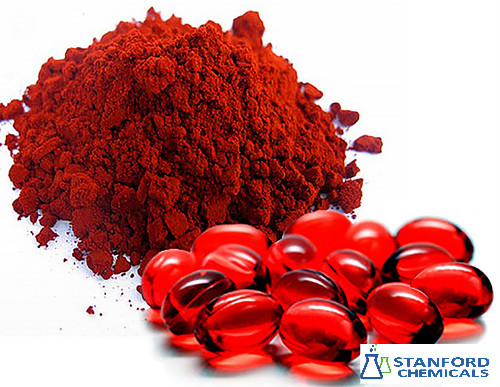

Astaxanthin is a natural carotenoid known for its powerful antioxidant effects, thanks to its unique chemical structure. In nature, you’ll find it mostly in marine sources—such as the microalgae Haematococcus pluvialis, as well as krill, salmon, shrimp, and crab. Of these, Haematococcus pluvialis contains the highest natural concentration of astaxanthin, which is why it’s one of the most popular ingredients used in dietary supplements today.
Astaxanthin is a naturally occurring carotenoid whose chemical structure endows it with strong antioxidant power. It can be mainly found in nature within marine living organisms, such as the microalgae Haematococcus pluvialis, and in krill, salmon, shrimp, and crab. Among these, Haematococcus pluvialis is recognized for having the highest natural concentration of astaxanthin and is one of the dietary supplement ingredients that finds its greatest use today.
Benefits of Astaxanthin
The primary benefits that astaxanthin offers involve its extraordinary power as an antioxidant. It’s roughly 6,000 times stronger than vitamin C and about 550 times more potent than vitamin E in antioxidant activity. Thanks to this strength, there are many science-backed benefits of astaxanthin:
1. It neutralizes the free radicals throughout the body, lowering oxidative stress, while protecting cells and tissues. Evidence has shown it could cross both the blood-brain barrier and the blood-retina barrier to provide direct antioxidant support to your brain and eyes.
2. Astaxanthin modulates key markers of inflammation-lowering, for instance, the levels of TNF‑α and IL-6, and may reduce chronic inflammation.
3. It helps keep the skin healthy. Studies in clinical settings show that the oral administration of 4–6 mg/d for 6–8 weeks can improve skin hydration, increase elasticity, reduce wrinkle depth, and improve skin photoprotection.
4. Astaxanthin promotes eye health. Studies indicate that astaxanthin can relieve eye strain and sharpen visual clarity, possibly offering protection against age‑related macular degeneration.
5. Some studies indicate that it reduces oxidative stress following exercise and aids in muscle recovery, which may enhance endurance.
Since astaxanthin is fat‑soluble, taking it with a meal that contains healthy fats—like avocado, nuts, or olive oil—helps your body absorb it better. Although the perfect timing isn’t yet set in stone, most experts recommend taking it with food to maximize its benefits.
Side Effects of Astaxanthin
Astaxanthin is understood to be a carotenoid with antioxidant properties. Nevertheless, like other supplements, it is important to consume it correctly to avoid any possible side effects.
At a daily dose, usually between 4 and 12 mg, Aqx is safe, and side effects are seldom experienced. Some potential though moderate side effects may include:
- A light red or orange color in the stool (this is harmless)
- Possible stomach discomfort if consumed in very high doses
- If you’re allergic to shellfish, you may need to avoid krill-derived astaxanthin, which contains it
- Pregnant or breastfeeding women should be advised to consult their healthcare provider, as limited data are available regarding their use
The European Food Safety Authority found in 2017 that up to 8 mg a day of astaxanthin sourced from Haematococcus pluvialis microalgae is safe for adult consumption.
Who Should Consider Taking Astaxanthin?
Astaxanthin could be particularly interesting for such groups, although one should keep in mind that we consume a lot of antioxidants as a matter of course:
- People who spend a lot of time in front of screens – This could help reduce eye strain and improve retinal health.
- Those who perform outdoor jobs or receive high levels of sun exposure – It may provide protection from damage caused by the Sun’s UV rays.
- Middle-aged and older adults – As we age, we need higher levels of antioxidants like astaxanthin, which could be beneficial for eye health, skin health, and brain health.
- Athletes and physically active persons — It may assist in decreasing oxidative stress associated with physical activity.
- Anyone not consuming a healthy amount of dark leafy greens and seafood – They may not derive enough antioxidants from their food.
Note: Astaxanthin is a nutritional supplement and not a medication. In case of any health disorder, particularly autoimmune disorders or hormone-related problems, or if one is on medications such as anticoagulants, it is necessary to consult a health professional before taking up astaxanthin.
A few last tips: When picking an astaxanthin supplement, you want to look for natural Haematococcus pluvialis extract, check the dosage and purity, and store it in a cool, dark, airtight place to preserve effectiveness. Take it with a meal containing healthy fats to enhance absorptive efficiency within the body. Start with a low dose to see how you feel, then adjust as needed.



 Bitcoin
  Ethereum
  Tether
  XRP
XRP  BNB
BNB  USDC
USDC  Solana
  TRON
TRON  Lido Staked Ether
  Cardano
  Avalanche
  Toncoin