
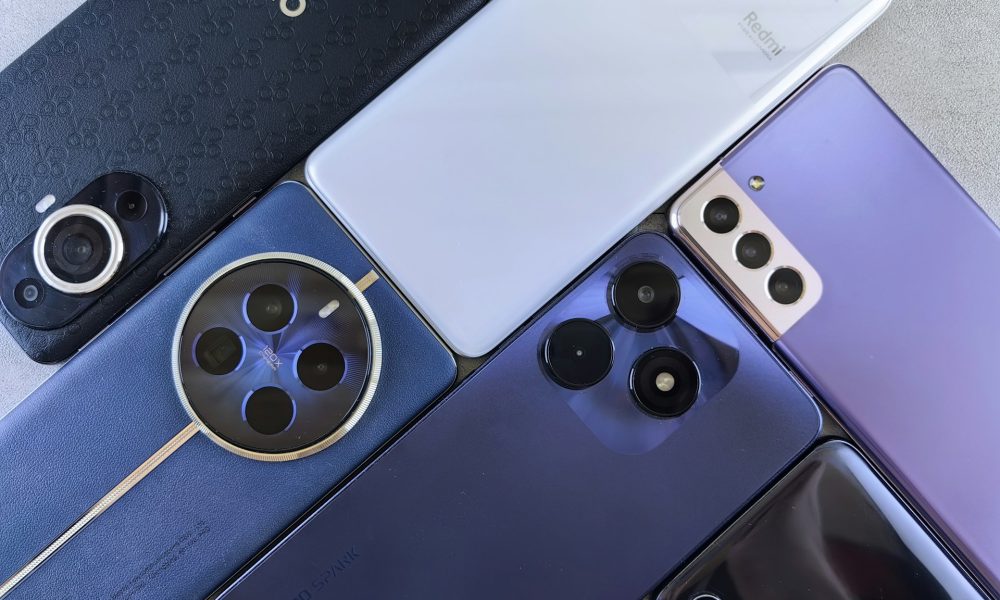

In the tech world, nothing ever happens in isolation. When a new smartphone is launched, you can be sure that it has its no-so-small effects on the environment in multiple ways. You may view a new smartphone as a feature in terms of benefits and a price tag in terms of cost, but rarely consider the environmental cost of it. Even people who are concerned with the environment are mostly unaware of the multi-layered reality of manufacturing smartphones.
Usually, when people think of the environmental cost of the tech industry, they think of black smoke rising from factories, but that’s not it. The environmental costs of manufacturing smartphones start way before the manufacturing process even begins, with the mining process of necessary minerals and materials to manufacture the chips that will make your phone “Smart”.
The mining process comes with its set of issues, from the mining industry’s negative environmental effects on the air, soil, water, and people who live in the mining regions, to exhausting non-renewable precious materials, including but not limited to gold.
Since these materials are so expensive and exist only in limited amounts on Earth, it will come to a point where it runs out. So, do we stop the technology on the planet to save the gold?
No, there’s actually a reliable, practical solution that not only reserves the rare minerals, reduces the mining costs, and keeps the technological advancements going, but also creates an entire additional market to grow the economy!
In this article, we’re taking a look at 5 rare Earth materials that you can conserve and save by choosing a refurbished smartphone instead of a brand new one.
Material #1: Gold (The High-Value Conductor)
If you’ve ever wondered what’s so special about gold, it’s the fact that it’s one of the best conductor materials that resists corrosion, unlike other conductors like silver and copper, which corrode and tarnish over time causing their performance to become poorer in electronics. Of course, silver is a better option as an electricity conductor, but for longevity reasons, gold is preferred by tech manufacturers.
Another reason gold is an important component in electronic devices, especially smartphones, is that it is malleable enough to be formed into the thinnest wire possible without breaking to be included in microchips and circuit boards.
You may think that if the wires and microchips are microscopic components, they can’t possibly have a significant amount of gold. Well, let’s look at the numbers.
While a metric ton of raw gold ore may contain maximum of 10 grams of gold, a metric ton of iPhones contains at least 300 grams of gold!
When these iPhones are refurbished and resold at lower prices, it gives a second life to the device and prevents that precious, rare metal from ending up in landfills, the world’s largest bins!
So, next time you shop refurbished, remember, you’re saving gold!
Material #2: Cobalt (The Battery Essential)
One of the most important parts of a smartphone is its battery. It has to hold a significant amount of charge and stay chemically stable without overheating, which can lead to these batteries catching fire.
To achieve this delicate balance, smartphone manufacturers use cobalt to stabilize the lithium-ion batteries and make sure they work properly for longer periods of time.
While cobalt is not as rare as gold, it’s in fact the 32nd most abundant material in the crust of the planet geologically; it is considered economically rare because 75% of the Earth’s cobalt is in the Democratic Republic of Congo. Additionally, mining for cobalt doesn’t happen directly; rather, it’s a byproduct of mining for other metals like nickel and copper.
For this reason, reusing cobalt through smartphone refurbishment that maintains the health of already manufactured lithium-ion batteries is crucial to reduce, if not prevent, the environmental and humanitarian disaster that demand for cobalt is causing in Congo, as well as other mining regions.
Material #3: Neodymium (The Magnet Power)
Neodymium is the name of the element that is used to turn alloy into the powerful chemical magnets that go into several parts of smartphones, including speakers, microphones, and the haptic engine that makes your phone physically vibrate and respond to screen touches.
Just like with cobalt, neodymium is not rare in the Earth’s crust, but rather in the geopolitical sense. Additionally, the mining of this material out of ore causes perhaps one of the most dangerous types of radioactive waste.
While with cobalt, both manufacturers and refurbishers can share the responsibility of recycling it, refurbishers by maintaining already-manufactured batteries, and manufacturers by using recycled cobalt in manufacturing new batteries, this is not the case for neodymium, as it can only be recycled through the refurbishment of electronics.
Material #4: Indium (The Invisible Touchscreen)
If you’ve ever wondered about what magic lets a glass screen on a smartphone or an iPad feel your touch and respond to it with an action, it’s Indium. To be more specific, a certain form of the metal called Indium Tin Oxide, which is highly ductile, transparent, and electrically conductive, allowing it to be the perfect material for a screen coating to be a display and able to electrically read and respond to touch.
As a metal, indium is rare on two different levels:
- In addition to being extremely rare in the Earth’s crust, indium cannot be mined for on its own, as it comes as a byproduct of refining zinc ore.
- Indium production is highly concentrated, as China alone produces over half of the world’s supply.
Due to its dual rarity, it’s imperative to conserve and recycle indium, as forecasts show that the planet may run out of indium in the coming decades.
Through the refurbishment of smartphones, the indium in the LCD and OLED panels is being saved from ending up in bins and, subsequently, burned in landfills.
Material #5: Tungsten (The Weight and Balance)
While it was previously used in smartphones for the haptic (vibration) function and heat management, tungsten now has a new crucial role in the AI functionalities added to most smartphone models as of 2025. With the rise of AI in smartphones and the demand for AI chips, the demand for tungsten has also risen.
Due to this added layer of demand to the tungsten’s original scarcity in the Earth’s crust, and the ethical mining crisis, as the main mining areas for this metal are in conflict areas, most companies are committed to using recycled tungsten in new smartphone manufacturing. So, when you choose to buy a refurbished smartphone, the first form of recycling and resource preservation, you’re not only helping the environment, but the economic and humanitarian causes as well.
At professional refurbishment centres, such as the UK’s QwikFone, refurbished phones are seen as more than just a way to save money; it’s a means to save the planet and its rare resources. The refurbishment process includes multi-point inspections and extensive tests to ensure that eco-aware users who choose to buy refurbished are getting the highest quality and the most reliable performance and longevity in their devices. To create the complete deal, QwikFone also offers a 12-month warranty period on its phones as well as a 30-day return period with a full refund option for a 100% safe deal.
Conclusion
With the introduction of AI to all devices, especially smartphones, the environmental costs of manufacturing devices are becoming higher with each passing year. Your next mobile purchase can be a part of the problem or a part of the solution. Choosing a refurbished mobile for your next phone will save you money and save the environment from the high cost of non-renewable resources consumption.
So, next time you look at a smartphone, look beyond the glass of the screen and the fast response of your AI assistant to see the rare geological collection that is worth protecting. Choose refurbished!



 Bitcoin
  Ethereum
  Tether
  XRP
XRP  BNB
BNB  USDC
USDC  Solana
  TRON
TRON  Lido Staked Ether
  Cardano
  Avalanche
  Toncoin