
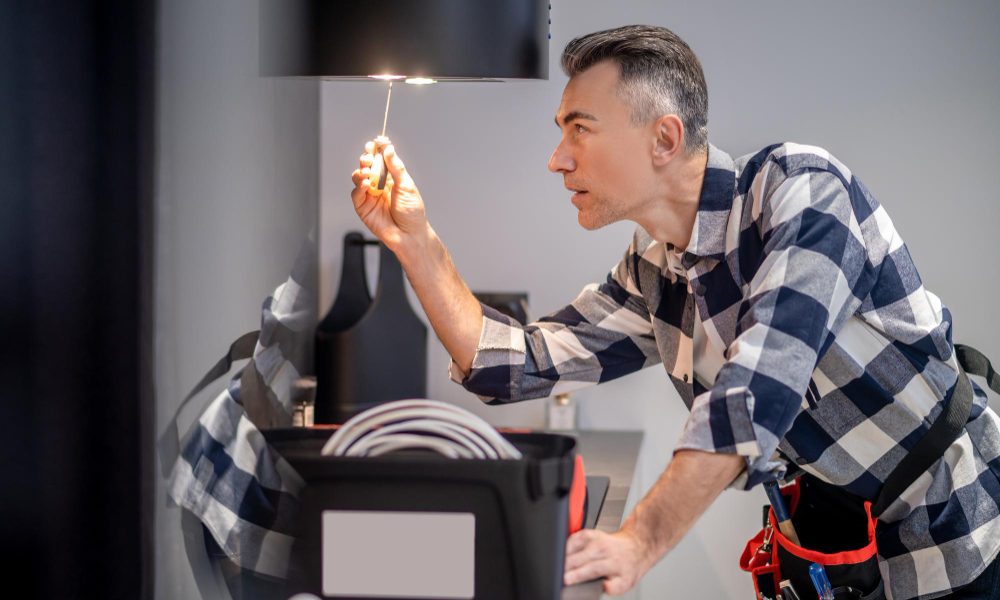
The Retired Electrician in Bristol Now Training LLMs for £200 an Hour—Is It Real, or a Hype Bubble?

When you first arrive in Bristol, you’ll notice that the city’s aesthetic quickly changes from picturesque to realistic.
Turning two streets inland returns you to the everyday Britain of wheelie bins, damp brick, and trades vans crammed into small parking spaces. Down by the Harbourside, the water is still enough to reflect a row of bright houses.
A retired electrician with hands still nicked from decades of work spending his mornings “training” large language models for the kind of hourly rate that used to be reserved for surgeons and barristers is the setting in which this story makes the most sense People keep saying £200 an hour because it has a gratifying sting to it.
| Category | Details |
|---|---|
| Place | Bristol, England |
| Local AI backdrop | Bristol hosts major public AI compute via the University of Bristol’s Isambard-AI facility (National AI Research Resource) |
| Why “training LLMs” pays | Many models still rely on human feedback: rating responses, writing examples, correcting errors, testing logic |
| What the “£200/hour” claim resembles | A widely reported case of a UK-based entrepreneur earning $200/hour training AI models via micro1’s expert network |
| What most listings look like | Many Bristol-targeted “AI trainer” listings are remote and pay far less than £200/hour |
| Credible reference link | https://www.gov.uk/government/publications/ai-research-resource/airr-advanced-supercomputers-for-the-uk |
In a limited, nearly technical sense, it might be true—an occasional rush of work for a specialized project, billed in short blocks, and paid at a premium. However, there is also a sense that the figure floats around because it flatters all parties: the reader feels impressed or outraged, the worker feels found, and the platform feels futuristic.
There are documented instances of AI “expert networks” paying about that amount, at least in dollars, which helps to explain why the claim doesn’t seem wholly ludicrous. A UK-based businessman who trains AI models using Micro1’s network of human experts for $200 per hour was featured on CNBC. Here, the specifics are crucial: that individual wasn’t performing standard clickwork. Expertise was framed through expert context, well-structured discussions, and excellent feedback.
What role does an electrician play in that, then?
In the popular imagination, electricians work quickly, fixing fuse boxes and wiring houses, leaving behind a subtle odor of warm plastic and dust. Actually, competent electricians are also troubleshooters. They make decisions that cannot be copied and pasted from a manual, read jumbled signals, and reason under pressure. When AI labs hire humans to review model outputs, they are attempting to capture that exact type of thinking—applied judgment, pattern recognition, safety instincts.
To avoid romanticizing it. A portion of this work is obviously tiresome.
Numerous “AI trainer” positions that are posted throughout Bristol are remote and pay very little more than £200 per hour. The jobs include writing sample responses, ranking responses, and assessing chatbot logic. It reads more like a new kind of piecework dressed up in Silicon Valley lingo than a gold rush. Even the lower-paid listings, however, highlight a crucial point: businesses require human judgment on a large scale, and they are unable to completely automate the process without breaking it.
The retired electrician, who we’ll call Martin since that name is still associated with actual kitchens and actual bills in Britain, describes the work in the same way that people describe side jobs when they’re unsure of how proud they should be.
With a mug of tea getting cold, he spends hours urging an AI system to break bad habits while seated at a tiny desk by a window. Confident nonsense is flagged by him. He clarifies instructions by rewriting them. He assesses the model’s comprehension of “safe” in a home context rather than a policy memo. Occasionally, he reads a generated response and chuckles—not in a nice way, but more like a tradesman laughing at a poorly done do-it-yourself project.
The entire arrangement has a slight tension, and it goes beyond money.
With the University of Bristol citing Isambard-AI, housed at the National Composites Centre, as a cornerstone of Britain’s AI aspirations, Bristol is emerging as a significant AI hub in the UK. The UK government claims that Isambard-AI, which is composed of thousands of Nvidia GH200 Grace Hopper “superchips,” is the most potent public computing facility in the nation. A national machine designed to speed up research and industrial work is humming away at the same time that regular citizens in the same city log on at home to perform small tasks that subtly influence what those models can say. The scale is overwhelming.
It’s difficult to ignore how strange the class is.
For many years, Britain advised everyone to “learn a trade” and advised youth to “learn to code.” Currently, tradespeople are being drawn into the AI economy, but not as programmers. as human safety rails, trainers, and testers.
And even though it is sometimes true, the £200/hour claim might be the exception that proves the rule. It’s still unclear if these rates will remain the same after more people join, platforms standardize salaries, and businesses determine that the “human feedback” stage can be trimmed. Anyone who has witnessed a labor market being “platformed” is aware of the typical trajectory of the story: initial scarcity, ostentatious compensation, followed by a gradual squeeze.
For his part, Martin seems more intrigued by the debate’s subtle novelty than by the argument itself.
He enjoys the sense of being helpful once more and of identifying a mistake before it is made by someone else. Additionally, he is aware—as many retirees are—that the position could disappear at any moment. A contract expires. A model’s version is updated. A platform modifies its guidelines. Work that seemed plentiful a month ago abruptly stops.
For the time being, however, a retired electrician can sit in a modest Bristol home and correct a machine’s responses line by line while earning the same salary as a City consultant in a city developing national-scale AI muscle. Just knowing that something has changed—and not in a tidy, comforting way—tells you that.


 Bitcoin
  Ethereum
  Tether
  XRP
XRP  BNB
BNB  USDC
USDC  Solana
  TRON
TRON  Lido Staked Ether
  Cardano
  Avalanche
  Toncoin