
UK Police Trial AI Facial Matching on Public Transit—And It’s Already Flagging Kids by Mistake

At London Bridge station, the morning rush has its typical blend of routine and urgency. Above it all, mounted on poles and vans, cameras silently scan faces as commuters clamber through ticket barriers, coffee cups gripped tightly, backpacks swaying. The majority of people are unaware of them. Or maybe they do, but decide not to think about it. Concentrating on catching the train is simpler.
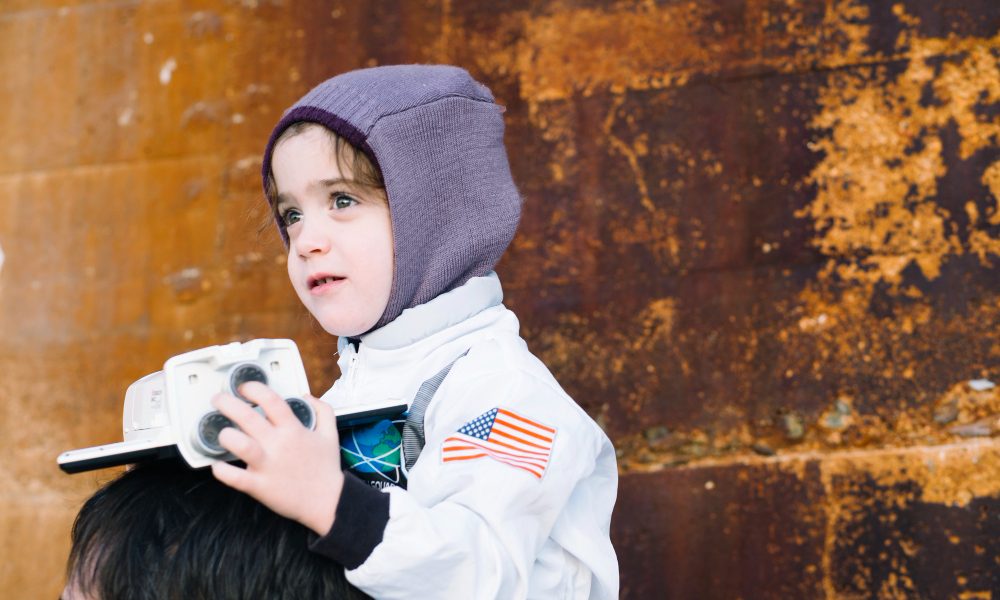
Currently, British Transport Police is using those cameras as part of a live facial recognition trial to find wanted suspects traveling through crowded transit hubs. The concept seems simple enough. Faces are compared to a watchlist. Put an end to criminals. Boost security. However, something surprising has already surfaced in these early phases: the system has already mistakenly flagged children.
| Category | Details |
|---|---|
| Program | Live Facial Recognition Trial |
| Agency | British Transport Police |
| Location | London railway and Underground stations |
| Technology Purpose | Identify suspects and monitor safety risks |
| Trial Duration | Six-month pilot |
| Major Concern | AI falsely flagging children and innocent commuters |
| Alerts Generated | Over 44,000 alerts during earlier AI transit trials |
| Legal Context | Ongoing legal and privacy challenges in UK courts |
| Public Reaction | Privacy groups call it intrusive and disproportionate |
| Reference | https://www.bbc.com/news/articles |
Algorithms intended to identify fare evasion incorrectly identified children walking behind their parents as possible offenders during previous AI monitoring trials at Tube stations such as Willesden Green. It’s the kind of minor technical glitch that initially appears to be innocuous. The implications, however, seem more pressing when one is standing on a crowded platform and witnessing a small child tugging at a parent’s sleeve as alarms silently go off somewhere hidden.
Live CCTV footage is analyzed by the system, which then compares faces to police databases and sends out alerts when possible matches are found. After that, officers examine these alerts before acting. Theoretically, human supervision serves as protection. However, it’s still unclear how frequently decisions are influenced by those early AI assessments before human intervention.
In its initial AI trials, Transport for London produced over 44,000 alerts—a figure so high that it nearly vanishes into thin air. That’s about 125 warnings every day. Observing commuters moving through stations interminably makes one wonder how easily errors could proliferate in such a setting.
There has been a strong reaction from privacy advocates. According to some, the technology runs the risk of developing a surveillance system that prioritizes suspects over citizens. Others draw attention to the fact that facial recognition is still not perfect, particularly when it comes to recognizing younger faces that undergo rapid changes over time. Given their smaller features and changing looks, children might pose special difficulties for AI models.
If necessary, police will defend the trial. They claim that in other deployments, facial recognition has already assisted in the removal of dangerous people from public areas, resulting in hundreds of arrests. As you hear their justifications, you get a sense of sincere faith in the potential of the technology. However, history indicates that belief can occasionally take precedence over reality.
These systems have a subtle yet enduring physical presence. Cameras are silent. They watch. Perched far above platforms, they become an integral part of the station’s architecture and infrastructure. It’s difficult to ignore how pervasive surveillance is in daily life.
Additionally, there are unanswered legal questions. In court, campaign organizations have contested the use of facial recognition, claiming that the public never gave their full consent for such surveillance. It’s still unclear where the lines will be drawn in the end as we watch these court cases develop.
Technology firms keep enhancing these systems by increasing their accuracy, decreasing false positives, and training them on bigger datasets. Engineers talk about advancements with assurance. Investors appear to be just as upbeat, seeing potential in the expanding surveillance industry. However, real-world testing does not take place in labs. Here, on platforms crowded with schoolchildren and commuters, it is taking place.
Errors involving children in particular have an unnerving quality. It adds a human element that is not possible with just statistics. A false alarm involving a person, particularly a child, feels different than one involving a bicycle or bag.
Proponents contend that growing pains are a common occurrence for new technologies. Automobiles in the past were risky. The first aircraft crashed. Safety got better over time. It’s possible that facial recognition will proceed similarly. However, accidents involving transportation are evident and comprehended. Algorithmic errors are silent and frequently go unnoticed.
There is a sense that something fundamental is changing as you stand close to the yellow safety line and watch trains come and go. Not all at once. Slowly. Active judgment is replacing passive recording in surveillance.
The trial is still ongoing. Police collect information. Code is improved by engineers. Regulators argue over regulations. Every day, commuters go by beneath the cameras, most of them oblivious to the calculations taking place above them.
It’s unclear if this technology will ultimately make public transportation safer or just more watched. However, it is already evident that the machines are listening. Additionally, they occasionally make mistakes.


 Bitcoin
  Ethereum
  Tether
  BNB
BNB  XRP
XRP  USDC
USDC  Solana
  TRON
TRON  Lido Staked Ether
  Cardano
  Avalanche
  Toncoin