
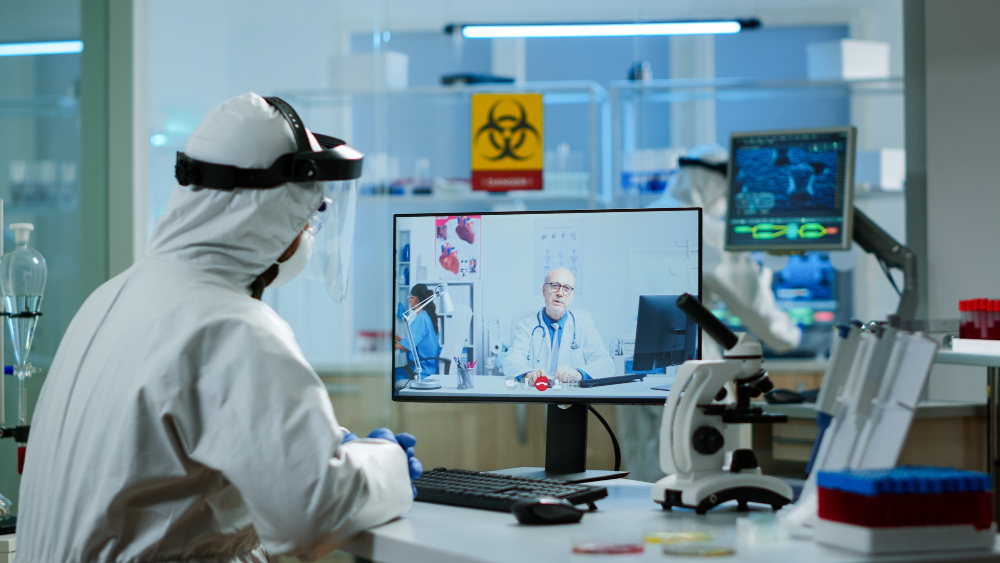
Why MIT Is Creating AI-Enhanced Lab Rats—and Bioethicists Are Sounding the Alarm About Ethics

The laboratory rat has subtly changed over the last ten years from being merely watched to being continuously analyzed, its movements converted into digital signals that artificial intelligence systems can analyze with astonishingly high accuracy, exposing patterns that human researchers frequently found difficult to consistently observe. This change has significantly raised the caliber of biological research by enabling researchers to track minute behavioral shifts that previously vanished into the haze of human exhaustion and inattentiveness.
In order to ensure that no significant signal is missed during lengthy experimental cycles, researchers at the Massachusetts Institute of Technology have installed intelligent cameras and adaptive sensors to create systems that operate remarkably similarly to attentive assistants. These systems continuously monitor, record, and organize behavioral information. The procedure seems incredibly effective, almost like thousands of silent observers working at once, each adding a piece to a bigger, gradually unraveling biological puzzle.
| Key Context | Details |
|---|---|
| Institution | Massachusetts Institute of Technology (MIT), Cambridge, Massachusetts |
| What Is Happening | Researchers are using artificial intelligence to observe, simulate, and interact with laboratory rats, improving biological research |
| Core Purpose | To understand disease, predict treatments, and potentially reduce the need for live animal testing |
| Ethical Discussion | Bioethicists say AI may unintentionally increase experimentation intensity and reshape animal welfare standards |
| Technological Methods | Behavioral tracking, robotic interaction, brain organoid integration, and simulated biological models |
| Why It Matters | These tools could accelerate medical discoveries while also requiring updated ethical protections for animals |
| Reference | MIT Technology Review |
By detecting behavioral abnormalities much more quickly in recent years, these systems have improved scientific accuracy and animal care in ways that previous laboratory generations could only try insufficiently. This has allowed researchers to intervene earlier when studying neurological diseases.
This development is especially helpful to researchers looking into Alzheimer’s disease and other neurological conditions because it makes it possible to measure early-stage drug responses in incredibly clear detail, which lowers uncertainty and helps doctors make better decisions that could eventually help patients live longer and healthier lives.
Simulators that mimic biological responses with remarkable versatility have been made possible by artificial intelligence. These simulations have produced digital models that can forecast how cells and organs will react to treatments, greatly reducing the need for live testing while creating new avenues for quicker discoveries.
Researchers are progressively creating systems that function nearly like biological twins by utilizing sophisticated computational modeling. These systems can respond to experimental queries prior to the start of any physical procedure, which saves time, lowers expenses, and significantly enhances research planning.
Thoughtful observers have started posing well-considered ethical questions about how far this integration should go in tandem with these encouraging developments, especially as experiments involving brain organoids and robotic interaction start. However, progress rarely happens in a straight line.
I recall observing a researcher pause a few years ago before turning on a behavioral tracking system during a lab visit. It seemed as though he knew he was going to witness something that the human eye alone could not completely comprehend.
Scientists hope to better understand neurological diseases by implanting human brain organoids into rat brains for research purposes. This could lead to the development of treatments that have been frustratingly unattainable for decades, providing families who have been waiting for answers with hope that has remained stubbornly distant.
Carefully cultivated from human cells, these organoids are incredibly useful tools for comprehending the progression of disease. They enable researchers to observe neural development in previously unthinkable ways, revolutionizing medical research with especially inventive precision.
However, bioethicists contend that moral principles need to change in tandem with these developments to maintain a balance between technological prowess and careful responsibility, safeguarding both scientific advancement and the dignity of living research subjects.
By using machines that move remarkably like real animals, scientists are also investigating how artificial companions affect behavior by introducing robotic systems made to socialize with rats. This allows for highly controlled experimental conditions while promoting natural responses.
Researchers can now study emotional and neurological responses without the introduction of unpredictable biological variables thanks to these robotic systems’ remarkable effectiveness at eliciting social reactions. This level of experimental consistency was previously challenging to attain.
Because each experiment yields more accurate and thorough data, removing redundant testing and increasing overall efficiency, these tools may drastically lower the overall number of animals needed in the context of long-term research goals.
The main worry of bioethicists is not the existence of AI per se, but rather the speed at which it is expanding research capabilities and simplifying experiments that previously required a great deal of work, which raises concerns about accountability and supervision.
However, many researchers maintain a strong sense of optimism, highlighting the value of artificial intelligence as a replacement tool that enables simulated experiments to address questions that previously required live subjects, advancing science toward more compassionate approaches.
Labs are developing hybrid research systems that balance digital and physical experimentation by fusing simulation and observation. This reflects a particularly inventive shift in scientific philosophy and ensures that discoveries continue while minimizing needless harm.
Scientists and ethicists have been talking more cooperatively in recent months, concentrating on developing rules that are both protective and adaptable, making sure that advancement stays in line with common ideals while promoting responsible innovation.
Animal welfare monitoring has significantly improved since AI-assisted tracking was introduced. This is because stress indicators can now be detected earlier and addressed more quickly, resulting in safer and more stable environments for research animals.
This advancement is part of a larger shift in which artificial intelligence supports researchers while empowering them to make more deliberate and knowledgeable decisions. It no longer functions as a cold replacement but rather as an intelligent assistant.
As simulations get more accurate, these systems may eventually completely do away with the need for animal testing, paving the way for a time when ethical responsibility and scientific advancement coexist.
Artificial intelligence is predicted to grow even more dependable in the years to come, directing biological research toward safer, quicker, and more humane techniques and guaranteeing that advancements in science and society have long-term positive effects.
For the time being, artificial intelligence is patiently learning inside silent labs with glowing screens and gentle mechanical hums, assisting scientists in making better decisions, seeing more clearly, and making steady progress toward once-impossibly-distant discoveries.


 Bitcoin
  Ethereum
  Tether
  XRP
XRP  BNB
BNB  USDC
USDC  Solana
  TRON
TRON  Lido Staked Ether
  Cardano
  Avalanche
  Toncoin