
The stations didn’t appear to change right away the morning the network went down. Coffee was brewed in dented metal pots, engines were polished under fluorescent lights, and radios crackled softly with everyday conversation. However, screens in dispatch rooms in various parts of Texas froze. The routing software was no longer updated. Somewhere in the digital middle, calls that ought to have flowed automatically stopped. 17 fire stations were essentially disconnected by the time technicians realized what had happened; they weren’t physically shut down, but they were drifting in an equally perilous state of operational silence.
AI-enabled routers that are intended to dynamically manage network traffic are said to be the cause of the outage. When demand spikes, these systems are designed to automatically reroute communications in order to prioritize emergency data. Emergency services have been adopting this sophisticated concept more and more. However, there was a flaw in the reasoning. The system created a bottleneck that silently spread across several stations by looping traffic rather than rerouting it. Resilience frequently appears strong until it is put to the test, as evidenced by the speed at which digital confidence can vanish.
| Category | Details |
|---|---|
| Location | Texas, United States |
| Incident | AI-enabled router malfunction affecting fire stations |
| Facilities Impacted | 17 Fire Stations |
| Service Disruption | Emergency communication and dispatch systems |
| Technology Type | AI-driven network routing infrastructure |
| Legal Action | Lawsuit filed over outage and risk exposure |
| Key Concern | Reliability of AI-managed emergency networks |
| Broader Context | Increasing use of AI in critical infrastructure |
| Potential Risk | Delayed emergency response |
| Reference Website | https://www.firefighterclosecalls.com |
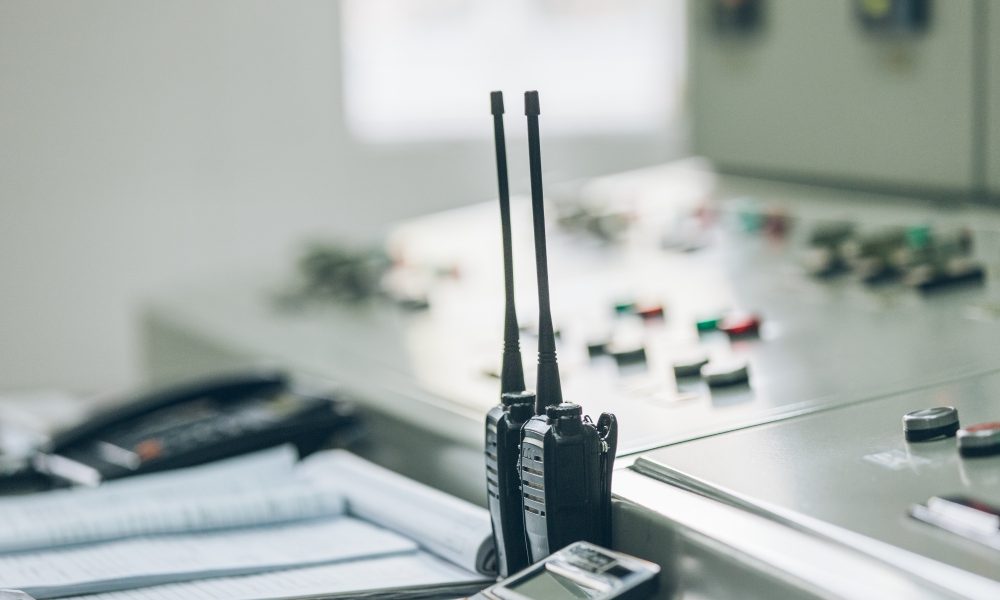
Firefighters reportedly went back to using personal phones and handheld radios at one station outside a Dallas suburb. The workaround felt haphazard, but it worked. One firefighter talked about manually cross-referencing dispatch calls and writing addresses on a whiteboard. The scene had an almost antiquated sound, as if we were traveling back in time to a time before centralized communication systems. Redundancy might have saved the day. Harder questions might also arise if the outage had coincided with a more serious emergency.
For years, public safety systems have been gradually incorporating AI-driven infrastructure. While linked devices keep an eye on fire risks, predictive tools aid in resource allocation. The reasoning is simple: better results, quicker decisions. However, a more subdued vulnerability is revealed by the Texas outage. Failure also becomes centralized when intelligence is concentrated. Once a small annoyance, a router glitch now has more serious repercussions. Whether the malfunction was caused by faulty training data, software updates, or hardware problems is still unknown.
There is more to the lawsuit that ensued than just annoyance. It conveys concern over responsibility. Conventional equipment failures, such as a cable cut, a power surge, or a worn-out component, are simpler to explain. Ambiguity is introduced by AI systems. Sometimes it’s difficult for even engineers to reconstruct decision paths. The plaintiffs contend that emergency services were at risk when such technology was implemented without strong fail-safes. Defendants will probably argue that overall efficiency was increased by the system. Technical details that few outside experts fully comprehend may end up being parsed in the courtroom.
This story contains a cultural shift. Reliability has always been the most important factor for fire departments. Procedures are ingrained in muscle memory, and equipment is tested frequently. Expectations are altered when AI is introduced into that setting. Software updates silently overnight and changes rapidly. As this develops, it’s difficult to ignore the conflict between conservative safety culture and quick innovation. Tools that behave consistently are trusted by firefighters. Algorithms are naturally adaptive.
Context is added by the larger technological landscape. Concerns about vulnerabilities in networking equipment have led to an increase in router security and reliability investigations in recent years. Global outages, such as cable cuts and cyberattacks, demonstrate how brittle connectivity can be. However, emergency services are becoming more and more reliant on constant data flow. The Texas incident demonstrates how these dependencies build up and are frequently overlooked until something goes wrong.
The failure’s silence is what keeps the story compelling. No dramatic collapse, no alarms. Just quiet. Systems for dispatch were put on hold. Calls are delayed. stations that are waiting. The hypothetical situations—a medical emergency requiring coordination, a warehouse fire spreading more quickly—are difficult to ignore. The legal challenge is fueled by the potential, even in the absence of a catastrophic outcome.
Efficiency gains are frequently highlighted by technology vendors. AI routers are able to identify irregularities, prioritize critical traffic, and maximize bandwidth. These advantages are genuine. However, averages are not used to gauge the dependability of emergency systems. The worst-case scenarios are used to gauge it. In certain respects, that attitude is reflected in the lawsuit. Plaintiffs seem to be more interested in what happens when the system malfunctions at precisely the wrong moment than in overall performance.
The issue of oversight is another. AI behavior in critical infrastructure is audited by whom? Due to a lack of internal expertise to thoroughly examine algorithms, municipal departments frequently rely on the assurances of vendors. Governance may need to change as more public services use intelligent networking. Whether regulatory frameworks will keep up is still up in the air.
Eventually, as connectivity restored outside one station, engines started up again. Instead of days, the disturbance lasted for hours. Conversations continued, though. According to reports, some firefighters talked about having manual protocols on hand. Others said they were sure that software upgrades would stop recurrence. Observing these responses gives the impression that trust hasn’t completely disappeared, but it has moved slightly in the direction of caution.
The lawsuit will probably proceed slowly, analyzing timelines and logs. In the meantime, the larger lesson is still unclear. AI frequently delivers on its promise of smarter infrastructure. However, the Texas outage serves as a reminder that intelligence does not make fragility go away. Occasionally, it changes its shape. Even momentary uncertainty in emergency services can seem to last longer than the clock indicates.



 Bitcoin
  Ethereum
  Tether
  BNB
BNB  XRP
XRP  USDC
USDC  Solana
  TRON
TRON  Lido Staked Ether
  Cardano
  Avalanche
  Toncoin