
Platforms like Ytzolo now generate thumbnails automatically for YouTube creators, analysing viewer behaviour patterns to predict which designs will drive clicks. The service launched in Britain targeting independent producers facing tighter margins and algorithm-driven visibility battles.
What was optional six months ago has become standard practice.
Across the UK’s digital content industry, creators and marketing agencies are adopting machine learning tools to handle tasks that once consumed hours of manual work. Thumbnail design, headline testing, keyword research, video descriptions—all increasingly automated through platforms trained on performance data. The shift reflects mounting pressure to produce high-performing content consistently, as advertising rates fluctuate and social media algorithms grow more demanding.
For thousands of British creators earning income through YouTube, TikTok, and Instagram, the stakes have risen sharply. Competition for viewer attention has made production more complex and data-dependent. Click-through rates, retention metrics, and thumbnail performance now influence revenue potential as much as creative quality. Those who can optimise faster gain measurable advantages.
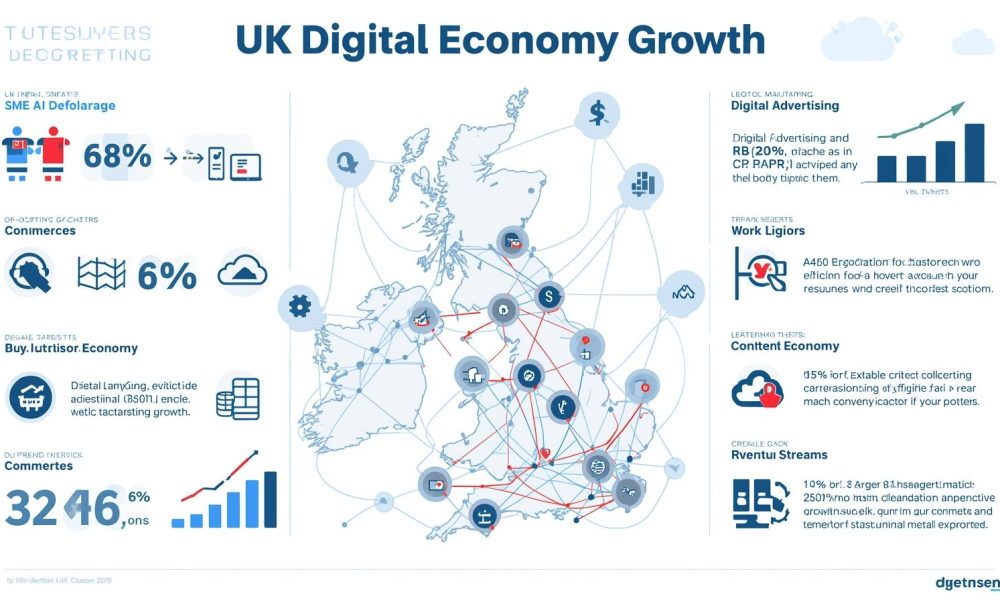
The Office for National Statistics identifies digital industries as among the fastest-growing sectors in the UK economy. Social media content creation, video production, and influencer-led businesses drive advertising revenues and consumer spending. But the ecosystem has matured rapidly—what began as a niche online activity now operates as a structured business sector with professional expectations.
AI adoption among UK small and medium-sized enterprises has accelerated over the past two years, according to government digital strategy reports. For content-based businesses, the appeal is practical: automation reduces production time while maintaining data-driven accuracy. Independent creators operating with limited resources see immediate workflow gains. Digital agencies managing larger content portfolios can scale without proportionally increasing staff costs.
The economic implications extend beyond individual creators. Britain’s advertising industry relies heavily on performance metrics derived from digital platforms. AI-enhanced content often generates higher engagement, which improves ad placement efficiency and revenue distribution. Brand sponsorship ecosystems, digital employment patterns, and technology infrastructure investment all feel the impact as automation becomes embedded in standard practice.
Regulatory oversight is evolving alongside the technology. The Financial Conduct Authority monitors digital financial flows and advertising transparency, whilst government bodies balance innovation support against consumer protection concerns. AI tools deployed within digital businesses will face tightening compliance frameworks around data privacy, algorithmic accountability, and transparency. The UK government’s broader technology strategy signals continued support for AI-led growth, but responsible deployment remains a central consideration.
Workflow optimisation has become the primary selling point for these platforms. Tasks that previously required significant manual effort—testing multiple thumbnail variations, analysing keyword performance, refining video metadata—now happen through machine learning algorithms. The tools don’t replace creativity, but they eliminate friction in the production process. For creators juggling content schedules alongside other work, efficiency gains translate directly into financial outcomes.
Yet widespread adoption creates its own tensions. Early adopters benefited from optimisation advantages when competitors relied on manual processes. As AI tools become accessible across the industry, baseline performance expectations rise. What was once a competitive edge becomes table stakes. The pattern mirrors technological adoption in other sectors—automation shifts from optional to mandatory, and businesses that lag risk falling behind.
Oversaturation presents another challenge. With AI lowering production barriers, content volume continues climbing. Distinguishing quality from quantity grows harder, even as intelligent analytics become more sophisticated. The risk is a crowded marketplace where optimisation alone cannot guarantee visibility, and creators face diminishing returns despite increased efficiency.
Platform algorithms add another layer of uncertainty. YouTube, TikTok, and Instagram adjust their visibility mechanisms regularly, often without transparency. Creators optimising for current algorithmic preferences may find their strategies obsolete within months. AI tools can adapt faster than manual processes, but the underlying volatility remains. Success depends on continuous adjustment rather than one-time optimisation.
For digital agencies serving UK clients, the shift has been pronounced. Reduced turnaround times allow firms to manage more extensive content portfolios, but client expectations have risen accordingly. What agencies once delivered over several weeks, clients now expect within days. The pressure to adopt automation intensifies as competitors demonstrate faster production cycles.
The creator economy’s trajectory will depend on several factors in coming years. Regulatory clarity around AI usage, investment in digital skills training, infrastructure support for SMEs, evolving advertising models, and platform algorithm transparency all shape the landscape. Government initiatives suggest ongoing support for AI integration, but economic sustainability hinges on equitable access. Smaller creators without resources to invest in premium tools risk disadvantage against better-funded competitors.
Longer term, the question is whether AI-driven optimisation raises all boats or accelerates consolidation. If automation genuinely reduces barriers, independent creators gain opportunities to compete against larger operations. If premium tools and proprietary data create new moats, market power concentrates among those already established. Early evidence suggests both dynamics are occurring simultaneously across different market segments.
What’s clear is that data-informed decision-making has become foundational to digital business operations in Britain. Metrics drive strategy in ways unimaginable five years ago. Creators track performance indicators daily, adjusting content based on algorithmic feedback loops. Agencies build client recommendations around analytics dashboards rather than creative intuition alone.
The UK’s digital content landscape now operates at the intersection of technology, creativity, and financial strategy. AI tools have moved from enterprise finance and research labs into the hands of independent YouTubers and small marketing firms. Whether this democratises opportunity or simply raises competitive intensity remains an open question.
For now, British creators face a pragmatic reality: automation is no longer experimental. It’s embedded in how successful content businesses operate. Those adapting to data-driven workflows gain measurable advantages in an increasingly crowded marketplace. Those relying solely on creative instinct without optimisation support find visibility harder to secure.
The transformation is still unfolding. Platform algorithms will continue evolving, regulatory frameworks will tighten, and new AI capabilities will emerge. But the direction is set. Britain’s creator economy is being rebuilt around machine learning tools that promise efficiency, optimisation, and competitive survival in a market where attention is the scarcest commodity.


 Bitcoin
  Ethereum
  Tether
  BNB
BNB  XRP
XRP  USDC
USDC  Solana
  TRON
TRON  Lido Staked Ether
  Cardano
  Avalanche
  Toncoin