
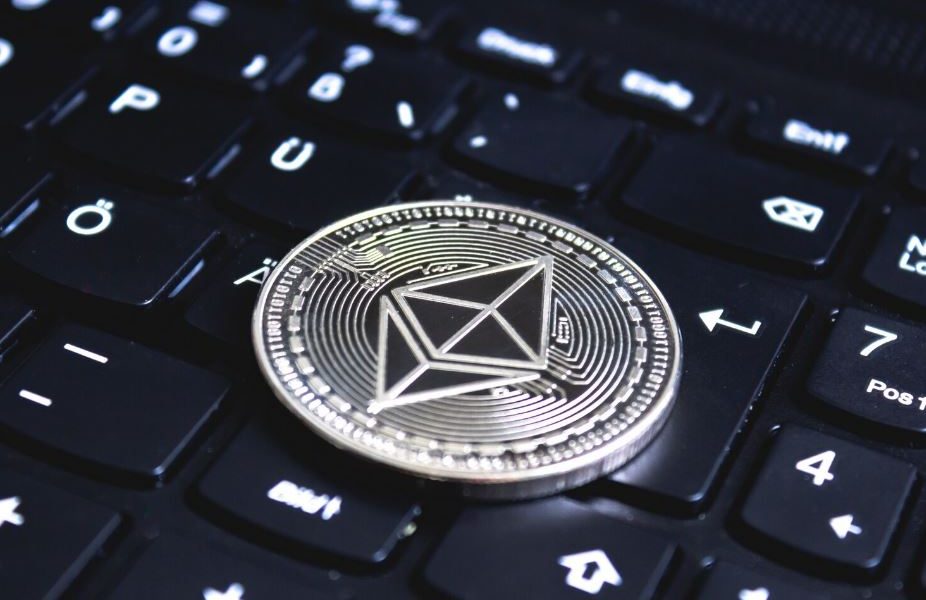
On trading screens, the numbers are always changing—from green to red to something in between. A small cryptocurrency exchange office in Karachi displays Ethereum at a price of just under 650,000 Pakistani rupees, or about $2,300, on a calm morning. Nobody in the room appears shocked. No longer.
Ethereum has previously existed. This feeling, not precisely this cost. ETH spent months declining, almost methodically, losing levels one by one after rising to nearly $4,800 less than a year ago. $3,500 vanished, followed by $3,000, and finally the silent panic that occurs when an asset falls below $2,000. It wasn’t overly dramatic. It’s more like a slow leak.
| Category | Details |
|---|---|
| Asset | Ethereum (ETH) |
| Type | Cryptocurrency / Blockchain Platform |
| Founder | Vitalik Buterin |
| Launch Year | 2015 |
| Current Price | ~$2,320 USD (approx. March 2026) |
| All-Time High | ~$4,946 |
| Market Cap | ~$280+ Billion |
| Key Drivers | ETFs, staking, macro trends, network activity |
| Reference Website | https://coinmarketcap.com |
It’s climbing once more now. On paper, the recovery—up about 50% from its recent lows—seems plausible. Higher lows, increasing momentum, and just the right amount of optimism are displayed on charts to keep traders interested. However, there is a hesitancy that is difficult to ignore as you stand in front of those screens and watch price action pass by.
This recovery might be genuine. It might also be brittle. Ethereum is currently being driven in part by external factors. Actually, a large portion of its movement still appears to be linked to Bitcoin, which keeps acting as the tide that lifts or lowers all cryptocurrency boats. Up to 60–65% of Ethereum’s weekly price movement, according to some analysts, still follows the path of Bitcoin.
There are concerns about that reliance. After all, Ethereum was meant to develop into a more autonomous network with its own economic gravity, powered by NFTs, decentralized finance, and a vast developer community. And it has, in a lot of ways. The network supports billions of dollars in value, handles millions of transactions, and is still developing.
However, that independence isn’t always reflected in the cost.
One trader described Ethereum as “fundamentally strong but emotionally confused” while strolling through a cryptocurrency meetup in Dubai earlier this year. At the time, it seemed like a joke. It no longer does.
Nonetheless, genuine catalysts are developing beneath the surface. For example, institutional interest is subtly increasing. A new story has emerged with the recent introduction of Ethereum-based ETFs, particularly those that include staking. Ethereum is beginning to appear as something that produces yield, albeit a small one. It is no longer merely a speculative asset.
That change is important. Large funds seek structure, predictability, and some kind of return in addition to price. Ethereum starts to resemble a financial instrument rather than a purely digital commodity when it offers staking rewards, even in the low single digits.
The market hasn’t yet fully accepted that notion, though. The issue of supply is another. There is less liquidity available because about 30% of Ethereum is currently locked in staking. That should, in theory, encourage price increases over time. It’s a well-known formula: less supply, constant demand.
However, markets seldom act in such a tidy manner. For example, short-term holders appear agitated. Instead of waiting for a bigger move, data indicates that many of them are locking in profits by selling into recent gains. It makes sense. Even small returns may seem worthwhile to secure after months of volatility.
However, that conduct creates pressure. This pattern seems to be almost cyclical. Ethereum rises, new investors join, early profits show up, and just as momentum is building, selling starts. The rally decelerates. Self-assurance declines. The cycle is restarted.
As this develops, it seems as though Ethereum is torn between two identities. On the one hand, it’s a long-term infrastructure wager that powers new digital ownership models, financial systems, and decentralized applications. However, it continues to be traded like a high-beta asset, responding swiftly to global uncertainty, interest rates, and macro signals.
Strangely enough, the story of Ethereum now involves the Federal Reserve. A few years ago, it would have seemed improbable that interest rate decisions, inflation expectations, and even geopolitical tensions would have an impact on cryptocurrency markets. A slightly hawkish tone from policymakers can send prices drifting lower. Abrupt rallies can be triggered by a hint of easing.
Ethereum no longer functions in a vacuum. Additionally, there is a more subdued discussion taking place within the cryptocurrency community. The main network’s revenue has decreased as activity moves to Layer-2 networks, which are quicker and less expensive solutions built on top of Ethereum. This begs the awkward question of whether Ethereum is obtaining sufficient value from its own ecosystem.
Some contend that institutional inflows and staking will make up for it. Others think the model still needs to be improved. In any case, it’s an ongoing discussion that shapes sentiment more than price charts may indicate.
Nevertheless, Ethereum continues to advance in spite of all this uncertainty. Over $2,300 again. assessing the degree of resistance. attracting attention once more.
Late in the trading day, there is a point when prices stabilize and volume slows. Screens cease to flicker so violently. Leaning back, traders wait. Ethereum feels more like an unresolved issue during those times than a volatile asset.
not failing. Not entirely convincing either. There’s a sense that technical levels and short-term sentiment won’t be the only factors influencing the next move, whether it’s toward $3,000 or back toward $2,000. Ethereum’s ability to balance its dual identities as a foundational technology and a speculative trade will determine the outcome.
It is still both for the time being. And its price may be determined more by that tension than anything else.



 Bitcoin
  Ethereum
  Tether
  XRP
XRP  BNB
BNB  USDC
USDC  Solana
  TRON
TRON  Lido Staked Ether
  Cardano
  Avalanche
  Toncoin