
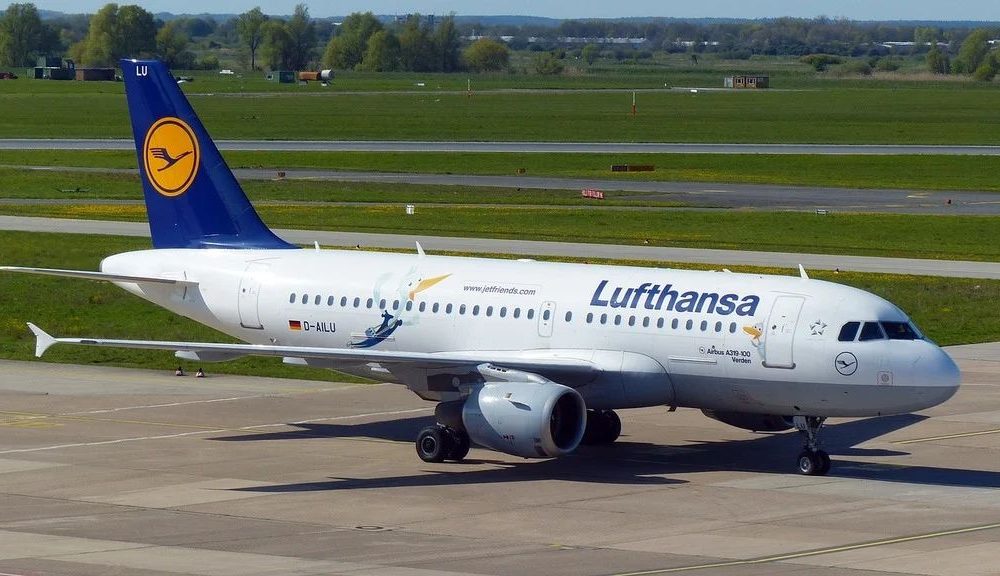

In an airline industry defined by razor-thin margins, regulatory complexity and rising capital intensity, consolidation is a strategic necessity. The question is no longer whether to consolidate, but how. Some groups have pursued federated models, preserving local autonomy at the cost of complexity. Others have chosen a more centralised path, prioritising operational coherence and cost control. Lufthansa Group has clearly aligned itself with the second model and is a classic example of a German approach.
When Lufthansa Group acquires an airline, integration seems to immediately extend to the cockpit of corporate governance itself. Time and again, as subsidiaries are brought into the Group, local chief executives give way to leaders forged within the German parent company. Decision-making migrates toward Frankfurt. Strategic levers are consolidated. What might once have been a loose federation of national carriers is steadily evolving into something closer to a unified industrial platform, with German decision-makers at the helm.
This pattern reflects a long-standing conviction within Lufthansa that centralised governance is the key to scale, discipline and long-term competitiveness. In a sector defined by thin margins, volatile demand and high capital intensity, German-style coordination is seen as necessity, and allows the various subsidiaries to operate in full consistency rather than in nominal competition with each other.
Indeed, this has helped the legacy airline survive post-pandemic volatility and has now put it in a position to determine the overall strategy of the group and its subsidiaries, even though Lufthansa Airlines, the mainline division, actually faces some of the greatest challenges within the group and is itself in need of significant reform.
As the group advances its “Matrix Next Level” and “ONE Airline Group” transformation, one question seems pertinent: can this Made in Germany consolidation model really be reconciled with national sensitivities (and can it be balanced with the financial demands of investors)?
The proven formula of (German) centralisation
Germany’s reputation as a paradigm of organisational prowess does not come from nowhere. Across sectors, a certain commitment to robust structure, centralised, hierarchical decision-making and control are proven values. Lufthansa’s history over the past two decades shows a consistent approach which adheres to this method, and its tracked record of putting German executives in place is a key component of this strategy.
Following the acquisition of SWISS, announced on 22 March 2005 and completed in 2007, leadership gradually shifted toward executives with deep Lufthansa roots. Harry Hohmeister, a German national, became CEO of SWISS in 2009, following on from Swiss German National Christophe Franz. He was followed by Thomas Klühr in 2016, who had begun his career within Lufthansa in 1990. Most recently, Jens Fehlinger, a German executive from within the group, was appointed CEO effective October 1, 2024.
A similar trajectory can be observed at Brussels Airlines. Lufthansa initially acquired 45% in 2009 and completed the full takeover in 2016. While Bernard Gustin remained CEO during early integration, he was replaced in April 2018 by Christina Foerster, a German executive. She was succeeded by Peter Gerber in 2021 and Dorothea von Boxberg in 2023, both German nationals with Lufthansa backgrounds.
At Austrian Airlines, fully acquired in 2009, leadership transitioned over time to German executives such as Kay Kratky and Alexis von Hoensbroech. ITA Airways, in which Lufthansa acquired 41% in January 2025, saw Joerg Eberhart (previously CEO of Lufthansa subsidiary Air Dolomiti) confirmed as CEO on the same day. These alignments underline wider efforts at structural centralisation.
In short, all current CEOs are German (Joerg Eberhard is a German-Italian dual national), executive teams across its airlines are largely German, and, over time, locally appointed chief executives are systematically replaced soon after acquisition by German nationals, who then almost exclusively succeed one another.
To compound this approach, on 12 September 2025, Lufthansa announced a move to bring its airlines “even closer together,” marking a significant shift away from previous relative autonomy for subsidiaries. A detail that did not go unnoticed: the Group’s logo has been changed to incorporate the crane, Lufthansa Airlines’ historic symbol—a clear message that the Lufthansa Group is both led by and centered around Lufthansa itself. As Aerospace Global News reported, from January 2026 “all route planning decisions will be made in Frankfurt,” under a newly established Hub Steering Board overseeing Frankfurt, Munich, Zurich, Vienna, Brussels and Rome.
The transformation is rooted in the broader “Matrix Next Level” initiative. As reported by AInvest, the programme represents a deliberate simplification of what had become a sprawling structure of 14 brands and six hubs. The objective is operational coherence. Network planning, revenue management, fleet allocation and IT architecture are being standardised. Under the “OneIT” initiative, fragmented digital systems are being unified. Under the “Hub Steering Board,” duplication between hubs is to be reduced.
Consequences of financial pressure
If centralisation has long been part of Lufthansa’s DNA, recent financial performance has accelerated its pace. Reuters reported that margins narrowed from 7.6% in 2023 to 4.4% in 2024, with analysts expecting only modest improvement in 2025. Competitors have moved faster. IAG and Air France-KLM have posted stronger profitability metrics in recent quarters. At the September 2025 Capital Markets Day, Lufthansa CEO Carsten Spohr acknowledged: “We definitely lag behind some of our competitors when it comes to financial performance.”
The Group’s natural response to this has been restructuring. No fewer than 30,000 jobs were eliminated at the Lufthansa Group during the Covid-19 pandemic. More recently, Lufthansa Group announced a new restructuring plan involving the cut of 4,000 administrative jobs by 2030, targeting recurring cost savings through digitalisation and automation. The group now aims for an adjusted operating margin of 8–10% from 2028 onward. This transformation aims to generate annual recurring savings of approximately €300 million while improving return on capital employed.
The shift therefore reflects not ideological preference but financial necessity. The earlier decentralised model (although preserving national identities) proved insufficiently agile in a market increasingly dominated by large, integrated airline groups. For Germans, this recalibration resonates with a familiar economic logic: complexity must serve performance. If it does not, it must be simplified.
The fate of new acquisitions
The privatisation of TAP Air Portugal could introduce a concrete test of Lufthansa’s consolidation model, insofar as the Portuguese government has stated its intention to preserve a certain national identity (especially within the executive branch). On 10 July 2025, the Portuguese government overtly stated its intention to keep the TAP brand and effective leadership in Lisbon; signalling that any transaction would need to respect national visibility and operational presence. Yet Lufthansa’s current restructuring suggests that integration, if pursued, would follow clearly defined principles, including the centralisation of leadership in Frankfurt.
For TAP, the implication is structural. Lufthansa has demonstrated in previous integrations that brand identity can remain intact while strategic authority shifts toward group-level governance. The decisive question is therefore whether Lisbon’s expectation of locally anchored leadership aligns with a model in which commercial steering, fleet allocation and administrative functions increasingly operate under central coordination.
Unlike earlier integrations, TAP carries additional geopolitical and transatlantic weight. Its routes to Brazil and Africa give it strategic relevance beyond European point-to-point competition. If Lufthansa were to integrate TAP, it would need to show that centralisation strengthens Lisbon’s hub rather than subordinating it within a Frankfurt-centric system.
The Lufthansa thesis is consistent: scale requires unified governance. The Portuguese decision (with Lufthansa up against IAG and Air France-KLM) will hinge on whether that discipline is seen as an enhancement of competitiveness or a dilution of national control.



 Bitcoin
  Ethereum
  Tether
  BNB
BNB  XRP
XRP  USDC
USDC  Solana
  TRON
TRON  Lido Staked Ether
  Cardano
  Avalanche
  Toncoin