
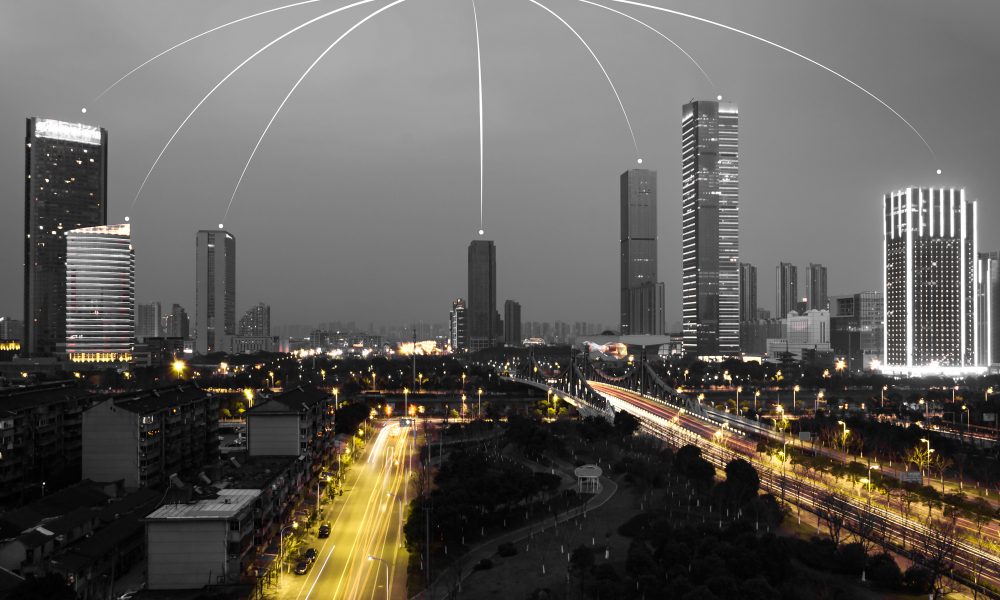
A narrow street near Regent’s Park is lined with construction barriers on a rainy morning in central London. Pedestrians edge around makeshift fencing as workers in reflective jackets lean over an open trench. For the majority of people passing by, it appears to be just another standard infrastructure repair. The streets of London are dug up so frequently that locals hardly ever look. However, there are rumors in the telecom industry that something strange might be happening underground.
It looks like Meta, the company behind Facebook, Instagram, and WhatsApp, is covertly constructing a private fiber-optic ring beneath some areas of London.
| Category | Details |
|---|---|
| Company | Meta Platforms, Inc. |
| CEO | Mark Zuckerberg |
| Headquarters | Menlo Park, California, USA |
| Industry | Social Media, Artificial Intelligence, Digital Infrastructure |
| Known Platforms | Facebook, Instagram, WhatsApp |
| Project Focus | Private fibre-optic network infrastructure |
| Key Location | London, United Kingdom |
| Reference | https://about.meta.com |
The concept is not shocking in and of itself. Tech companies are building their own digital infrastructure more and more. Google has completed the task. It has been accomplished by Amazon. The true industrial backbone of the internet era is now data centers and fiber cables. In this instance, the project’s secrecy and the possibility that some local authorities were unaware of its full scope seem out of the ordinary.
Street construction is typically closely monitored by London councils. Permits are submitted. Road closures are coordinated by utility companies. However, a number of telecom planning experts claim that Meta’s fiber network may have been put together by a patchwork of infrastructure partners and subcontractors, making it challenging to see the whole picture at once. It’s possible that everything is allowed in theory. However, officials and industry observers are left wondering why there hasn’t been a single explicit public announcement.
It’s difficult not to consider how the city’s digital infrastructure has changed while standing close to Old Street, which has long been known as London’s “Silicon Roundabout.” Twenty years ago, government-regulated networks and telecom companies were the primary conduits for the internet. These days, the largest tech firms frequently construct their own data highways.
After all, Meta transports enormous volumes of data around the world on a daily basis. Images uploaded in London may be kept in data centers located thousands of miles away. AI systems require even faster connectivity because they are trained on massive datasets. It would make technical sense to construct a private fiber ring around a major European city.
Even so, the subdued approach draws criticism. In recent years, the company has been reevaluating its physical presence in London. As part of a larger change after the pandemic and the emergence of hybrid work, Meta paid about £149 million in 2023 to terminate the lease on a large office building close to Regent’s Place. The amount of office space may have decreased. However, it seems that investment in infrastructure is going in the other direction.
There has been a discernible change in the behavior of large tech companies. Structures are not required. Pipelines for data are not.
Meta would have direct control over how its services transport data throughout London and beyond with a fiber ring, which is essentially a loop of high-capacity cable connecting data hubs. Traffic can reroute around the loop in the event that one segment fails. Reliability increases. Latency decreases. These milliseconds are important for large-scale cloud computing and AI systems.
However, infrastructure projects—especially those that are underground—rarely remain undetectable for very long.
When roads in the same neighborhoods keep reopening, local authorities usually take notice. Locals pose inquiries. Maps of utilities are updated. Sometimes the discovery is made indirectly, such as when telecom engineers notice that someone else is discreetly setting up cables close by.
The story is also overshadowed by a larger political backdrop.
Digital sovereignty has been a topic of careful consideration for Britain. The necessity of domestic control over vital technology infrastructure is frequently emphasized in reports from government advisers and policy groups. Satellite systems, fiber networks, and data centers are becoming more and more important to the country. It is inevitable for some policymakers to question who actually controls the pipes when a multinational tech company constructs its own network beneath a capital city.
It’s not a brand-new tension. Similar networks were quietly constructed in the past by major telecom companies, who frequently leased access to corporate clients rather than the general public. However, the size of businesses like Meta alters the discourse. For billions of users worldwide, the platform already facilitates social interactions. The company’s influence becomes even more multifaceted if it also starts to control significant portions of the physical infrastructure that carries that data.
However, it’s important to keep in mind that technological infrastructure frequently expands due to pragmatic necessity rather than grand strategy. Bottlenecks are identified by engineers. They install new cables. Every few years, data traffic doubles. Sometimes the quickest solution to a technical issue is what appears to be a covert project.
Nevertheless, the picture of a private fiber ring silently circling London has some symbolic meaning.
Above ground, the city is humming with buses, taxis, and tourists traversing Thames bridges. At night, office towers that house banks, law firms, and startups glow. Beneath it all, invisible networks transport financial transactions, videos, messages, and AI calculations.
As this develops, there’s a sense that the internet’s physical architecture is gradually being privatized, constructed not only by telecom providers but also by the same tech firms whose applications permeate everyday life.
It’s unclear if Meta’s London fiber ring will be a standard infrastructure upgrade or something more ambitious. Not much will be revealed by the cables alone. After all, fiber lines have an almost depressingly unremarkable appearance.
However, the consequences—control, speed, and influence—may extend well beyond the trenches where the cables are being installed.



 Bitcoin
  Ethereum
  Tether
  BNB
BNB  XRP
XRP  USDC
USDC  Solana
  TRON
TRON  Lido Staked Ether
  Cardano
  Avalanche
  Toncoin