
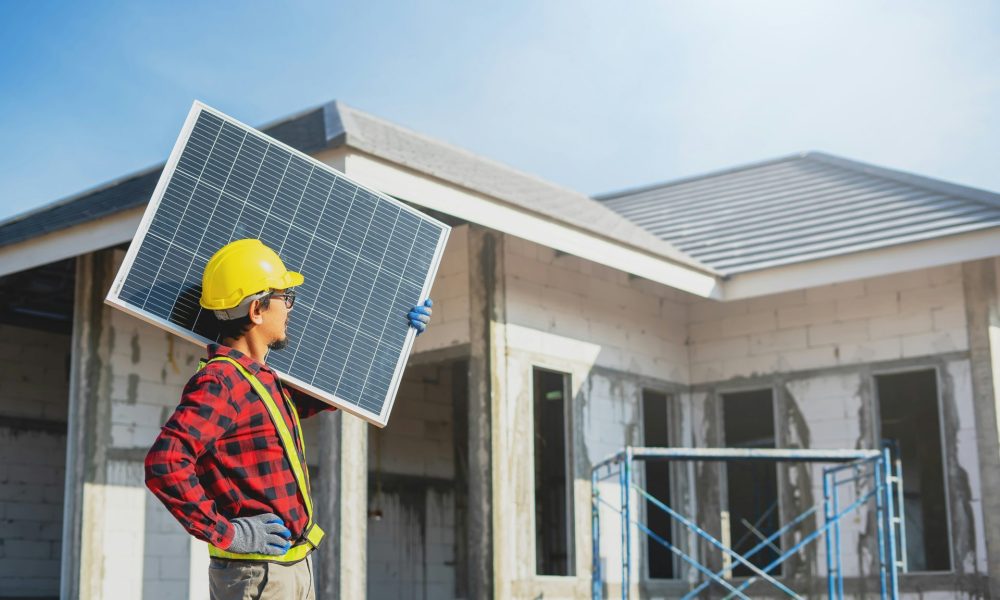
As energy prices continue to shape household budgets across the UK, more homeowners are beginning to rethink how they power their homes. What was once a passive monthly expense is now an active area of focus, with increasing numbers of people looking for ways to reduce reliance on traditional energy suppliers.
At the centre of this shift is solar energy.
Once considered a niche upgrade, solar panels are now becoming a mainstream feature of UK homes. The conversation is no longer just about sustainability. It is about control, predictability, and long-term financial stability.
A Response to Rising Energy Costs
Over the past few years, energy prices have fluctuated significantly, making it difficult for households to plan ahead. Even with government interventions and tariff changes, many homeowners are still facing higher costs than they were just a few years ago.
This uncertainty has led to a growing interest in alternatives.
Solar offers a way to reduce dependence on external suppliers by generating electricity directly at home. While it does not eliminate the need for grid energy entirely, it significantly reduces how much is required on a daily basis.
For many households, that reduction is enough to create noticeable savings over time.
The Move Towards Energy Independence
Beyond cost savings, there is a broader shift happening in how people think about energy.
Homeowners are no longer just consumers. Increasingly, they are becoming producers as well.
By installing solar panels, households can generate their own electricity during daylight hours and use it to power appliances, heating systems, and everyday devices. This creates a level of independence that was not possible with traditional energy models.
Instead of being fully exposed to market changes, homeowners gain more control over their own usage and costs.
Why Adoption Is Accelerating
There are several factors contributing to the rapid growth of solar adoption across the UK.
Technology has improved, making systems more efficient and reliable. Installation processes have become more streamlined, reducing disruption for homeowners. At the same time, awareness has increased, with more people understanding how solar works and what it can offer.
Financially, the case has also become stronger. As energy prices rise, the potential savings from solar become more attractive, shortening the perceived payback period.
Together, these factors are creating momentum that is pushing solar into the mainstream.
More Than Just Lower Bills
While reduced energy costs are a major driver, solar offers additional benefits that are becoming increasingly important to homeowners.
- Greater protection against future energy price increases
- Improved energy efficiency within the home
- A reduced environmental footprint
These benefits combine to create a solution that is both financially and environmentally appealing.
For many households, this balance is what makes solar particularly attractive.
The Importance of Getting It Installed Properly
As solar becomes more common, the quality of installation is becoming a key consideration.
A well-designed system will take into account factors such as roof orientation, shading, and household energy usage. These details have a direct impact on how efficiently the system performs over time.
Working with qualified solar MCS registered electricians ensures that installations meet industry standards and deliver the expected level of performance. This is especially important for homeowners who are investing with long-term savings in mind.
A Long-Term Financial Perspective
One of the reasons solar is gaining traction is that it aligns with a longer-term view of household finances.
Rather than focusing purely on monthly costs, homeowners are starting to consider lifetime value. Solar panels typically last for decades, meaning the savings they generate continue long after the initial investment has been recovered.
This creates a different kind of financial benefit compared to most home improvements.
Instead of simply maintaining or upgrading a property, solar actively contributes to reducing ongoing expenses year after year.
What This Means for the Future
The growth of solar adoption reflects a wider shift in how energy is viewed in the UK.
As more households take steps towards energy independence, the traditional model of relying entirely on external suppliers is beginning to change. While the grid will always play a role, it is no longer the only source of power for many homes.
This shift is likely to continue as technology evolves and awareness increases.
For homeowners, the key takeaway is clear. Solar is no longer just an option for those focused on sustainability. It is becoming a practical and increasingly common way to manage energy costs and gain greater control over household finances.
Final Thoughts
As the UK continues to adapt to changing energy demands, solar is playing an increasingly important role in how homes are powered.
By offering a combination of cost savings, independence, and long-term value, it is helping homeowners move away from uncertainty and towards a more stable and predictable approach to energy use.
For many, that shift is no longer a future consideration. It is happening now.

 Bitcoin
  Ethereum
  Tether
  BNB
BNB  XRP
XRP  USDC
USDC  Solana
  TRON
TRON  Lido Staked Ether
  Cardano
  Avalanche
  Toncoin