Bitcoin
 Ethereum
 Tether
 BNB
 USDC
 XRP
 Solana
 TRON
 Lido Staked Ether
 Cardano
 Gram (prev. Toncoin)
 Avalanche
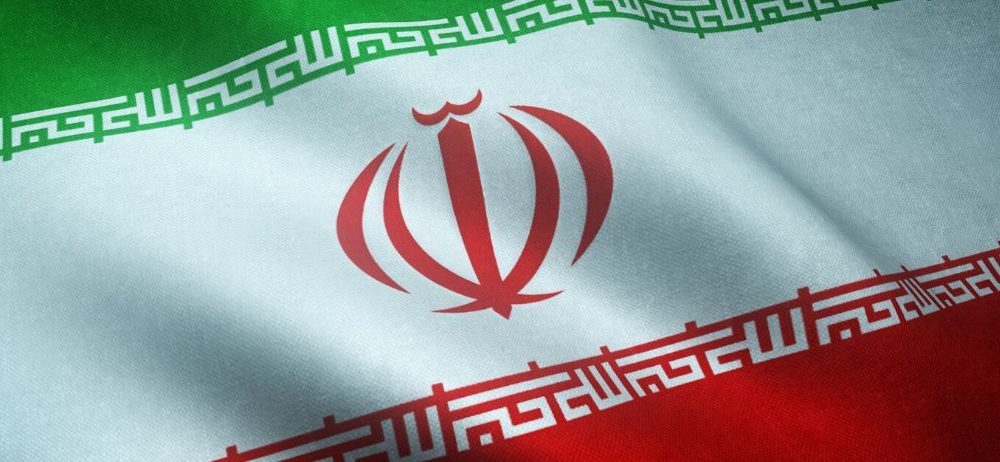
Old stone, new glass, posters, slogans, and the never-ending friction of traffic can all give Tehran the impression of being a city constructed out of layers. The most fundamental question in that mix is: Who is Iran’s president?—has both a neat response and an unclear meaning. Masoud Pezeshkian took office as president on July 30, 2024.
However, the uncomfortable reality that the presidency is real but not the ceiling is evident to anyone who has spent more than five minutes watching Iranian politics. Iran’s system places ultimate power in the hands of the Supreme Leader, leaving the president to oversee daily government operations, including budgeting, cabinet, and the economy, while continuously negotiating the limits of what is allowed. Outsiders may assume that the president will act like a head of state in the West. Iran often penalizes that presumption.
| Item | Important information |
|---|---|
| Current President of Iran | Masoud Pezeshkian (Al Jazeera) |
| In office since | July 30, 2024 (sworn in) (Al Jazeera) |
| Why he matters now | He is part of Iran’s constitutional leadership structure during a Supreme Leader transition, amid escalating regional conflict (TIME) |
| Background | Physician (heart surgeon) turned politician; reform-leaning profile in Iran’s factional spectrum (Wikipedia) |
| Official reference website | Iran’s presidential portal: president.ir (President.ir) |
Pezeshkian’s ascent was ironic in its own right. He came into the presidency with a reputation for reform—less ideological theater, more talk about everyday life, and the kind of promises that seem modest until you realize where they’re coming from. He was a heart surgeon by training. Whether he wishes to make changes is not the question. The issue is whether Iran’s apparatus enables him to translate intention into policy without being silently confined.
That question is sharper now because of the timing. Ayatollah Ali Khamenei, the supreme leader of Iran, was killed in U.S.-Israeli strikes in recent days, according to several major outlets, plunging the nation into a difficult succession period. Under such circumstances, the president’s job description abruptly shifts from one of ordinary governance to that of a constitutional hinge, one of the public figures tasked with maintaining the state’s stability while the actual decisions are made behind closed doors.
An interim leadership arrangement, comprising President Pezeshkian and senior figures, is a detail that frequently appears in reports. Its purpose is to carry out specific tasks until a new Supreme Leader is chosen. It’s still unclear how resilient or cohesive that arrangement is under pressure, and the wording differs depending on the outlet. However, the fundamental idea remains: Pezeshkian is more than just “the president” in a formal sense. At a time when stability is a limited resource, he is, at the very least, one of the system’s stabilizers.
At this point, the initial query—who is Iran’s president—begins to seem more like a doorway than a solution. due to the fact that Iran’s presidency is both strong and limited, open and monitored. Pezeshkian can try to direct economic policy, appoint ministers, and set domestic priorities, but the security state, the clerical vetting system, and the Revolutionary Guards’ gravitational pull restrict how far a president can go. As one observes that dynamic, it seems as though Iran’s elected politics operate similarly to a pressure valve, releasing heat without ever allowing the boiler to be dismantled.
And the heat is evident right now. Following Khamenei’s passing, reports highlight the possibility of retaliation and escalation, including worries about physical or cyberattacks connected to Iran or related organizations. Even commonplace remarks feel calibrated in this environment, where a televised speech can sound reassuring but also read like an internal memo directed at rival power centers.
Supporters of Pezeshkian once presented him as a pragmatic individual who could discuss issues such as wages, the cost of living, sanctions pain, and how routine tasks in Tehran can feel like stressful math. His detractors frequently perceived a well-known script: a gentle façade for a strict system. Both points of view may be accurate. The presidency can be constrained while still having an impact. Even though it serves as the nation’s front office, it still lacks control over the structure.
A single, telling image: the official, polished presidential website, which uses formal language to publish state meetings and diplomatic lines. However, the broader narrative—regional shocks, military calculations, succession politics—moves with a rougher texture that defies easy categorization in press releases. Iran in miniature is an example of this contrast: a state that uses formal communication and power structures to govern.
Who is Iran’s president, then? Pezeshkian Masoud. However, the answer to the question of “who runs Iran” will vary depending on the week and whether you’re focusing on the men in uniform, the streets, or the constitution. Given the current collision between succession and conflict, the presidency may become more visible than it has been in years. After the immediate crisis is over, it’s also possible that the system reverts to its previous practices. In Iran, people rarely offer certainty, and when they do, it’s usually safer to be skeptical.