Bitcoin
  Ethereum
  Tether
  BNB
BNB  USDC
USDC  XRP
XRP  Solana
  TRON
TRON  Lido Staked Ether
  Cardano
  Gram (prev. Toncoin)
  Avalanche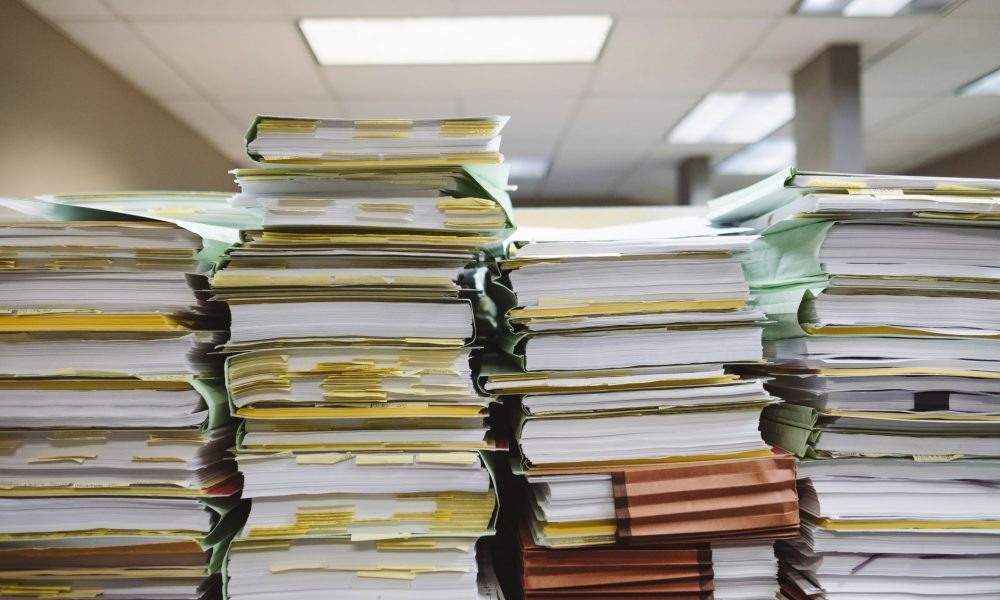
Paperwork usually becomes awkward long before it becomes excessive.
Most people do not wake up to a desk covered in documents. What happens instead is slower and less obvious. A form gets left out because it may still be needed. Meeting notes are dropped into a drawer with the intention of sorting them later. A printed report is folded into a bag after a meeting, while older papers are moved somewhere safer but less visible. None of that feels especially chaotic in the moment. The problem only shows up when one document suddenly matters and there is no clear place to look first.
That is often where things start to slip a bit. Not because there is too much paperwork, but because active documents, reference papers and things that simply should not be thrown away all begin to blur into the same pile.
For a lot of people, that middle ground is the real issue. Some papers are still in use. Others just need to be kept accessible. Neither really belongs in long-term storage, but leaving them loose is what makes them difficult to track.
Why One Folder Often Stops Being Enough
A standard folder is fine when the aim is simply to keep documents together.
The difficulty comes later, once the contents begin to build. Notes, letters, invoices, printed forms and updates all end up in the same place, which means the folder starts to act more like a temporary holding point than any real system. Everything is technically stored, but not in a way that makes retrieval easy.
At that point, structure matters more than storage. For paperwork that still needs to stay within reach, using expanding file folders gives documents separate sections without turning a simple filing problem into something more complicated. Papers can be grouped in a way that still makes sense a week or a month later, which is why formats like these are still widely used across office supply retailers such as Office Stationery.
The Kinds of Documents People Lose Track of Most
The papers that cause the most frustration are usually the ordinary ones.
In a small office, that can be supplier invoices, printed order forms, meeting notes or internal paperwork that gets referred to more than once during the month. None of it looks important enough to file formally at first, but it still needs to stay accessible. That is how documents end up split between trays, drawers, shelves and laptop bags.
At home, the pattern is much the same. School letters, warranty details, car documents, insurance paperwork and household forms rarely feel urgent until they suddenly are. The issue is not that there are hundreds of them. It is that they build up across different places and are only noticed when something needs to be found quickly.
Students often run into a similar problem from the other direction. Lecture handouts, revision notes, reading extracts and draft coursework can stay manageable for weeks, then become difficult to separate once deadlines start to overlap. The paperwork itself has not changed much. What changes is how quickly it needs to be retrieved.
There is nothing unusual about those situations. Most paperwork problems start like that.
Why A4 Still Matters in Practice
A4 remains the default format for most printed paperwork, and that affects how easy documents are to live with.
Once papers are folded to fit smaller storage, they become less useful. Corners curl, pages lose shape and anything that needs to be checked, scanned or handed over later starts to feel more awkward than it should. Keeping paperwork flat sounds minor, but it makes a difference when documents are handled repeatedly over time.
An A4 expanding file is practical for that reason. It keeps reports, forms and records flat while still separating them into sections, which is often enough to stop paperwork drifting back into one mixed stack. For someone carrying meeting papers, holding onto term-time school documents or keeping household records in one place, that makes day-to-day handling easier.
Accordion File, Concertina File and Expanding File
People often use different terms for what is broadly the same idea.
Accordion file, concertina file and expanding file usually refer to a folder divided into multiple sections for sorting paperwork. In practice, the name matters less than how well the file suits the documents being stored. A file with too few sections quickly becomes another stack in disguise. One with clear compartments, usable tabs and enough capacity tends to hold up better in real use.
What Makes One Genuinely Useful
The difference between a file that helps and one that gets ignored is usually practical.
Clear Sections
Papers are easier to keep in order when there is an obvious place for each group.
Tabs That Can Be Read Quickly
A-Z tabs or numbered tabs make it easier to return documents without searching through everything.
Enough Room for Regular Use
Some files work for occasional storage, others hold up better when papers are added and removed throughout the week.
A Secure Closure
An elastic closure helps keep everything in place if the file is being carried around.
Portability
For paperwork that moves between locations, a portable file organiser is often more useful than something that stays on a shelf.
A Simple Way to Keep Active Paperwork Under Control
A lot of paperwork does not need archiving. It just needs somewhere better to sit in the meantime.
That is one reason this type of filing still works. It deals with the awkward category of documents that are active enough to stay close at hand, but important enough that they should not be left drifting between desks, drawers and bags.
For most people, that is usually enough,