
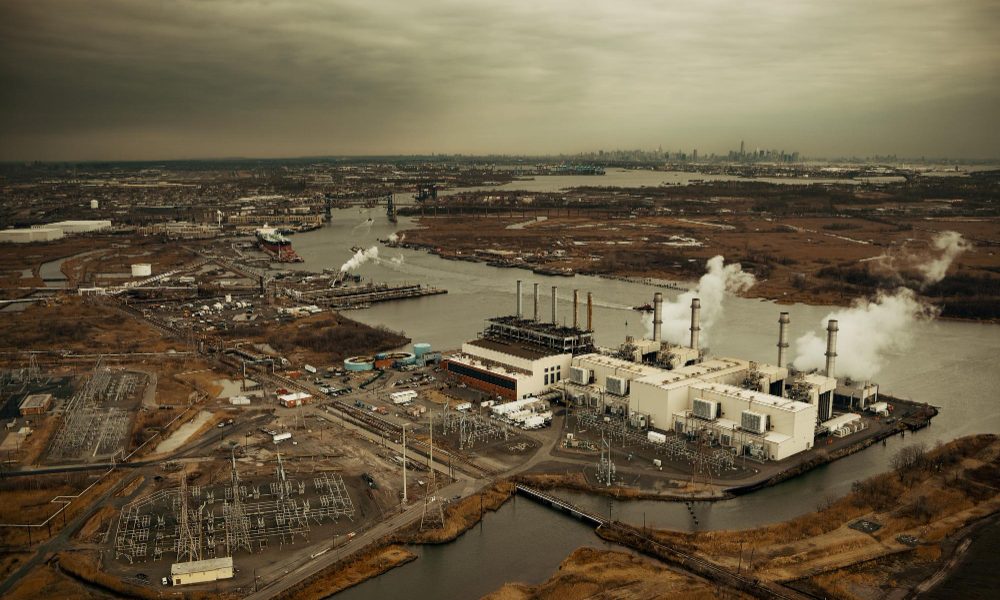
Over 150 tankers are anchored somewhere in the Gulf of Oman. They’re not disassembled. They’re not holding out for cargo. They are awaiting a response to a question that has never been addressed on this scale in the global energy market: when will it be safe enough to relocate? The world’s most important oil route has become less of a shipping channel and more of a parking lot since Iran closed the Strait of Hormuz on March 2 and marine insurers started removing war-risk coverage days later. In late March, the effects were already permeating supply chain desks and commodity markets, but they haven’t yet reached grocery stores and gas stations. They will.
It is truly hard to comprehend the statistics underlying this crisis. Approximately 20 million barrels, or 20% of the world’s petroleum liquids, pass through the Strait of Hormuz every day. In contrast, about 4 to 5 million barrels per day were taken off the market during the 1973 Arab oil embargo, which quadrupled oil prices, disrupted supply chains throughout the Western world, and caused recessions in several nations.
| Crisis Trigger | US military strikes on Iran beginning February 28, 2026; Iran closes Strait of Hormuz March 2, 2026 |
|---|---|
| Strait of Hormuz | Handles ~20–21% of global petroleum liquids (approx. 20 million barrels/day); effectively closed as of March 2026 |
| Dual Chokepoint Risk | Hormuz + Suez/Bab el-Mandeb corridor both compromised simultaneously — first time in modern history; covers ~1/3 of seaborne crude trade |
| Oil Price Range (Forecasts) | Brent above $100 at current disruption; UBS: $120+; Goldman Sachs: $120–$150 prolonged; Deutsche Bank worst-case: $200; JPMorgan: $120 if war exceeds 3 weeks |
| Tankers Affected | 150+ tankers anchored in Gulf waters; 5+ struck; Stena Imperative hit by two projectiles near Bahrain |
| Insurance Crisis | Gard, Skuld, NorthStandard cancelled war-risk coverage effective March 5; London P&I Club, American Club, Steamship Mutual, Swedish Club followed |
| Comparison to 1973 | 1973 embargo: 4–5M bpd lost, prices quadrupled. 2026 crisis: 13–20M bpd at risk — 3–4× the scale of the 1973 shock |
| Recession Threshold | BlackRock CEO Larry Fink: “steep and stark” recession if oil hits $150; The Economist: 2 months at $140 pushes parts of global economy into slump |
| Shipping Rerouting | All 5 major container lines (Maersk, MSC, CMA CGM, Hapag-Lloyd, COSCO) suspended Hormuz transits; rerouting via Cape of Good Hope adds 2–3 weeks |
| Food & Fertilizer Risk | 1/3 of global fertilizer trade passes through Hormuz; agricultural supply chains directly exposed |
| IEA Warning | Fatih Birol (IEA): crisis worse than twin 1970s oil shocks and Russia-Ukraine war combined; “no country immune” |
| Official Reference | thomsonreuters.com — US-Iran War Economic Impact |
If it continues, the current disruption is estimated to be between 13 and 20 million barrels per day. That’s not the 1973 crisis on a bigger scale. This type of event is structurally distinct. No nation would be immune, according to Fatih Birol of the International Energy Agency, who described it as worse than the twin oil shocks of the 1970s and the conflict between Russia and Ukraine put together. Officials in his position don’t make that claim lightly.
Brent crude surpassed $100 per barrel as the crisis worsened, up from about $60 at the beginning of 2026. Oil prices reacted quickly but, thus far, not catastrophically. It is unsettling how wide the range of forward projections is. $120 seems reasonable to UBS. In a protracted conflict, Goldman Sachs models $120 to $150. If the conflict lasts longer than three weeks, JPMorgan puts $120 on the table. The worst-case scenario for Deutsche Bank is close to $200.
In late March, BlackRock CEO Larry Fink, whose company oversees assets in practically every area of the world economy, provided his own benchmark: if prices hit $150 per barrel, the world will experience what he described as a “steep and stark” global recession. “Profound implications,” he stated. Even before the Gulf crisis started, consumer confidence in the US was already close to all-time lows, according to The Economist, which has a tendency toward understatement. The Economist calculated that two months at $140 would push significant portions of the global economy into a slump.
The dual chokepoint issue, which has no true modern precedent, is what distinguishes this specific moment from previous oil shocks. The closure of Hormuz was not an isolated event. The Houthis have simultaneously compromised two of the most important maritime routes in the world after declaring they would resume attacks on the Suez/Bab el-Mandeb corridor. Approximately one-third of the world’s seaborne crude trade is handled by these two routes combined.
The Hormuz transits have been suspended by all five major container shipping lines: Maersk, MSC, CMA CGM, Hapag-Lloyd, and COSCO. Instead, they are rerouting around the Cape of Good Hope, adding two to three weeks to voyage times and consuming already-stressed vessel capacity. Oil shipments will not be the only ones impacted by the rerouting delays. Consumer electronics, components, finished goods, and anything else that passed through those corridors will cascade through trade lanes that have no direct connection to the Middle East.
Perhaps the most overlooked aspect of the crisis is the insurance withdrawal. The kind of sustained firepower Iran probably cannot sustain against US naval superiority would be needed for a complete military blockade of Hormuz. However, insurance firms don’t wait for assurance. With effect from March 5, Gard, Skuld, and NorthStandard terminated their war-risk coverage. Within twenty-four hours, Steamship Mutual, Swedish Club, American Club, and London P&I Club all followed.
Commercial traffic ceases when ships are unable to obtain insurance, not because there is a physical barrier but rather because the liability of moving is too great for any reasonable actor to bear. While markets concentrate on price charts, that is the mechanism operating silently in the background. As operations stabilize, tanker traffic may resume under US Navy escort. Additionally, it’s possible that the insurance market will continue to be unfavorable for weeks following any de-escalation, delaying the recovery that every economy will be eager for.
There should be more focus on the food and fertilizer angle than there is now. The Strait of Hormuz is traversed by one-third of the world’s fertilizer trade. The link was made clear by Egyptian President al-Sisi, who warned that oil prices above $200 would harm both the global food and energy markets, creating a compound vulnerability that disproportionately affects developing economies.
If disruptions persist into the summer planting and shipping season, nations already dealing with inflationary pressure, currency strain, and limited fiscal capacity to subsidize fuel costs will face an especially harsh combination. For example, Egypt lost about $9 billion in revenue due to the Gaza conflict. A complete shutdown of Hormuz is a completely different order of magnitude.
Whether the most dire scenario—a prolonged closure measured in months rather than weeks—actually occurs is still up in the air. There are several reasons to believe that the worst-case scenario remains hypothetical: Iran’s capacity to maintain a full blockade is constrained, OPEC spare capacity exists on paper, US military capability in the Gulf is real, and strategic reserves can be used.
However, even in the absence of a formal blockade, the moderate scenario—in which intermittent tanker strikes and insurance withdrawals produce a long-lasting chilling effect on commercial traffic—is already taking place. In addition to keeping oil prices high, that scenario hinders international trade, fuels inflation, and puts the patience of central banks that have been working to lower prices in recent years to the test. As one observes the tankers anchored in the Gulf of Oman and the insurance cancellations occurring throughout Lloyd’s of London, it is difficult to avoid the impression that the prices people pay at the pump and checkout line do not yet accurately reflect the conditions in those waters.



 Bitcoin
  Ethereum
  Tether
  XRP
XRP  BNB
BNB  USDC
USDC  Solana
  TRON
TRON  Lido Staked Ether
  Cardano
  Avalanche
  Toncoin