
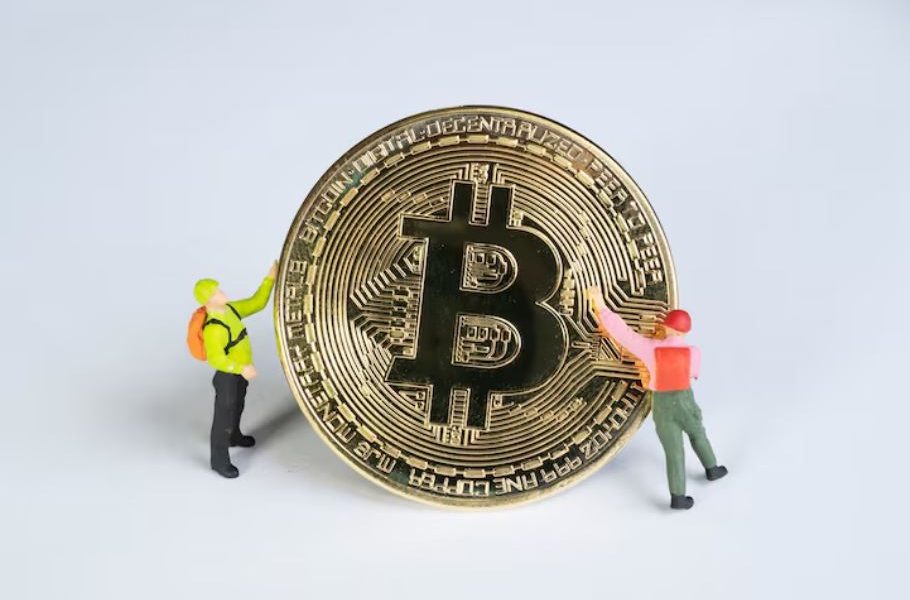
The stereotype of the home Bitcoin miner—the type seen in early documentaries with a few machines running in a spare bedroom—has subtly faded into oblivion. The machines are probably unplugged, sitting under a sheet, collecting dust if you walk into any of those bedrooms today. Simply put, the math is no longer valid. The small operator stopped participating in Bitcoin and turned into a spectator somewhere between the most recent halving and the unrelenting increase in network difficulty.
The figures paint a terrible picture. The average all-in cost of mining a single Bitcoin in 2026 is estimated by industry experts to be around $90,000. On many days, the spot price has uncomfortably hovered near or below that amount. The spread is still livable for miners in Iceland or Texas who have access to inexpensive hydropower. It’s a donation exercise for someone using residential electricity rates to run a few S19s in their garage. The difficulty keeps increasing, the hash rate keeps rising, and the bar rises slightly every two weeks.
| Topic | The Bitcoin Mining Death Spiral |
| Underlying Asset | Bitcoin (BTC) |
| Network Algorithm | SHA-256, Proof of Work |
| Block Time Target | ~10 minutes |
| Difficulty Adjustment | Every 2,016 blocks (≈14 days) |
| Total Supply Cap | 21 million coins |
| Last Coin Expected | Approximately year 2140 |
| Average Mining Cost (2026) | ~$90,000 per BTC (industry estimates) |
| Required ASIC Efficiency | Below 15 J/TH for profitability |
| Profitable Energy Cost | Under $0.05 per kWh |
| Dominant ASIC Brands | Bitmain (Antminer), MicroBT (Whatsminer) |
| Block Reward (Post-2024 Halving) | 3.125 BTC |
The term “the mining death spiral,” which is frequently used in cryptocurrency circles, is typically written off as pure FUD by maximalists. They’re not wholly incorrect. When miners give up and cease directing their hash power toward the network, the protocol’s self-correcting mechanism, the difficulty adjustment, lowers the cost of mining. The reasons why a true death spiral is more theoretical than actual have been covered in great detail by CoinShares analysts. However, the phrase isn’t always used in reference to the collapse of the network. They are discussing a more focused topic. They are discussing themselves.

What appears to be taking place is more akin to a gradual industrial consolidation than a death spiral. The publicly traded companies that currently dominate the conversation are Marathon Digital, Riot Platforms, and CleanSpark. They can purchase ASICs at favorable prices because of their scale, access to capital markets, and long-term power purchase agreements. They are able to ride out drawdowns by keeping mined Bitcoin on their balance sheets. None of that is available to the home miner. The home miner unplugs and returns to a day job when the price drops. The equipment is already outdated when it spikes.
The cultural irony in this situation is difficult to ignore. The idea that anyone with a CPU could join the network and earn a fair share gave rise to Bitcoin, a sort of cypherpunk libertarianism. In those early forum posts, Satoshi Nakamoto outlined his initial vision, which assumed a wide distribution of mining power. Instead, what has surfaced is similar to the very system from which Bitcoin was intended to break free. The majority of the hash rate is currently controlled by a small number of powerful companies that are regulated and becoming more and more integrated with the conventional energy and financial markets. Something seems to have been lost in translation.
Naturally, the logic of economics is harsh. Mining is still profitable if you can run sub-15 J/TH machines at scale and obtain electricity for less than five cents per kilowatt hour. It doesn’t if you can’t. The block reward was reduced to 3.125 BTC by the 2024 halving, and it will be further reduced by the subsequent one. Eventually, transaction fees are meant to make up the difference, but that will be an issue for 2140 or so. Meanwhile, the squeeze keeps going.
It’s still unclear if the small miner is still necessary for Bitcoin to maintain its ideology or if it has already transcended that need. The institutional model appears to be acceptable to investors. Some of the older people—those who genuinely held 2009 coins—are less talkative than they once were. As you watch this happen, you get the impression that decentralization was successful for Bitcoin. It simply couldn’t surpass economics indefinitely.



 Bitcoin
  Ethereum
  Tether
  BNB
BNB  USDC
USDC  XRP
XRP  Solana
  TRON
TRON  Lido Staked Ether
  Cardano
  Gram (prev. Toncoin)
  Avalanche