
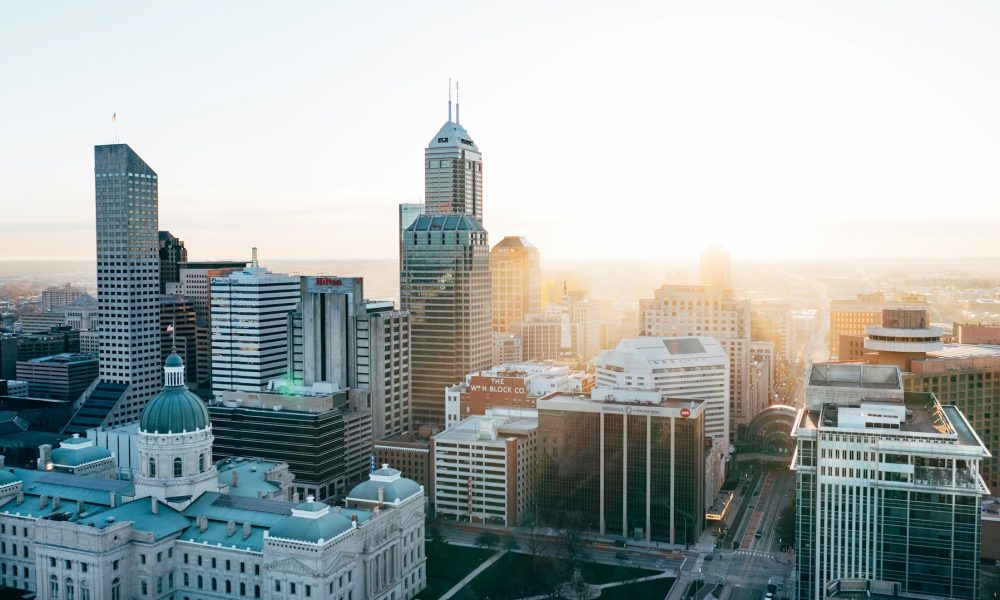
Industrial vacancy rates hit 16 percent in 2024. That’s a number worth sitting with for a moment — and it tells the story of how Indianapolis commercial real estate got here.
Audie Tarpley and the Dillon Construction Group (DCG) team have been watching this market closely, and the picture heading into 2026 looks considerably brighter. Per the KeyCrew Journal, vacancy has dropped to 9.5 percent as of March 2026. Still not perfect, but the direction is right.
So how did it get so messy to begin with?
Blame the pandemic — specifically, what it did to supply chains. When COVID-19 scrambled global logistics, companies panicked and grabbed warehouse space wherever they could find it, stacking up backup inventory near the retail markets they served. Smart move at the time. But once supply chains stabilized and inventory levels normalized, those same companies found themselves locked into leases for space they no longer needed. Meanwhile, new industrial construction kept rolling. Supply climbed. Demand softened. The imbalance that followed took years to correct, and the market is still working through the tail end of it.
Large distribution centers remain the biggest transaction driver in the industrial segment. But here’s where it gets interesting: the flex market has quietly outperformed expectations.
Flex properties — industrial spaces under 10,000 square feet, split between warehouse and office use — have become a magnet for small-venture creators and first-time entrepreneurs. These spaces lease on shorter terms, typically two to five years, which suits businesses that need room to grow without locking themselves into a decade-long commitment. Low overhead, manageable risk, easy exit if needed. The demand has been real and sustained.
On the office side, the story is one of consolidation and reinvention. A wave of adaptive reuse has converted older office buildings into residential units, mixed-use developments, and co-working environments. Tenants who remain in traditional office space have gravitated hard toward Class A properties — centrally located, transit-accessible, loaded with amenities like flexible leasing, conference facilities, and shared work areas. Average buildings in average locations? Struggling. Premium buildings in the right spots? Doing just fine.
DCG has been active on both fronts.
Audie Tarpley and the team completed a next-generation office project in 2025 — the Merchants Bank HQ2 in Carmel, Indiana. The 11,000-square-foot, five-story building includes a fitness center, social lounges, rooftop deck, and a first-floor parking garage. A pedestrian bridge connects it to the existing HQ1 building. It’s the kind of project that reflects exactly what the market is asking for: quality, amenities, and a location that actually makes sense.
DCG also wrapped up the Riverfront at Promenade Park in Fort Wayne — 340,000 square feet combining 228 apartment units, a parking garage, and ground-level retail. Mixed-use demand has come back with some force, and projects like this one show why developers are paying attention.
Indianapolis is increasingly cited as a recovery model — moderated supply, quality-focused demand, and design flexible enough to meet tenants where they are. New spaces are being built for realistic commitments: tenants who know what they need, for how long, and at what cost.
For companies like DCG, that’s not a constraint. It’s an opportunity.



 Bitcoin
  Ethereum
  Tether
  BNB
BNB  USDC
USDC  XRP
XRP  Solana
  TRON
TRON  Lido Staked Ether
  Cardano
  Gram (prev. Toncoin)
  Avalanche