
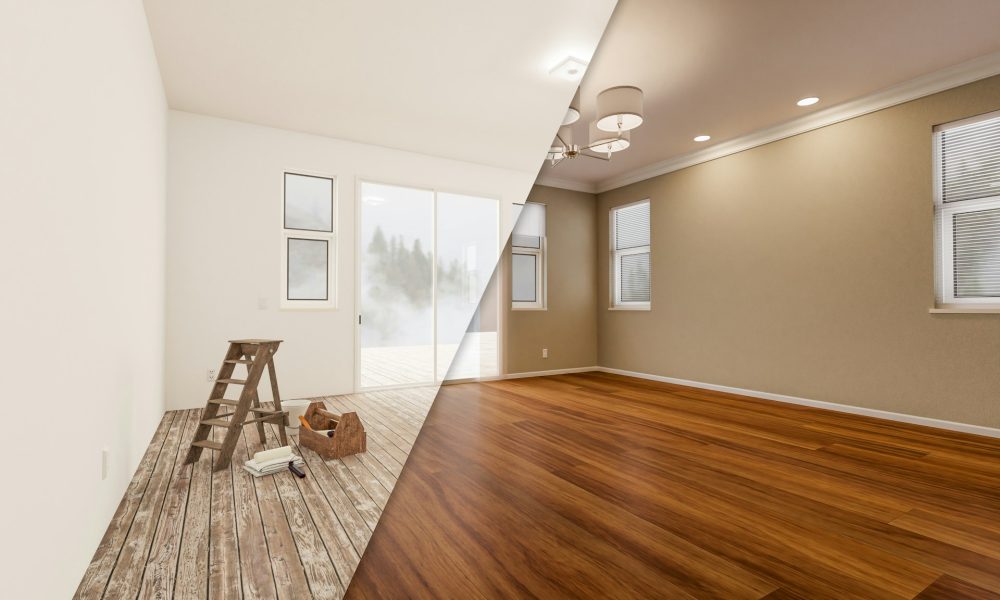
Something’s shifted in how UK homeowners approach renovations. It’s not just about making a space look good anymore — it’s about making it last.
Modern property renovation trends are moving away from purely cosmetic upgrades. Rising costs, stubborn inflation, and higher mortgage rates have pushed households into thinking harder about where every pound goes. The result? Material selection has quietly become one of the most financially consequential decisions in any renovation project.
Here’s the thing: buyers aren’t just walking into showrooms and pointing at the nicest tiles. They’re researching product lifespans, comparing sustainability credentials, and calculating maintenance costs in the future. That’s a fundamentally different mindset than a decade ago.
Spending Smarter, Not Just More
The UK renovation market has stayed surprisingly active despite broader economic jitters. But the money is moving differently now.
Homeowners treating their property as a long-term asset — not a short-term flip — are driving demand for materials that hold up under real-world conditions. Kitchens. Bathrooms. Flooring. Interior finishes. Each is being evaluated not just for looks, but for how it performs after five years of daily use.
Slower housing mobility has accelerated this trend. When moving isn’t a viable option — and for many households right now, it isn’t — you improve what you’ve got. And if you’re improving it, you want it done properly.
Developers in the mid-range and premium housing sectors are picking up on this too. What used to be considered an upgrade is now an expectation. Durable surfaces and energy-conscious materials are being baked in as standard, not sold as extras.
The Interior Finishing Factor
Interior finishes — once the last-minute decision after the big-ticket items were sorted — are getting serious attention now.
Construction suppliers report stronger demand for products that strike the right balance between contemporary design and practical performance. That’s especially true in high-traffic, moisture-prone areas where cheaper materials fail fast and visibly.
Many homeowners researching options online now browse through detailed windowsill catalogue selections — not just for aesthetics, but to compare durability, surface consistency, and how well a product actually holds up in modern interior schemes. It sounds like a small thing. It isn’t. This kind of pre-purchase research represents a broader shift in buying behaviour: specification comparisons, sustainability data, and lifespan information are now influencing decisions that showroom visits used to handle on their own.
The rise of hybrid working has only added to this. Homes now function as offices, social spaces, and living environments simultaneously. That’s significantly more wear. Materials need to keep up.
What Developers Are Prioritising
Competition is fierce across the residential development market. Developers who once viewed premium materials as cost items are increasingly viewing them as commercial strategy.
The calculus is straightforward: higher upfront material costs, but lower long-term repair liability and stronger buyer satisfaction. In build-to-rent and premium apartment schemes — where heavy occupancy turnover is the norm — this trade-off makes clear financial sense.
Supply chain pressures haven’t gone away either. That’s pushed procurement teams toward materials offering consistent quality at commercially realistic price points. Not the cheapest. Not necessarily the most expensive. The most reliable.
Sustainability Has Moved From Nice-to-Have to Expected
Environmental considerations aren’t a side conversation anymore. They’re central to modern property renovation trends and increasingly tied to property value in ways buyers actively factor in.
Recyclable materials, responsibly sourced timber, low-emission finishes — demand for all of it is climbing. Government energy efficiency requirements are pushing things in the same direction. And as energy costs remain elevated, buyers are connecting operational efficiency to long-term savings in ways they simply weren’t a few years ago.
Manufacturers who’ve figured out how to combine sustainable production with premium design standards are the ones gaining ground. That combination — credible sustainability credentials plus high performance — is where market momentum currently sits.
The question isn’t whether material quality matters anymore. It clearly does. The real question is which manufacturers can consistently deliver both performance and environmental responsibility at scale — because that’s precisely what the market is now demanding.


 Bitcoin
  Ethereum
  Tether
  BNB
BNB  XRP
XRP  USDC
USDC  Solana
  TRON
TRON  Lido Staked Ether
  Cardano
  Toncoin
  Avalanche