
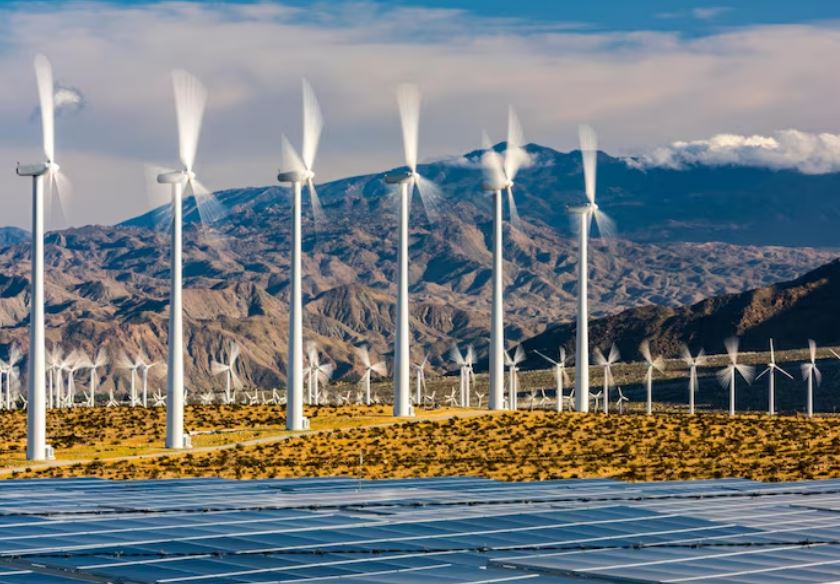
When the government decides an industry is unwanted, a certain silence descends upon it. That has loomed over Mexico’s renewable energy industry for the majority of the past six years. Permits stalled for solar developers who had invested heavily in projects during the 2016 and 2017 auctions. Half-built wind farms sat half-built. Executives from other countries ceased to fly in. At conferences, you heard the half-joking statement that Mexico had evolved into a destination for unwinding rather than initiating renewable energy investments. Almost overnight, that attitude has shifted.
Right now, $4.75 billion is being discussed. Energy Minister Luz Elena González announced late last year that private companies have committed to 20 new solar and wind projects in eleven Mexican states. In Campeche, Yucatán, Oaxaca, Veracruz, Querétaro, and other places, there are fifteen solar plants and five wind farms. The majority are anticipated to turn on in 2028 or 2029. By international standards, it isn’t a startling amount—Texas alone consumes more than that in a single year of grid spending—but for Mexico, following years of stagnation, the situation is different.
One piece of legislation, President Claudia Sheinbaum’s National Energy Reform, which was passed in March of last year, is responsible for the change. The math is simple and clever from a political standpoint. The state-owned CFE must provide at least 54% of the grid’s electricity. Private generators have access to the remaining 46%. While subtly acknowledging what practically everyone in the industry already knew—that CFE alone could not build out the grid Mexico needs—it maintains the nationalist optics upon which her predecessor based his energy doctrine. As you watch it happen, you get the impression that Sheinbaum had been waiting to reach this compromise.
It’s interesting to see who is attending. 98 projects were submitted when the Energy Ministry issued its initial call for proposals in October. Sixty proposals seeking about six times the capacity the government had requested were received in response to the second call in February. Invenergy made a submission. AES and London-based Cubico followed suit. In the December priority round, contracts were awarded to the Danish fund Copenhagen Infrastructure Partners, a name that was uncommon in Mexico. Iberdrola is back at the table after being embroiled in regulatory disputes during the AMLO years. Reporters were informed by Gilberto Sánchez of the National Solar Energy Association that his organization has been receiving meetings since February, primarily from South American developers with local expertise and European businesses in smaller markets. He claimed that the appetite brought back memories of the auction era.
The numbers that are being assessed speak for themselves. Currently, an estimated 270 billion pesos, or nearly $15.7 billion, in potential investment is being evaluated for about 10 GW of generation and 3 GW of storage. During its initial phase, the mixed-investment plan with CFE alone attracted 220 expressions of interest for 38 GW, which ultimately reduced to 56 projects from 40 companies. Compared to what Mexico has seen in years, this flood is unprecedented. Preliminary expressions and signed contracts are not the same thing, so it remains to be seen if all of that capital really shows up.
The discussion becomes more technical and likely more illuminating when it comes to storage. Prioritizing areas where the grid faces the greatest challenges, the Ministry is mandating an initial 935 MW of battery capacity with three hours of autonomy. By combining solar and wind energy with batteries, Mexico is able to do something it was previously unable to do: move clean energy production into the evening peak, when Monterrey’s and Mérida’s air conditioners are most active. Technically, it’s a minor issue, but it drastically alters the economics of a grid that relies heavily on renewable energy.
However, it’s best to keep optimism in check. The percentage of clean energy in Mexico is about 22%. 40% is the goal for 2030. The new regulations—financial guarantees, required interconnection commitments, and revocation risk for missed deadlines—are more stringent than what developers had to deal with ten years ago. That’s a huge improvement in less than five years. Everything is centralized through a single channel under the Single Window for Strategic Projects, which sounds effective until it becomes a bottleneck. That’s exactly what a number of developers worry about in private.
It’s also difficult to ignore the timing. Through the 2026–2028 Action Plan, Mexico and Canada have been subtly strengthening their cooperation as Washington retreats from its climate commitments under the Trump administration. It’s almost opportunistic in the best way. Mexico has the land, the sun, the wind, and now, at last, the political cover to allow foreign capital to expand upon them. Decisions that have not yet been made will determine whether that results in 22 additional gigawatts by 2030 or another warning about Mexican energy policy. As of right now, the quiet has vanished, meetings are taking place, and proposals are piling up.



 Bitcoin
  Ethereum
  Tether
  BNB
BNB  USDC
USDC  XRP
XRP  Solana
  TRON
TRON  Lido Staked Ether
  Cardano
  Gram (prev. Toncoin)
  Avalanche