Bitcoin
  Ethereum
  Tether
  BNB
BNB  USDC
USDC  XRP
XRP  Solana
  TRON
TRON  Lido Staked Ether
  Cardano
  Gram (prev. Toncoin)
  Avalanche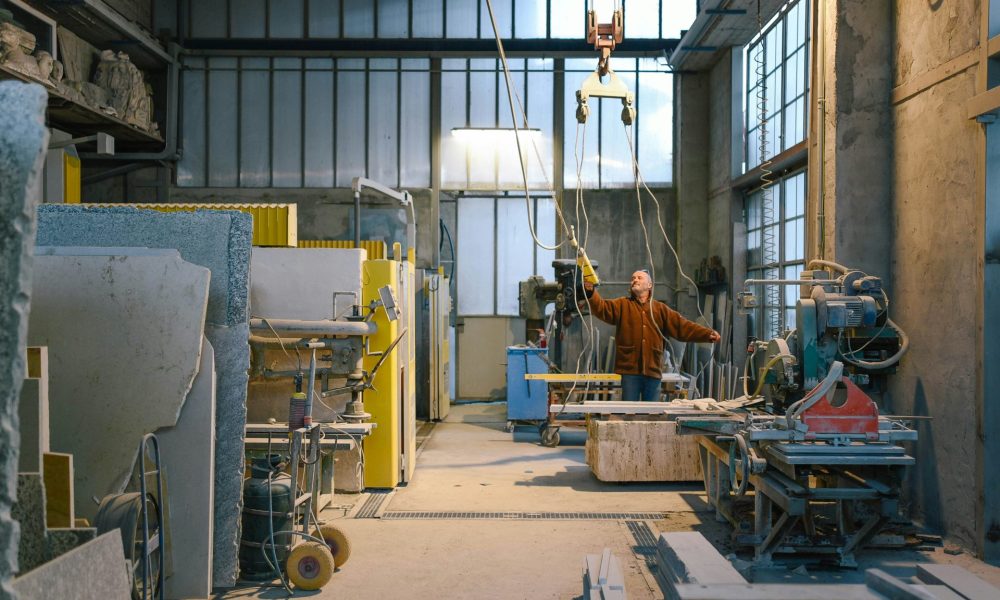
Ask most people to name a construction job and you’ll get the usual suspects: bricklayer, plumber, electrician, painter. Solid trades, all of them, and there’s nothing wrong with a steady career laying blocks or wiring houses. But if you scan the very top of the construction pay scale, you’ll notice something odd. The biggest day rates rarely belong to the most common trades. They belong to the people doing the jobs almost nobody else can — or will — do.
Scarcity is the engine here. When only a few hundred people in the country can repair a medieval spire, hang off a 200-metre chimney, or carve a replacement gargoyle that matches one chiselled in 1380, those people get to name their price. Add in danger, years of training, and demand that never quite goes away, and you have a recipe for trades that pay far more than their obscurity would suggest.
This is a guide to those margins — the strange, specialised, surprisingly well-paid corners of the building world, and how to think about choosing one.
Why the weird jobs pay so well
Before the job list, it’s worth understanding why an unusual trade can out-earn a mainstream one. Three forces tend to be at work.
Scarcity of skill. A skill that takes seven years to learn and has no shortcut commands a premium simply because the supply of practitioners is tiny. You can train a competent labourer in weeks; you cannot train a master stonemason in anything less than a decade.
Risk and discomfort. Height, depth, confined spaces, explosives, deep water — the construction tasks most of us would never volunteer for carry a hazard premium. The market pays you to do what it struggles to staff.
Heritage and irreplaceability. Britain is stuffed with listed buildings, cathedrals, canals and country houses that legally must be repaired using traditional methods and materials. Modern shortcuts aren’t allowed, so the old skills retain real commercial value rather than fading into hobby status.
Keep those three levers in mind and the strange economics of the trades below start to make sense.
Heritage trades: old skills, modern pay packets
It feels counterintuitive that a “dying” trade could be lucrative. Surely a craft on the way out is a financial dead end? In practice the opposite is often true. As the number of practitioners shrinks, the work doesn’t disappear — listed buildings still need repairing — so the few remaining specialists become more valuable, not less. For a wider tour of these endangered-but-profitable crafts, including realistic salary figures, check out the UK Construction Blog guide.
A few standouts worth knowing about:
Stonemasonry. Heritage masons who can cut, carve and set stone for cathedrals, listed buildings and conservation projects are in genuinely short supply. Experienced masons can earn comfortably into the mid-thirties and well beyond as self-employed specialists or yard owners. The work is physical and slow, but it’s also some of the most respected craft in the country — your repairs may outlast you by several centuries.
Thatching. Here’s an unusual fact to sit with: a good water-reed thatch roof can last 25 to 40 years, and master thatchers are so scarce in some regions that they’ve been described as “double rarities” — rare practitioners of an already-rare trade. Demand is steady thanks to the tens of thousands of thatched properties dotted across England, and a self-employed thatcher with a full order book and a strong reputation can do very nicely.
Blacksmithing and ornamental ironwork. Forget horseshoes — modern architectural blacksmiths make gates, railings, balustrades and bespoke commissions for high-end homes and restoration projects. The trade nearly vanished: by around 2010 there were estimated to be only a few hundred professional blacksmiths working in the UK. Numbers have since recovered, partly because rarity made the surviving smiths’ work both desirable and well paid.
Leadwork. Specialist leadworkers who can dress, weld and detail lead for church roofs, domes and heritage buildings occupy a tiny niche with steady ecclesiastical and conservation demand. It’s skilled, weatherproof work that very few roofers can do to conservation standard.
Stained glass restoration. Repairing and re-leading historic windows is painstaking, specialist work — and when the supply chains for traditional materials break down, the few people who can still do it become even more sought after.
The pattern repeats across all of these: low numbers, real demand, high barriers to entry, and therefore strong pay for anyone willing to put in the apprenticeship years.
High, deep and dangerous: the hazard-premium trades
If heritage craft isn’t your thing, the other route to outsized pay is to go where the work is genuinely uncomfortable or dangerous. These are some of the best-paid roles in construction precisely because the labour pool is small and the nerve required is rare.
Steeplejacks. The job made famous by Fred Dibnah, the flat-capped Bolton steeplejack whose televised chimney climbs turned him into a national treasure. Steeplejacks scale chimneys, spires, towers and masts to inspect and repair them, often using ladders lashed in place by hand. It’s a trade with a long pedigree, a small workforce and a serious head-for-heights requirement — which is exactly why it pays.
Rope access technicians (IRATA). This is the modern, industrial cousin of the steeplejack. Rope access grew out of techniques developed for the North Sea oil industry, and today IRATA-qualified technicians abseil down skyscrapers, wind turbines, bridges and offshore platforms to inspect and repair them. UK averages sit in the mid-thirties, but experienced technicians — particularly those working offshore, on wind farms, or at the higher certification levels — can push toward and past £45,000–£50,000. The certification ladder is clear and the work is genuinely international.
Tower crane operators. Spend your day in a glass cab a couple of hundred metres above a city skyline and you’ll be among the better-paid people on site. The UK average hovers around the low-to-mid thirties, but in London experienced operators frequently command well over £50,000. An unusual detail: because climbing down for breaks wastes huge amounts of time, many operators stay in the cab for most of the shift, often hauling up a packed lunch and a flask — some long-term operators rig up little kettles and even portable toilets to avoid the descent.
Tunnellers and shaft sinkers. Major infrastructure — tunnels, sewers, metro lines, deep foundations — needs people willing to work underground in cramped, demanding conditions. These roles carry significant premiums on big projects, and skilled tunnellers move from one mega-project to the next as the work follows them.
Commercial and saturation divers. This is arguably the extreme end of “construction.” Underwater welders and saturation divers maintain offshore structures, pipelines and harbour works in conditions that range from merely unpleasant to genuinely perilous. The day rates can be eye-watering — but so are the risks and the years of specialist training, so it’s a path to choose with clear eyes rather than pound signs alone.
The common thread is unmistakable: the market will pay handsomely for the people prepared to be high up, far down, or far out at sea.
The new frontier: tech-driven niches that didn’t exist a decade ago
Scarcity doesn’t only protect ancient crafts — it also rewards people who get into a brand-new specialism before everyone else catches up. As construction goes digital and the UK races to decarbonise its building stock, a fresh crop of unusual, well-paid roles is emerging at the intersection of trade skills and technology.
Drone surveying is a good example. Operators who can fly, capture and interpret aerial data are replacing scaffolding and cherry-pickers for inspections — a roofer with a drone licence and the know-how to read the imagery is suddenly far more valuable than one without. Closely related is thermal imaging, where specialists use infrared cameras to find exactly where a building is leaking heat. The retrofit wave makes this especially lucrative: by some estimates the UK needs to retrofit homes at a rate of roughly 1.8 every minute between now and 2050 to hit its energy-efficiency targets, and you can’t fix what you can’t measure. For a fascinating look at where this is heading — one firm is using drones, thermal imaging and AI to build what’s described as a “Google Maps of heat loss” across whole neighbourhoods — it’s worth a listen to this UK Construction Podcast episode on drones, AI and heat-loss mapping.
The same logic applies to retrofit coordinators, BIM (Building Information Modelling) specialists and geospatial surveyors. None of these were household trades a decade ago; all of them now command strong pay precisely because demand has outrun the supply of people who can do them. If you’d rather build your scarcity advantage on a rising technology than a vanishing craft, this is where to look.
A few unusual facts to recalibrate your assumptions
- Britain’s listed-building stock means traditional skills aren’t nostalgia — they’re a legal requirement on a large slice of repair work, which keeps “obsolete” trades commercially alive.
- The Whitechapel Bell Foundry closed in 2017 after nearly 450 years of operation. When a workshop like that shuts, it doesn’t just lose a business — it removes specialist moulds, tooling and know-how that can’t easily be recreated, pushing dependent trades further up the rarity scale.
- Heritage Crafts assesses endangered trades using a system borrowed directly from wildlife conservation — the same logic used to classify endangered animal species, applied to human skills.
- Some craft apprenticeships, such as thatching, can run for up to seven years. That long runway is part of why the trades stay scarce and well paid: most people simply won’t commit the time.
How to choose the right unusual trade
A high ceiling on earnings is only useful if the path suits you. Some tips for thinking it through:
Be honest about your tolerances. Heights, depths, confined spaces, heavy physical graft, working alone for long stretches, weather exposure — these aren’t minor details, they’re the whole job. The hazard premium exists because most people opt out. If you’re genuinely unbothered by 150 metres of fresh air beneath your boots, that’s a real and marketable advantage.
Follow the buildings, not just the salary. Heritage trades cluster where the heritage is — cathedral cities, conservation areas, regions thick with listed or thatched properties. High-rise and crane work concentrates in major cities. Offshore and rope-access work follows energy infrastructure. Where you’re willing to live and travel shapes which niches are realistic.
Treat the long apprenticeship as the moat, not the obstacle. The seven-year training that puts most people off is precisely what protects your earning power once you’re qualified. The barrier to entry is the business model.
Plan to go self-employed. In most of these trades the serious money arrives when you stop being an employee and start running your own specialist operation — setting your own rates, building a reputation, and choosing the high-value jobs. Factor that trajectory in from the start.
Get the certification that travels. Recognised tickets and accreditations — IRATA for rope access, conservation-accredited craft qualifications, plant and crane certifications — are what let you charge premium rates and work anywhere. Chase the credential, not just the experience.
Check which skills are genuinely endangered before you commit. This is where doing your homework pays off. The charity Heritage Crafts maintains a “Red List of Endangered Crafts,” a UNESCO-informed inventory that ranks UK trades by how likely they are to survive into the next generation. The 2025 edition assessed 285 crafts and placed 165 on the Red List, with 72 classed as critically endangered. You can explore it directly via the Heritage Crafts Red List of Endangered Crafts. For someone choosing a career, a “critically endangered” rating is a double-edged signal: it flags both genuine fragility and the kind of scarcity that can make a determined practitioner very valuable. Pair a high-demand niche with a shrinking workforce and you’ve found the sweet spot.
The bottom line
The mainstream trades will always offer a dependable living, and there’s real dignity in that. But the standout earnings in construction tend to hide in the awkward corners — up a spire, down a shaft, over the side of a tower block, or hunched over a workbench shaping stone the way it was shaped six hundred years ago.
What these jobs share is that very few people can or will do them. That scarcity is not a bug; it’s the entire point. If you’ve got the nerve for the heights, the patience for a long apprenticeship, or the temperament for a craft most of the world has forgotten, the unusual route may well be the most lucrative one you’ll find in the whole industry.
Just go in with your eyes open: choose the niche that fits your tolerances and your map, earn the credentials that let you charge what you’re worth, and let scarcity do the rest.