
Keir Starmer resigned Monday. By afternoon, the calls and messages were already coming in – not about Westminster or about who’s next but about one thing: what does this mean for my business?
Fair question. Britain’s about to crown its seventh prime minister in a decade. Andy Burnham leads the Labour leadership odds; the usual chatter about tax and spending has kicked off, and every business owner who caught the news is now running some version of the same mental calculation.
Matt Haycox — entrepreneur, investor, and the man behind more than £1 billion deployed into UK businesses — thinks most of them are calculating wrong. “Every time there’s a change at the top, my inbox fills up with people asking me what it means for them,” he says. “My answer is usually the same. It means a lot less than you think, and the worrying itself is doing more damage than the politics ever will.”
The pause that costs you
Here’s what actually happens when news breaks like this. Owners freeze. The hire gets put on hold. The funding application sits there. Everyone tells themselves they’ll move once things settle down.
Haycox has watched it unfold through Brexit, through Covid, and through 2022, when three prime ministers came and went in months. “Waiting feels responsible,” he says. “It feels like the sensible thing to do. It isn’t. It’s just fear wearing a suit. The owners who freeze hand their best months to the ones who don’t.”
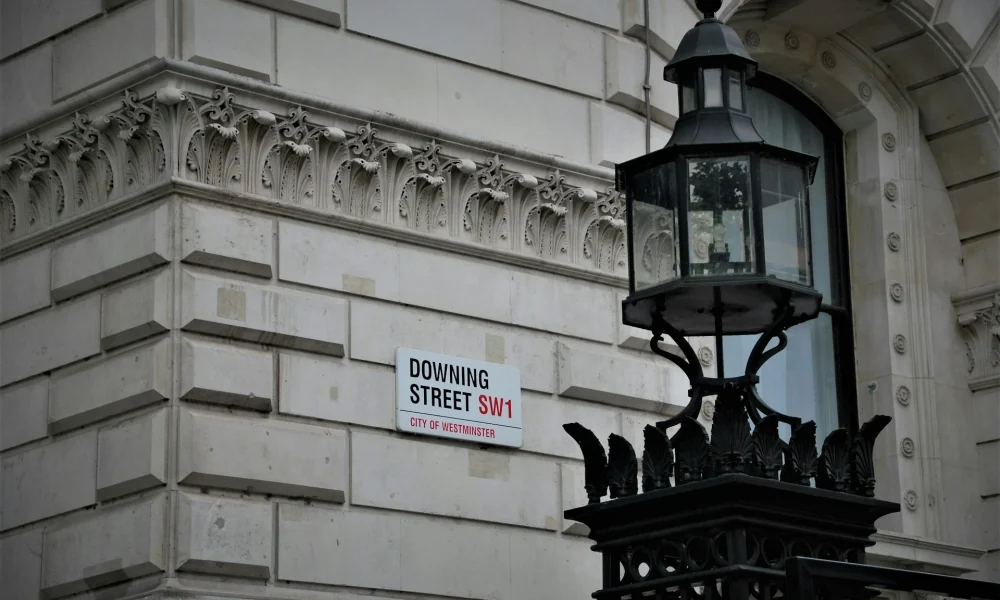
The logic is hard to argue with. A new person in Downing Street doesn’t change whether your product solves a real problem. Doesn’t touch your margins. Doesn’t move your customers. “Show me the line in your accounts that moves the day Starmer walks out of Number 10,” Haycox says. “There isn’t one. So why are you behaving like there is?”
What you can actually control
Separate the noise from the levers. Then ignore the noise entirely.
The levers, in Haycox’s view, are the same ones they’ve always been: cash position, funding access, and customer demand. “You can’t vote on the next prime minister and you can’t set the base rate,” he says. You can count your runway, sort your funding lines, and call your customers. Spend your energy where you actually have a say.”
Sounds obvious. But here’s what makes it matter — uncertainty is specifically good at pulling attention away from those things. Owners spend the week reading political coverage instead of chasing the overdue invoice or the warm lead. The ONS has documented this pattern repeatedly; the British Chambers of Commerce reports confidence dipping around moments exactly like this one. Knowing the pattern is the first step to not getting caught by it.
The funding window closes quietly
This is the part Haycox cares about most.
When politics gets cloudy, capital gets cautious. Lenders tighten criteria. Investors slow their decisions. The money doesn’t vanish — it just gets harder to reach, and it gets harder fastest for the businesses that need it most.
“Here’s the trap,” he says. “You wait for certainty before you sort your funding. But certainty is exactly when everyone else is asking too, and the lenders have already pulled their heads in. You wanted to play it safe, and you ended up at the back of the queue on worse terms.”
The move is counterintuitive: sort funding before you need it, while you still have room to negotiate. Borrow when you can, not when you must. Older than any government, that principle is.
The wobble is an opportunity
This is Haycox’s most uncomfortable point — and he knows it sounds uncomfortable.
“Every wobble transfers market share,” he says. “Some of your competitors will spend the next month paralysed. They’ll stop marketing, stop selling, and tell themselves they’re being prudent. That’s a gift. While they’re hiding, you’re in front of their customers.”
He’s not selling fearlessness. The point isn’t to ignore risk — it’s to keep doing the basics while everyone else talks themselves out of it. “You don’t need to be braver than the next guy,” he says. “You just need to keep doing the basics while he puts off making decisions.”
Picture it: your closest competitor spends the next four weeks watching political coverage and putting decisions on ice. You spend those same four weeks in front of their customers. By the time a new PM is confirmed and your competitor is back in the game, you’ve already moved.
The actual to-do list
Push Haycox for the practical version, and he gets specific fast.
Know your real runway — not the optimistic number, the real one. Get funding lines sorted while the door’s still open. Stay visible to your customers; they’re worried too, and the business that keeps showing up looks like the safe pair of hands. And stop refreshing the political coverage, because none of it will file your accounts or close your next deal.
“A new prime minister is somebody else’s problem to manage,” he says. “Your problem is the same as it was last week. Build something people want; make the numbers work; keep enough cash to carry on. Do that and it genuinely does not matter who’s standing outside Number 10.”
Not what most owners want to hear in a week like this.
Probably the only answer that actually pays.



 Bitcoin
  Ethereum
  Tether
  BNB
BNB  USDC
USDC  XRP
XRP  Solana
  TRON
TRON  Lido Staked Ether
  Cardano
  Gram (prev. Toncoin)
  Avalanche