
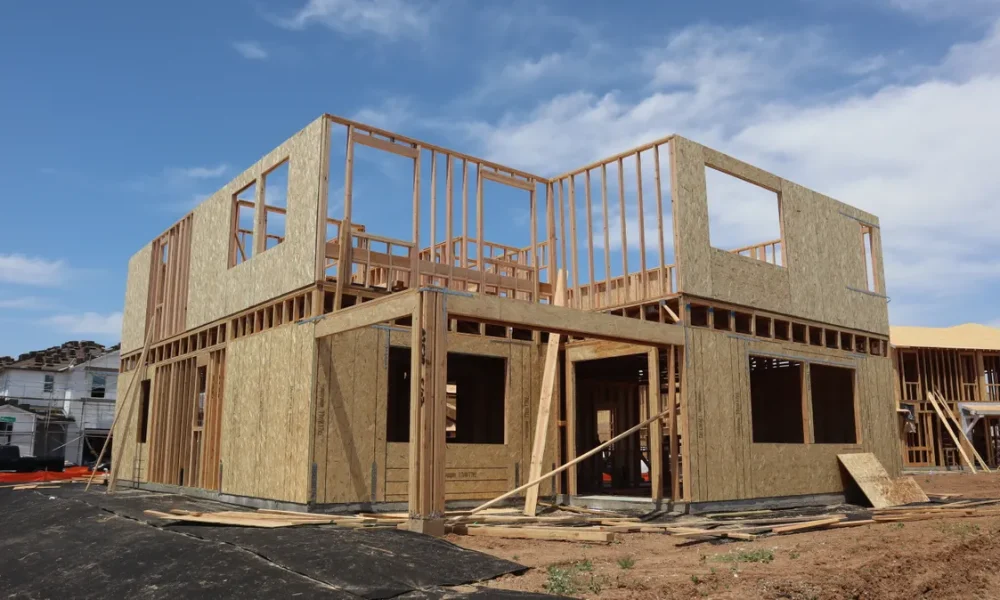
The Persimmon share price valuation has compressed to levels last seen thirteen years ago, with PSN trading around 1,134p against a May 2021 peak of 3,160p — a peak-to-trough decline of almost 65%. For income-focused investors, the question is whether the operational numbers now justify revisiting the thesis.
A Difficult Decade, but the Business Is Still Producing
The backdrop is well-documented. Brexit, the post-pandemic rate surge, the removal of Help to Buy in 2023, and rising employer costs from National Insurance and Minimum Wage increases all squeezed the sector simultaneously. Post-Grenfell fire-safety remediation added further hundreds of millions to builders’ cost bases. Persimmon was not insulated from any of it.
Yet the company’s FY2025 results, published earlier this year, showed an operation that has quietly rebuilt momentum. New home completions rose 12% to 11,905, with the average selling price up 4% to £278,203. New housing revenue reached £3.31bn, up 16% year-on-year. Underlying operating profit came in at £472.1m, up 17%, with the underlying operating margin edging to 14.3%.
On a statutory basis, profit before tax was £397.3m, up 11%. This figure differs from the underlying operating profit because it reflects finance costs and one-off items; the two metrics are not interchangeable, and investors should note both when reading the full-year filing.
Gross profit rose 13% to £656m, with a gross margin of 19.8%, according to Morningstar’s transcript of Persimmon’s earnings call. Cash at 31 December stood at £117.0m, down from £258.6m a year earlier, reflecting investment in growth. Land holdings at year-end were 84,879 plots owned and under control.
For context on how far the business has recovered from its peak, the profit history since 2021 tells the story plainly:
| Year | Statutory Pre-tax Profit |
|---|---|
| 2021 | £973.0m |
| 2022 | £703.7m |
| 2023 | £351.8m |
| 2024 | £395.1m |
| 2025 | £445.6m |
The direction of travel since 2023 is upward, but the distance back to 2021 profitability levels remains substantial.
Persimmon Share Price Valuation: What the Forward Numbers Suggest
At the current price, PSN trades on a forward price-to-earnings ratio of 11.1, with a forecast dividend yield of 5.51% for 2026. The income component is already concrete: total dividends per share for 2025 came to 60p, comprising a 20p interim paid in November 2025 and a proposed final dividend of 40p per share, subject to shareholder approval, payable on 10 July 2026 to shareholders on the register on 19 June 2026. That total is unchanged from the 60p distributed in 2024.
The forward sales position adds texture to the volume outlook. As of 1 March 2026, Persimmon’s private forward sales stood at £1.25bn, up 9% from £1.15bn a year earlier, with the private average selling price in the order book up 6%. That is a meaningful lead indicator for the current trading year.
Management has guided for 12,000 to 12,500 completions in 2026, with underlying operating profit expected towards the upper end of consensus. Profit before tax is projected to come in line with expectations, constrained by increased finance costs tied to growth investment, according to the full-year results RNS published on Investegate.
Persimmon markets homes across three brands: Persimmon Homes, Charles Church, and Westbury Partnerships. The half-year results from mid-2025 showed the sales outlet count at 277 with a target of at least 300, suggesting further volume capacity is being added even as the order book strengthens, per the H1 2025 RNS.
The Case For and the Case Against
The bull case rests on the combination: a compressed valuation, a rebuilding completions trajectory, a forward sales book growing faster than the prior year, and a yield above 5.5% that is covered by a profitable business. Planning constraints remain a structural brake on the sector, and the cost-of-living pressure on buyers has not dissipated. Mortgage rates have come down from their peak but not to levels that remove affordability friction.
The bear case is simpler. The company earned nearly £1bn before tax in 2021 and is on track for roughly half that in 2025. The recovery is real but partial, and macro conditions could easily stall it again. The rate environment remains more hostile than it was during the 2010s, and UK consumer confidence is fragile.
The setup here is not a straightforward recovery trade. It is a slow-burn position for investors who can tolerate several quarters of uneven progress. The next test arrives with the 2026 half-year results: if completions are tracking toward the upper end of the 12,000 to 12,500 guidance range and the forward sales book holds above £1bn, the valuation argument becomes harder to dismiss.



 Bitcoin
  Ethereum
  Tether
  BNB
BNB  USDC
USDC  XRP
XRP  Solana
  TRON
TRON  Lido Staked Ether
  Cardano
  Gram (prev. Toncoin)
  Avalanche