
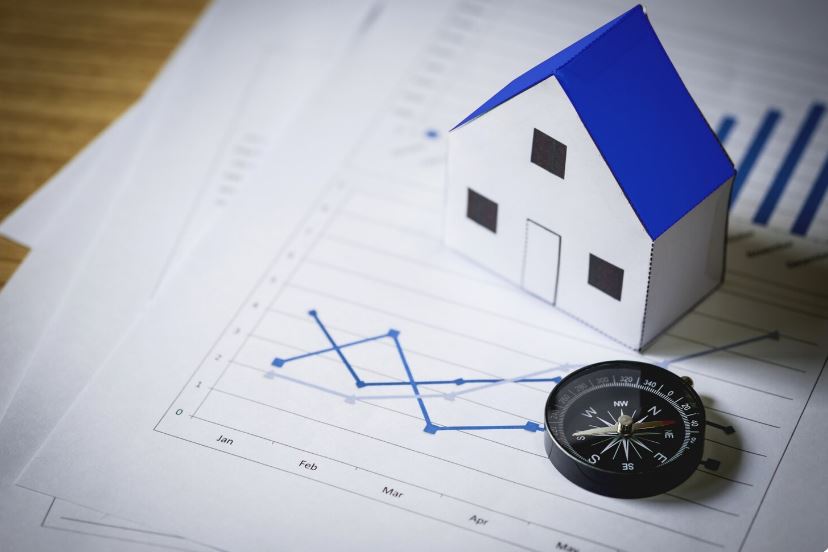
It was anticipated that mortgage rates would make a comeback in 2026. Buyers entered January with cautious optimism after years of witnessing affordability decline; rates had fallen into the low 6% range, and there was real talk of the 5s returning. Then came reality. The optimistic outlook that had greeted the year had subtly faded into something more akin to frustration by midsummer, when the average 30-year fixed rate had risen back to 6.75%.
It’s difficult to ignore how familiar everything seems. The headline “rates may drop soon” was repeated in 2024, 2025, and now 2026. And yet, here we are.
Mortgage rates reached some of their highest levels of the year this past summer, according to CBS News reporting based on expert forecasts. This was partially caused by renewed geopolitical tensions driving up oil prices and rekindling concerns about inflation. The U.S.-Iran conflict is a major contributing factor, according to Jeff DerGurahian, head economist at loanDepot. Inflation usually follows changes in oil prices. Additionally, mortgage rates rise in tandem with inflation.
Many lending experts’ forecasts for the 2026 mortgage rate on CBS News are largely in agreement: don’t anticipate significant relief before the year is out. The Mortgage Bankers Association and Fannie Mae both predict that rates will remain relatively stable for the remainder of 2026. The year-end average, according to Fannie Mae, is approximately 6.4%. At about 6.5%, the MBA is slightly higher. Neither is forecasting a decline into sub-6% territory, and given the current circumstances, the majority of experts consider that possibility to be unlikely.
Amegy Bank senior vise president Bill Dawley put it succinctly: if investors continue to worry about inflation or the mounting national debt, mortgage rates may not significantly change even if the Fed were to lower short-term rates. It’s a point worth considering. The markets have already uncomfortably shown that there is a connection between the Fed and mortgage rates, but it is not direct. Mortgage rates actually increased after the Fed lowered rates in September 2025. Compared to those who took action weeks earlier, buyers who had been waiting for that opportunity to lock in a lower rate ended up in a worse situation.
The current waiting strategy is so covertly expensive in part because of this counterintuitive dynamic. According to a May 2026 U.S. News survey, 62% of potential buyers stated they were waiting for interest rates to drop. Remarkably, 62% of respondents said the same thing up until 2025, and there was never a decline. There is a sense that the waiting strategy has been subtly normalized in a way that merits closer examination after seeing this unfold for two years in a row.
The math becomes especially intriguing for buyers in markets such as Las Vegas. Although rates are still high, local market conditions have changed significantly. There has been at least one price reduction for nearly 43% of active listings. At 3.6 months, supply is at a point where buyers have significant bargaining power. Buydowns at seller-funded rates are now accessible in ways that weren’t possible during the 2021 craze. The leverage is currently in place. If rates do eventually decline and competition resumes, it’s still unclear if it will remain in place.
The 2026 mortgage rate forecasts from CBS News are realistic rather than depressing. According to Jeff Taylor of the Mortgage Bankers Association, a sustainable resolution to geopolitical tensions, core inflation convincingly staying below 3%, and unemployment rising to 4.5% or higher would all be necessary for rates to reach sub-6% before December. Today, none of those requirements are even close to being fulfilled.
Experts concur that buyers who remain involved—keeping an eye on inflation reports, keeping a close eye on the yield on the 10-year Treasury, and maintaining close communication with lenders—are in a far better position than those who merely wait for a headline to signal that the time has come. The moment can come and go before most people realize it opened, as February 2026 briefly demonstrated.
Through fall, rates are probably going to remain in the mid-to-high 6% range. Maybe longer. That’s not a reason to freak out, but it is a reason to stop thinking that a significant rate decline is imminent.



 Bitcoin
  Ethereum
  Tether
  BNB
BNB  USDC
USDC  XRP
XRP  Solana
  TRON
TRON  Lido Staked Ether
  Cardano
  Gram (prev. Toncoin)
  Avalanche