
Concurrent Technologies shares are drawing fresh attention from small-cap watchers after the AIM-listed defence and aerospace computing specialist posted a half-year trading update that underlines just how sharply its order momentum has accelerated. With macro risks ranging from US tariffs to Middle East tensions still capable of rattling UK equities, the company’s order pipeline provides an unusually concrete buffer against cyclical wobble.
Order intake doubles as defence spending holds firm
The headline from the London Stock Exchange trading update for the first half of FY26 is striking in its scale. Order intake reached £46.9m, up from £22.3m in H1 FY25, a rise of 110% year-on-year. That includes a large multi-year order from a European customer that the company has since confirmed as its largest-ever single contract.
According to Sharecast, that contract is a four-year deal worth approximately £17m from a major European defence equipment prime contractor, announced on or around 11 June 2026. For a company of Concurrent’s scale, a single order of that size arriving alongside a doubling of overall intake is the kind of data point that reframes the near-term revenue picture.
Revenue for H1 FY26 advanced to approximately £23.1m from £21.1m in H1 FY25, while profit before tax rose 22% over the same period. The revenue growth is modest in percentage terms, but order intake running at twice the pace of recognised revenue signals a meaningful backlog building beneath the surface.
A US contract adds another leg to the Concurrent Technologies shares story
On 2 July 2026, Concurrent Technologies added a $9.4 million US defence production contract to its order book, covering the supply of approximately 400 TR-LBE 3U VPX computing plug-in cards during 2026 and 2027. The contract also includes a component commitment to support potential future manufacturing for a rugged airborne electronic countermeasures programme. Details were reported by Yahoo Finance.
The company was first to market with a 13th Generation Intel Core i7-based solution built to US defence open standards, a position that supported its selection for this programme. CEO Miles Adcock, quoted via Stockopedia, said: ‘This programme is a great example of the design wins secured in recent years now converting into production activity, as we previously indicated would begin from 2026 onwards.’
That conversion dynamic is central to the bull case. The company has £129m of secured design wins queued to feed future revenue. The logic is that once engineering approval is granted, production contracts tend to follow with less competitive re-tendering than in other sectors. Defence procurement cycles are long, but they are also sticky.
Supply chain remains the thesis-breaker to watch
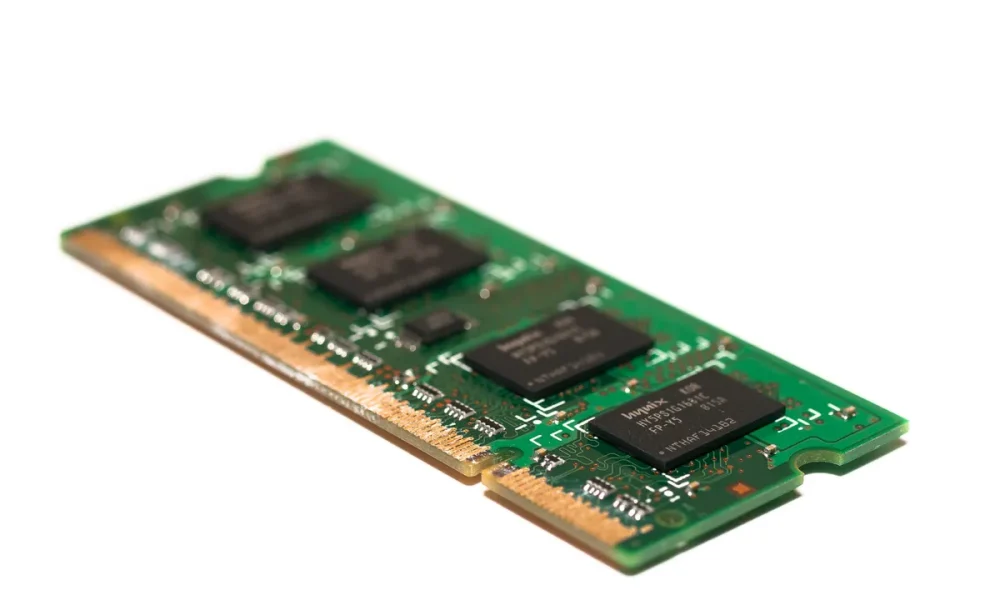
Concurrent’s products depend on specialist components, including memory chips and Intel processors. Geopolitical disruption near key trading routes has proven, across multiple cycles since 2018, capable of compressing component availability faster than customers pull orders. If supply tightens while the order book grows, the company may struggle to convert intake into revenue promptly, opening space for larger, better-capitalised rivals.
On the facilities side, Concurrent is expanding manufacturing capacity through an upgraded current facility and a planned move into a new office building. The company’s official regulatory announcement from December 2025 confirmed confidence in the revised plan after delays to the original project. Additional capacity is needed: without it, even a healthy order book becomes a constraint rather than an asset.
For investors thinking about positioning ahead of a broader market pullback, the construction here is worth understanding clearly. Concurrent’s customer base sits in defence and telecoms, sectors where government spending is rising rather than retreating in the current geopolitical environment. Demand visibility is higher than most small-caps can offer. The risk is not revenue drought; it is delivery bottleneck.
The next test comes as manufacturing capacity additions land in the second half of 2026. Whether output can keep pace with a £46.9m intake half-year is the question that will determine whether the order book translates into earnings acceleration or deferred recognition.



 Bitcoin
  Ethereum
  Tether
  BNB
BNB  USDC
USDC  XRP
XRP  Solana
  TRON
TRON  Lido Staked Ether
  Cardano
  Gram (prev. Toncoin)
  Avalanche