
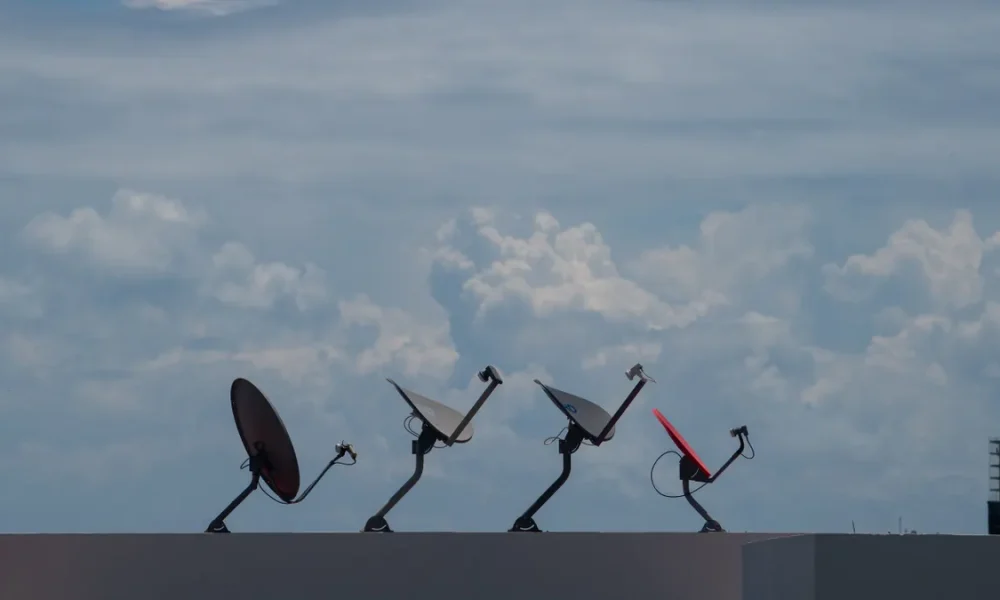
The SpaceX share price in 2026 has traced a familiar post-IPO arc: a burst of enthusiasm, then gravity. SPCX, which priced its initial public offering at $135.00 per share on 15 June 2026, has since shed close to 50% from its mid-June peak and now trades around $115. The question, as ever, is whether the correction has opened a genuine entry point or merely marked a less expensive mistake.
The IPO itself was substantial. SpaceX’s S-1 registration statement was filed on 20 May 2026, and the eventual offering covered 638,888,888 shares of Class A Common Stock, including the full exercise of the underwriters’ overallotment option of 83,333,333 shares. Goldman Sachs, Morgan Stanley, BofA Securities, Citigroup and JPMorgan served as lead underwriters.
What the Financials Say About Starlink’s Value
The bull case for SPCX rests almost entirely on Starlink, and the numbers from the company’s own filings give that case some substance. According to SpaceX’s Free Writing Prospectus filed in June 2026, the Connectivity segment generated Adjusted EBITDA of $7.2 billion in 2025, up from $3.8 billion in 2024. Total company revenue reached $18.7 billion in 2025, representing 33% year-on-year growth. The company stated it had raised only $9 billion of primary equity capital in total to build those businesses.
CNBC’s coverage of the Q2 2026 results adds further texture. The Connectivity unit contributed $11.39 billion in revenue in 2025, accounting for 61% of total sales, and was SpaceX’s only profitable business segment last year, generating income of $4.42 billion. As of 31 March 2026, Starlink had 10.3 million subscribers across 164 countries, with over 9,600 satellites deployed.
Those are not small numbers. The recurring, high-margin nature of satellite broadband subscriptions is precisely why analysts, and the AI chatbot that prompted this conversation, assign Starlink a disproportionate share of the equity value.
SpaceX Share Price 2026: What the Earnings Release Changed
The article that prompted this analysis anticipated an inaugural earnings report in early August as the first real test of momentum. That report landed on 4 August 2026, signed by CFO Bret Johnsen. On the accompanying earnings call, Johnsen stated the company is on pace to reach $100 billion in annualised recurring revenue by year-end, according to CNBC’s live coverage of the results.
If that figure is credible, the valuation conversation shifts considerably. A $1.5 trillion market capitalisation against $100 billion in annualised recurring revenue implies a price-to-sales multiple that still sits well above peers. The original analysis noted that SpaceX’s price-to-sales ratio already exceeded those of Nvidia, Microsoft and Amazon even after the post-IPO correction. The Q2 revenue trajectory may reduce that gap over time, but it does not close it immediately.
One operational detail worth noting: SpaceX has stated it does not intend to release quarterly or annual results through conventional wire services. Material information, including financial results, will be announced through the investor relations section of the SpaceX website and the company’s X account. Investors accustomed to following earnings through Bloomberg terminals or standard news feeds will need to adjust their monitoring accordingly.
The Space segment tells a more complicated story. Adjusted EBITDA there fell from $1.2 billion in 2024 to $0.7 billion in 2025, reflecting $3.0 billion in research and development investment for Starship. Starship has completed 12 flights to date, with a rated payload capacity of 100 metric tons to low Earth orbit in fully expendable configuration. The commercial monetisation of that capability remains a future event, not a current revenue line.
The AI segment ran an Adjusted EBITDA loss of $1.2 billion in 2025, reversing from a $0.3 billion positive in 2024. The prospectus frames the total addressable market for AI-related services at $26.5 trillion, the largest single component in SpaceX’s stated TAM. The gap between that ambition and the current losses is the kind of distance that can take a decade to close, or never does.
ChatGPT’s base-case target of $155 by year-end implies a 35% return from current levels and requires clearing the $135 IPO price along the way. The earnings trajectory from Starlink gives that scenario some footing. Execution risk on Starship commercialisation, the AI segment losses, and a valuation multiple that still demands a great deal of future growth leave the $135 level as the more immediate and informative marker. The next earnings release, and what Johnsen says about Starlink subscriber growth, will determine whether the stock earns the right to test it.



 Bitcoin
  Ethereum
  Tether
  BNB
BNB  USDC
USDC  XRP
XRP  Solana
  TRON
TRON  Lido Staked Ether
  Cardano
  Gram (prev. Toncoin)
  Avalanche