
The FTSE 250 record highs reached earlier this week were not the product of a broad-based lift: the mid-cap index crossed 24,000 points for the first time, adding 1,987 points since 1 January for a near-9% gain, but a handful of stocks have done the bulk of the work. Three names stand out: CMC Markets (LSE: CMCX), Raspberry Pi (LSE: RPI) and Keller Group. As of 5 August, their share prices were up 128%, 127% and 90% respectively.
What Drove FTSE 250 Record Highs This Year
The gains across all three stocks reflect very different stories. CMC Markets is a re-rating. Raspberry Pi is a sequence of earnings upgrades. Keller Group is steady industrial compounding. Each dynamic tells investors something different about where value can appear in the mid-cap space, and each carries its own set of risks now that the share prices have moved so sharply.
CMC Markets: A Re-Rating in Progress
CMC Markets has been one of the clearest momentum names in the FTSE 250 this year. Its latest full-year results showed net operating income up 15% to £392.6m and profit before tax up 20% to £101.3m. The full-year dividend rose to 13.8p from 11.4p. Management pointed to a record year in Australian stockbroking and growing revenue diversification through partnerships.
The market has responded by reclassifying the business. Investors who once viewed CMCX primarily as a trading platform tied to volatility spikes are increasingly pricing it as a broader financial services group with more durable earnings. That shift in perception is what a re-rating looks like. The risk, now the share price has moved 128%, is that the new valuation leaves very little room for a softer trading period.
Raspberry Pi: Earnings Upgrades Doing the Work
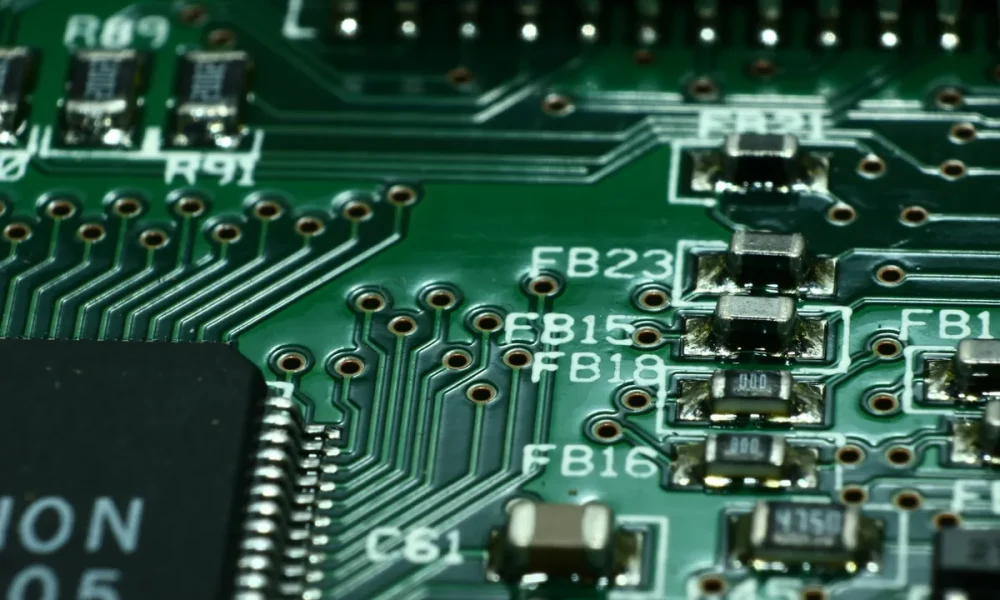
Raspberry Pi’s 127% gain reflects a series of genuine earnings revisions rather than multiple expansion alone. The company reported FY 2025 revenue of $323.2m, up 25% from $259.5m in FY 2024, with unit shipments rising 9% year-on-year. Earnings per share reached $0.1448 for FY 2025, a 35% increase from $0.107 the prior year, while gross margin held at 24% despite cost pressures. The company ended FY 2025 with a cash position of £28m, down from £45m in 2024.
Product development has continued. Raspberry Pi launched 13 new products in FY 2025, including an AI camera and two HATs during H2 2024 and H1 2025. Direct sales in H2 2025 were up 15% on H1 2025, with compute module and Raspberry Pi 4 sales growing around 33% and Raspberry Pi Zero 2 up 32%.
The forward picture has also surprised. For H1 FY 2026, management guided that profitability would be ‘materially ahead’ of H1 FY 2025, with adjusted EBITDA of at least $38m and unit sales exceeding 4 million, driven by volume growth, a favourable product mix and access to low-cost DRAM inventory. That kind of upward revision sequence is precisely what moves a growth stock sharply. The question now is whether the expectation level that guidance has set can actually be cleared.
Keller Group: The Compounder in the Room
Keller Group feels different from the other two. Its latest trading update pointed to record half-year revenue and profit, stronger underlying performance and an increased dividend. There is no particular narrative hook: no AI angle, no consumer electronics moment. What the market is paying for is visible, repeatable delivery from a geotechnical and construction specialist.
That kind of dependable earnings progression does attract a valuation premium, particularly when broader market sentiment is tilting towards quality. The cyclicality of construction work remains a risk: margin pressure and project execution are the areas to watch if economic conditions soften.
What the Moves Mean for the Index
Three stocks producing gains of this magnitude will always raise a natural question: how much of the FTSE 250’s 2025 advance is concentrated rather than broad? The honest answer is that an index driven by a small number of large movers is more vulnerable to a reversal in those specific names than the headline gain suggests. Balance across income, defensive and growth positions remains the more durable approach for most portfolios.
For all three stocks, the setup heading into the second half of 2025 is the same: the thesis has been validated by results, but the forward bar is now materially higher. The next trading update from each will tell investors whether execution has kept pace with the re-rating.



 Bitcoin
  Ethereum
  Tether
  BNB
BNB  USDC
USDC  XRP
XRP  Solana
  TRON
TRON  Lido Staked Ether
  Cardano
  Gram (prev. Toncoin)
  Avalanche