
A Form 4 filed with the Securities and Exchange Commission on 20 August 2026 shows Sean Tresvant, Yum! Brands’ (NYSE: YUM) Chief Consumer Officer and head of the Taco Bell division, disposing of 2,035 shares on 18 August 2026 at $144.86 apiece – a transaction worth roughly $295,000. Coverage from the Motley Fool and Nasdaq framed this as a “substantial” 28% cut to his overall equity stake. The percentage is right. The story behind it is not quite what those write-ups described.
Both outlets attributed the disposal to the exercise of stock options. The filing itself, corroborated by a separate summary from Kalkine Media, tells a different story: the shares came from the vesting of 4,101 restricted stock units (RSUs – grants of company stock that convert to shares on a schedule, typically tied to continued employment), with the company withholding a portion to cover the tax bill that vesting triggers. That is a mechanical, non-discretionary event baked into most executive pay packages. It is not the same signal as an executive choosing to cash out options at a moment of their own choosing.
What the Yum Brands insider stake reduction actually shows
After the withholding, Tresvant was left holding 5,206 shares directly and 33 shares through a 401(k) account, down from 7,274 shares beforehand – the arithmetic behind the 28% figure that both outlets reported. The filing was signed by M. Gayle Hobson under power of attorney, standard practice for routine Form 4 submissions. At Yum!’s roughly $40.2bn market capitalisation, a $295,000 transaction is a rounding error, not a market-moving event, which is precisely why the “substantial” framing overstates its significance as a read on insider sentiment.
Tresvant’s title is also worth getting right: he runs Taco Bell and serves as Yum!’s Chief Consumer Officer, not chief executive of the parent group. That distinction matters when a filing like this gets read as a verdict from “the boss” on where the company is headed – it isn’t one.
A pattern, not a one-off
This was not Tresvant’s first sale of the year. He also disposed of 3,000 shares on 26 May 2026 at an average price of $154.68, worth roughly $464,040, according to a report from Daily Political. Taken together, the two transactions look like the periodic housekeeping that comes with vesting schedules and tax obligations rather than a shift in conviction about the stock.
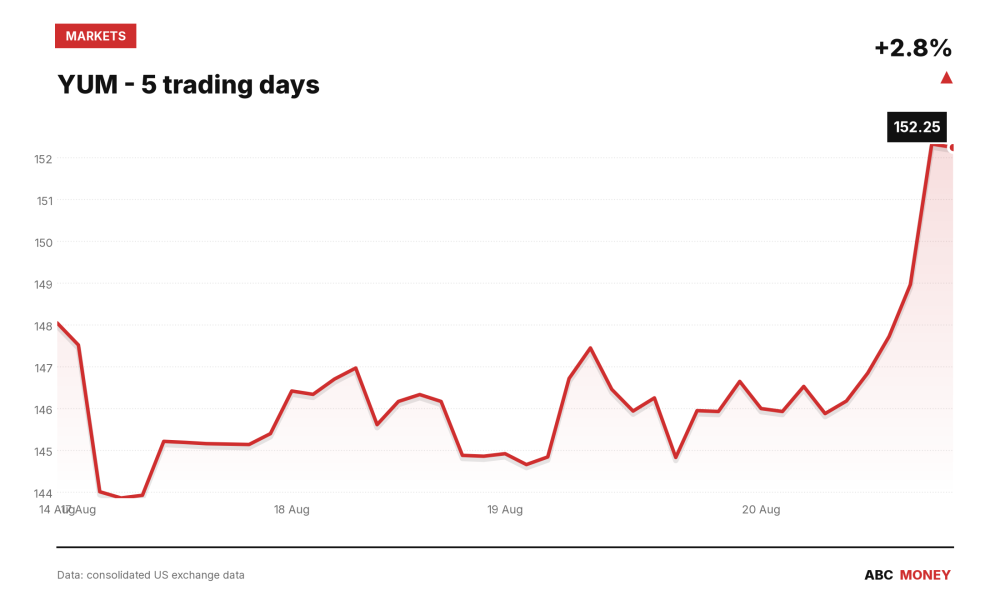
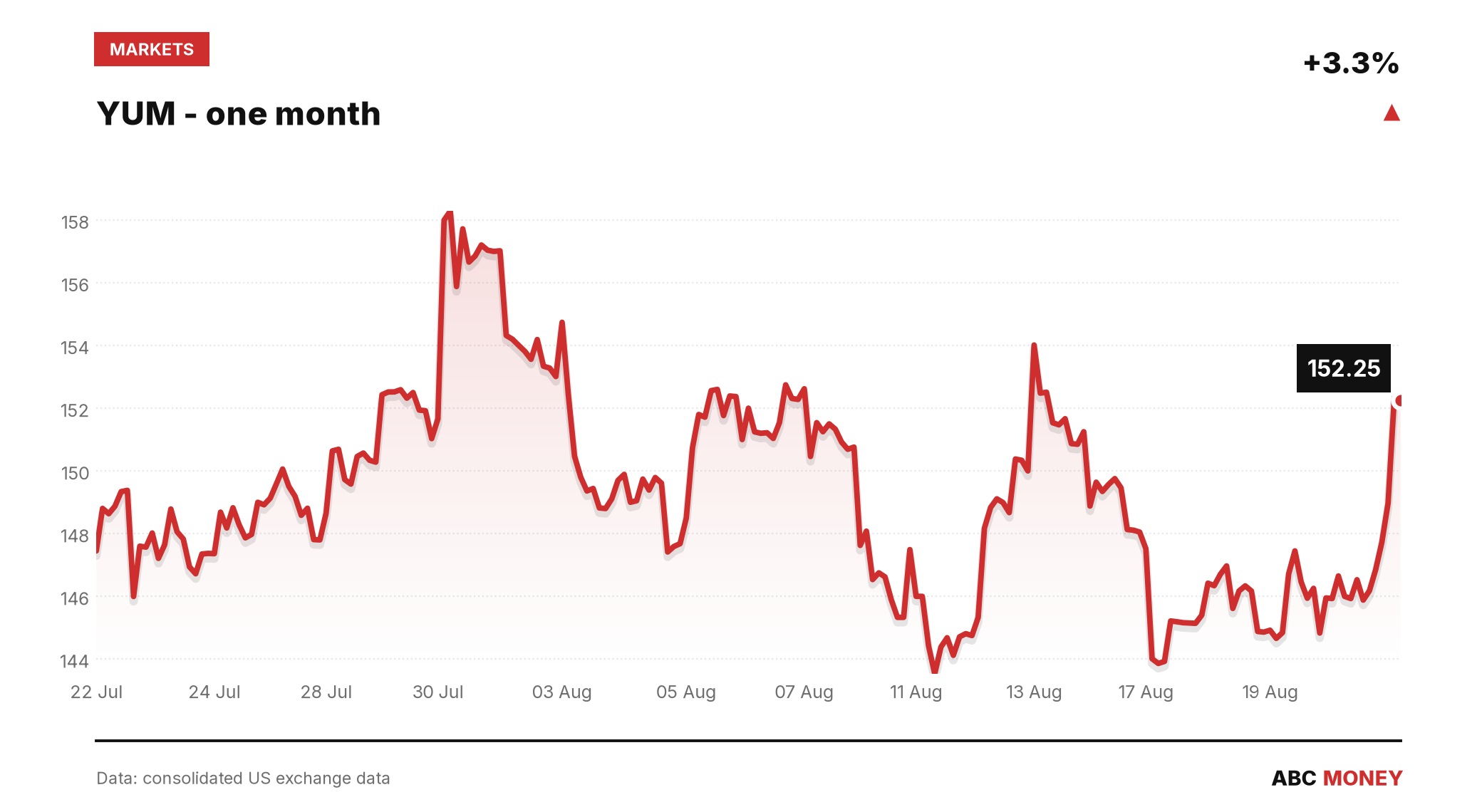
The shares closed at $152.25 on 20 August, up 3.9% on the day and on volume roughly 1.8 times the 20-day average, though still down 1.3% over the preceding 20 trading days and about 11.7% below the 52-week high of $170.14 reached earlier in the cycle, according to MacroTrends. None of that day’s move has been tied to the Form 4 itself; insider filings of this size rarely register with the wider market, and Yum!’s Taco Bell division had separately been dealing with a cyclosporiasis outbreak linked to lettuce in its restaurants in July 2026 – an unrelated headwind that had nothing to do with Tresvant’s tax bill but was very much on investors’ minds around the same period.
The underlying business, for context
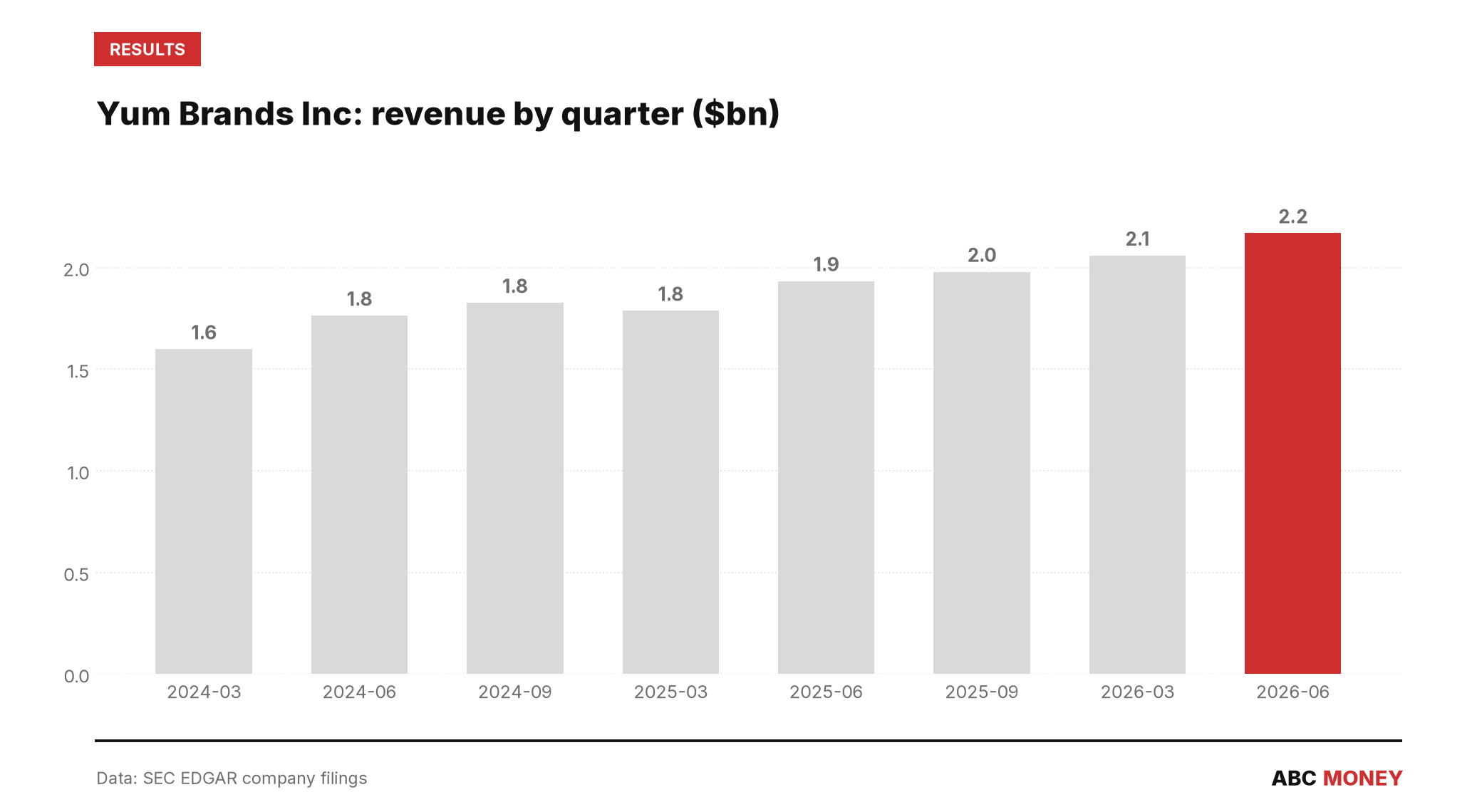
Yum!’s recent quarterly filings show a company still growing steadily rather than one an executive might be quietly retreating from. Revenue rose from $1.79bn in the first quarter of 2025 to $2.06bn in the first quarter of 2026, and to $2.17bn in the second quarter of 2026, according to the company’s 10-Q filed on 5 August 2026. Diluted earnings per share for that same second quarter came in at $3.08, up sharply from $1.33 a year earlier, though that jump reflects a specific item disclosed in the filing rather than a straightforward doubling of underlying profitability, and investors comparing quarters should read the full filing rather than the headline number alone.
None of this changes the basic fact pattern: an executive’s RSUs vested, the company withheld shares to cover the tax, and the net effect on his holdings was a 28% reduction that two outlets chose to badge as a substantial, option-driven sale. The percentage was accurate. The mechanism and the framing were not, and the distinction matters for anyone using insider filings as a read on how the people running Taco Bell actually feel about the stock.
Investors watching Yum!’s insider filings going forward will find them logged in the SEC’s EDGAR system under the company’s CIK 0001041061, alongside the quarterly disclosures that give the more reliable picture of how the business itself is performing.
This article is for information only and is not investment advice or a recommendation to buy or sell any asset. Markets move quickly; figures are correct as sourced at the time of writing. Always do your own research before making financial decisions.


 Bitcoin
  Ethereum
  Tether
  BNB
BNB  USDC
USDC  XRP
XRP  Solana
  TRON
TRON  Lido Staked Ether
  Cardano
  Gram (prev. Toncoin)
  Avalanche