Bitcoin
  Ethereum
  Tether
  BNB
BNB  USDC
USDC  XRP
XRP  Solana
  TRON
TRON  Lido Staked Ether
  Cardano
  Gram (prev. Toncoin)
  Avalanche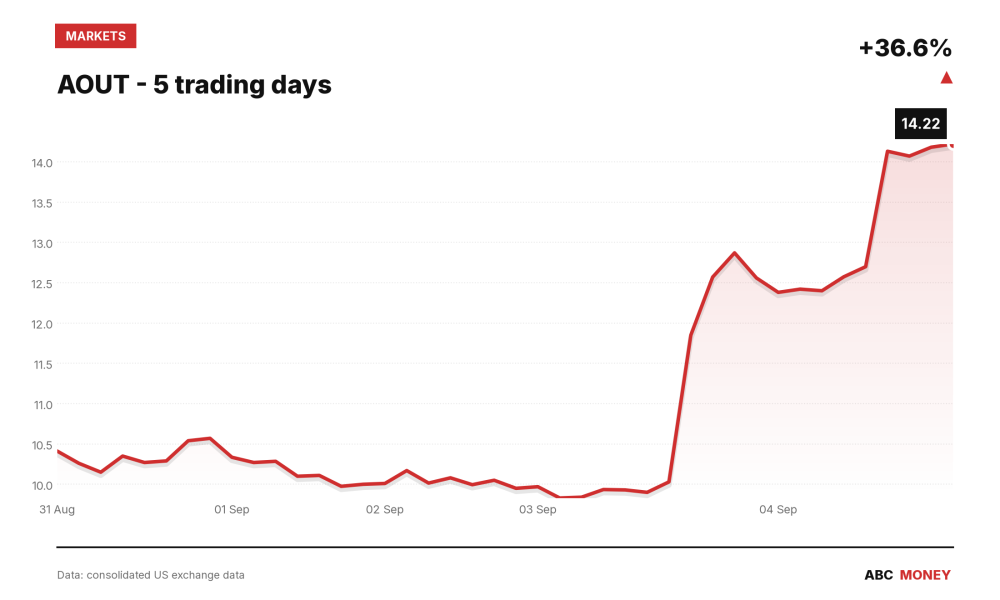
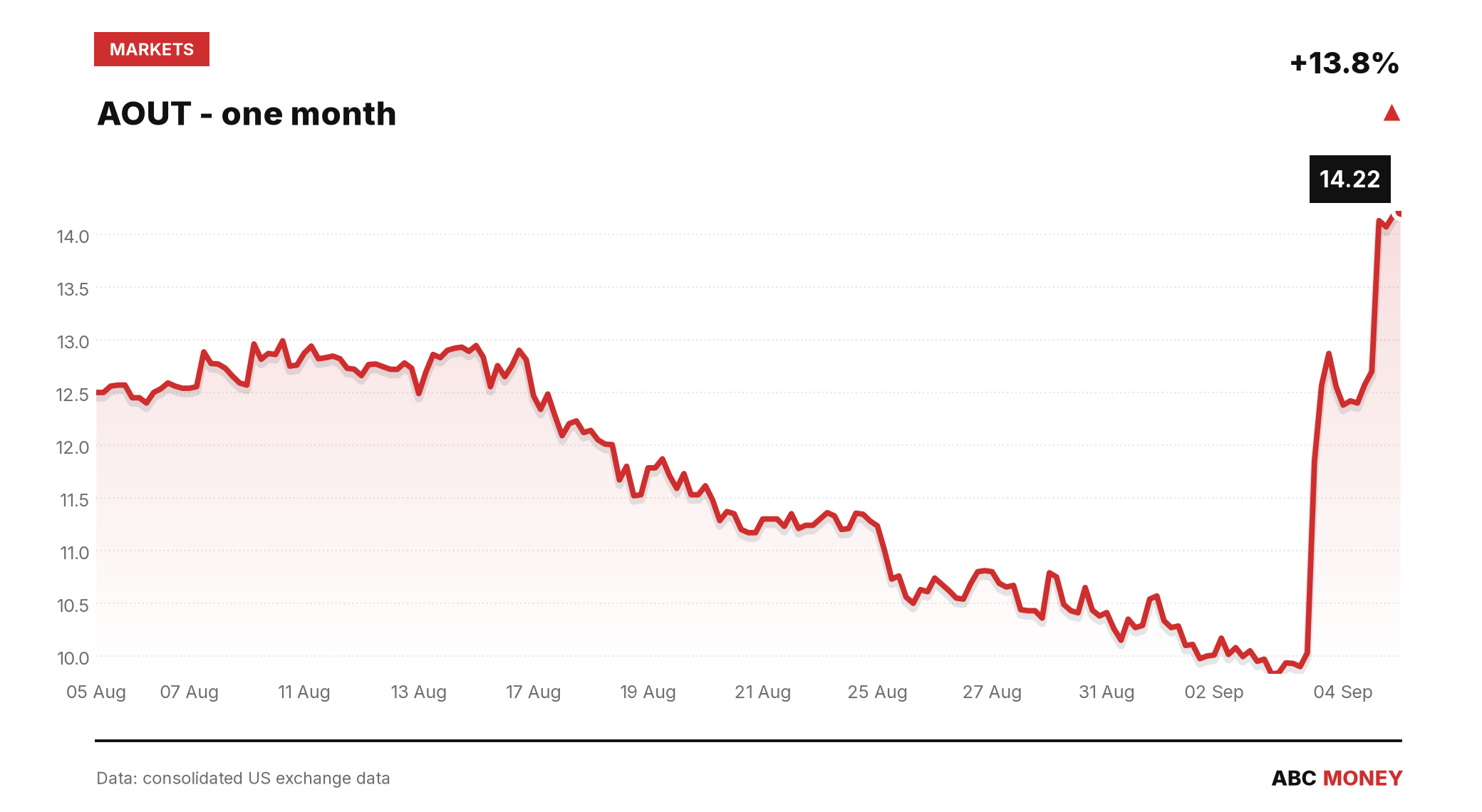
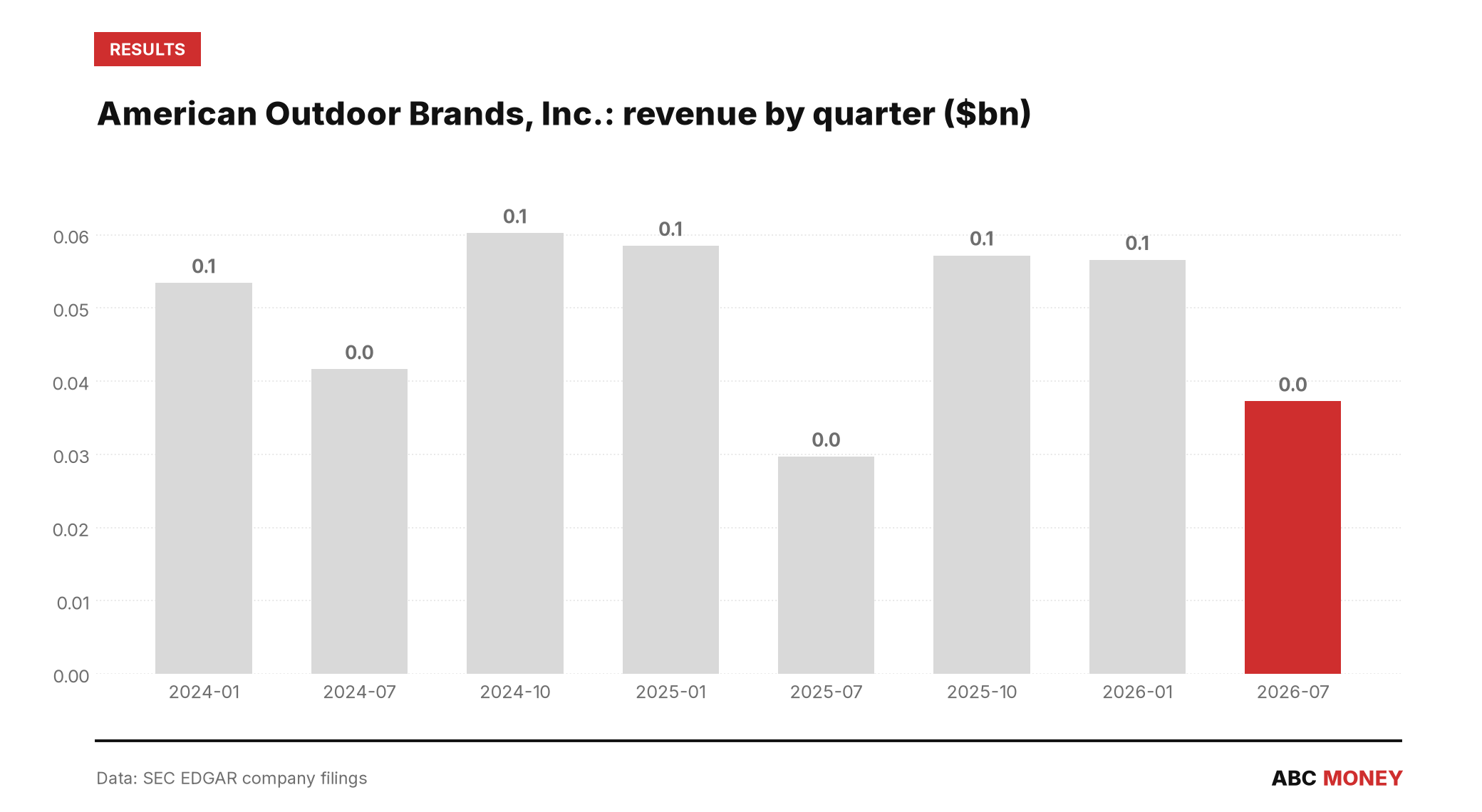
American Outdoor Brands (NASDAQ: AOUT) delivered the kind of quarter that gets a small-cap re-rated overnight: a swing to non-GAAP profit, a sales beat, and a raised full-year outlook. The Columbia, Missouri-based maker of hunting, shooting and outdoor accessories reported first-quarter fiscal 2027 net sales of $37.3m for the three months to 31 July 2026, up 25.4% on the $29.7m booked a year earlier. Shares jumped more than 25% in after-hours trading on the news, according to Benzinga, before extending the move into the following session.
The company posted non-GAAP net income of $415,000, or $0.03 per diluted share – swinging from a loss in the comparable quarter – against a Zacks consensus estimate of a $0.24 loss per share, an earnings surprise of 112.5%, according to Zacks Investment Research. Revenue also cleared the bar, coming in ahead of the $36.6m consensus tracked by Investing.com.
The 25.4% headline growth number is doing some heavy lifting
On a GAAP basis – the accounting standard companies must report under, before any adjustments – American Outdoor Brands still lost money. The net loss narrowed to $1.5m, or $0.12 per diluted share, from a $6.8m loss a year earlier, per the company’s 10-Q filing. That’s real progress, but it’s the non-GAAP figure – which strips out items such as stock compensation and one-off costs – that generated the “earnings beat” headline.
The sales growth figure also needs a footnote the press release itself supplies. American Outdoor Brands said roughly $6.0m of orders that would normally have landed this quarter were instead pulled forward into the prior fiscal fourth quarter by retailers, according to the company’s own earnings release. Strip that timing effect out and underlying sales growth was 4.3%, not 25.4%. Retailer order timing is common in this space and doesn’t invalidate the beat – but it’s the difference between a company quietly compounding and one that just had a very favourable comparison.
Margins widened and the outlook nudged higher
Away from the top-line noise, the margin story looks cleaner. Gross margin rose to 53.0% from 46.7% a year earlier – a gain of 630 basis points, where a basis point is one-hundredth of a percentage point – reflecting a better product mix and lower input costs, per the filing. Management used that improvement to lift full-year fiscal 2027 guidance for adjusted EBITDA (earnings before interest, tax, depreciation and amortisation, a cash-flow proxy investors use to strip out financing and accounting noise) to a range of $14.5m to $17.5m, while holding full-year sales guidance at $200m-$210m, according to a TradingView recap of the guidance. Against fiscal 2026’s $190.5m in net sales and a $9.2m GAAP net loss, that guide implies roughly 5% to 10% top-line growth for the year – a far more modest pace than this quarter’s headline number suggests, and one that tacitly concedes the order-timing boost won’t repeat.
A stock-specific rally, not a market one
The share reaction was outsized relative to the company’s normal trading pattern. Beyond the after-hours pop, AOUT last traded at $14.20 as of 4 September 2026, up 14.33% over 24 hours, with volume running roughly 12.6 times its 20-day average and the stock touching the top of its recent range, per consolidated exchange data cited by Benzinga. Barchart separately clocked an 18.9% gain during the morning session alone – a large but not identical figure to the after-hours move, consistent with a rally that kept building through the trading day rather than fading.
None of this looks like it was borrowed from a calmer macro tape. The 10-year US Treasury yield sat flat at 4.79% into the print, according to data from the Federal Reserve Bank of St Louis, with unemployment ticking down to 4.1% in July. With bond markets and the broader economic backdrop essentially unchanged, the move in AOUT looks like a reaction to the numbers themselves rather than any shift in risk appetite.
For a company this size – AOUT’s market capitalisation is a fraction of larger consumer names – a quarter like this can shift the narrative quickly. The next test comes with the fiscal second-quarter report, when investors will get their first read on whether the underlying 4.3% growth rate, rather than the flattered 25.4%, is the more honest guide to what comes next.
This article is for information only and is not investment advice or a recommendation to buy or sell any asset. Markets move quickly; figures are correct as sourced at the time of writing. Always do your own research before making financial decisions.