
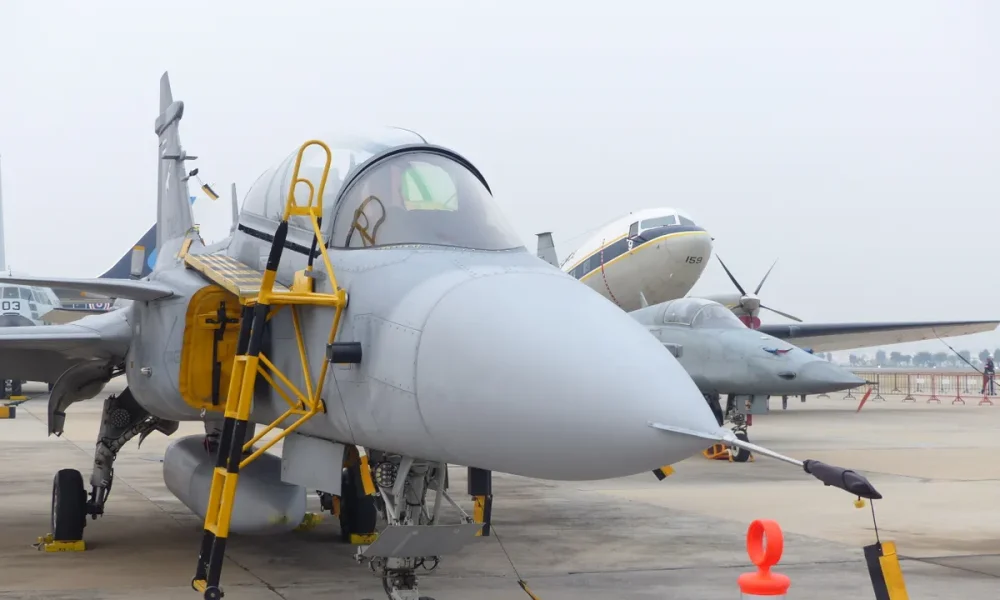
The BAE Systems share price has delivered one of the FTSE 100’s most striking returns of the past half-decade, turning a £5,000 stake in August 2021 into £20,642 by mid-2026, dividends included. The question now is whether the structural forces that drove that move remain intact, or whether the stock is running ahead of what the business can sustain.
How the BAE Systems Share Price Got Here
The shares were hovering near 500p in 2021, a period when defence budgets across NATO were largely stagnant. Russia’s invasion of Ukraine in early 2022 changed the calculus. Governments that had quietly deprioritised military spending found themselves scrambling to rebuild capability, and BAE Systems was among the clearest beneficiaries: its order book swelled, its revenue base expanded, and the share price crossed 2,000p in 2026.
That return — roughly fourfold in five years, inclusive of modest dividends — outpaced Meta, Apple and Alphabet over the same window, in the middle of a technology boom. Few FTSE 100 stocks from the 2021 index can claim as much.
The 2025 full-year results, published earlier this year, confirm the momentum is more than sentiment. BAE Systems’ 2025 annual results showed underlying Sales of £30,662m, up 10% from £28,335m in 2024, with Underlying EBIT rising 12% to £3,322m and Underlying EPS of 75.2p, also up 12%. Free cash flow came in at £2,158m. The Order backlog reached a record £83.6bn, up £5.8bn on the prior year, against Order intake of £36.8bn.
Contract Wins Underline the Demand Picture
The backlog figure matters because it provides visibility into future revenue that few industrial companies can match. Recent contract awards suggest that pipeline is not thinning. In June 2026, the U.S. Army awarded BAE Systems a $535 million contract for continued production of M109A7 Paladin Self-Propelled Howitzers and M992A3 Ammunition Carriers. Separately, the U.S. Army awarded a $318 million contract to upgrade M88 recovery vehicles to the M88A3 configuration, disclosed via the BAE Systems newsroom.
In August 2026, the U.S. Navy contracted BAE Systems for $149.8 million to cover maintenance and modernisation of the USS Boxer (LHD 4), as disclosed on the BAE Systems Platforms and Services news page.
The U.S. remains the company’s single largest customer, accounting for around 50% of revenues, and these contract awards reinforce why. European momentum is also building: the company secured a £2.5bn contract to support Türkiye’s Eurofighter Typhoon fleet, and won over £1bn in European air defence missile orders, alongside plans for a new 150,000-square-foot manufacturing facility in Endicott, New York.
Valuation: Where the BAE Systems Share Price Sits Now
After a fourfold run, the valuation deserves scrutiny. Simply Wall St’s analysis via Yahoo Finance places BAE Systems on a price-to-earnings ratio of 26x, above its peer group average of 22x but below the broader European defence industry average of 31.4x. That positioning — premium to peers, discount to the sector — is not obviously stretched given the record backlog and double-digit earnings growth, but it does mean the shares need the growth story to hold.
The risks are real. A sustained de-escalation in global conflicts would reduce the urgency behind defence procurement cycles. There is no certainty that higher government budgets translate into contracts for BAE Systems specifically, rather than domestic suppliers or competitors. The ethical dimension also screens out a portion of the institutional investor base, which can affect liquidity and price dynamics at the margin.
The UK government has discussed increasing defence spending materially relative to GDP, and that conversation is echoing across European capitals. BAE Systems’ exposure is broad enough to benefit from that trend wherever it crystallises, but the concentration of revenue in the U.S. means Washington’s procurement priorities remain the variable that matters most.
The next test for the share price will be the 2026 interim results and whether order intake continues to grow against a record comparable. A backlog of £83.6bn buys time, but investors will want to see conversion into revenue and cash.


 Bitcoin
  Ethereum
  Tether
  BNB
BNB  USDC
USDC  XRP
XRP  Solana
  TRON
TRON  Lido Staked Ether
  Cardano
  Gram (prev. Toncoin)
  Avalanche