Bitcoin
  Ethereum
  Tether
  BNB
BNB  USDC
USDC  XRP
XRP  Solana
  TRON
TRON  Lido Staked Ether
  Cardano
  Gram (prev. Toncoin)
  Avalanche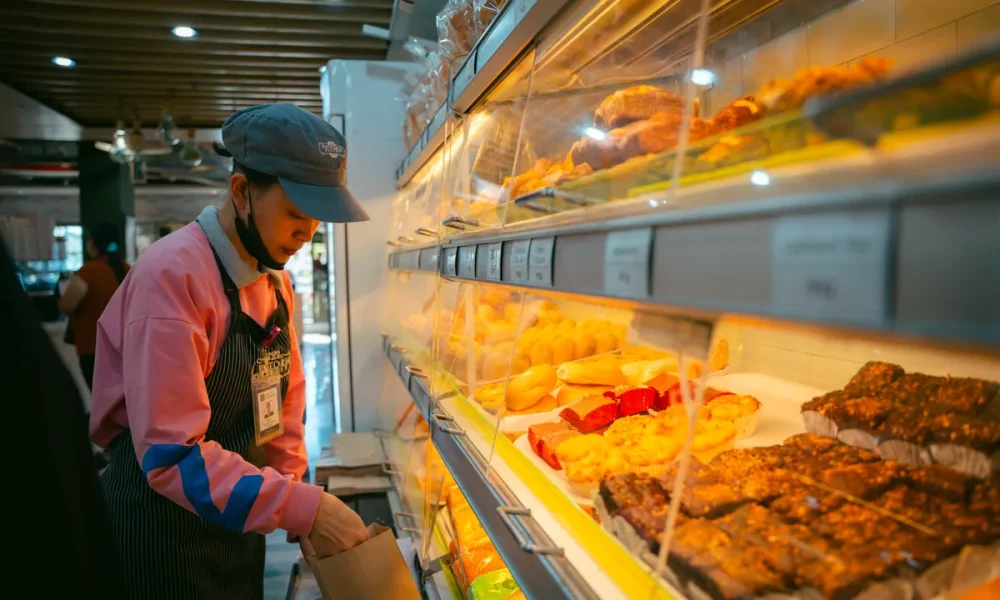
The Greggs shares valuation case looks superficially attractive: GRG has fallen 53% between 2024 and 2026 and still sits 44% below its all-time high, yet the underlying business reported a 20% rise in first-half pretax profit just weeks ago. Whether that disconnect represents genuine value or a value trap deserves a closer look.
What the H1 2026 Numbers Actually Show
According to the London Stock Exchange interim results announcement, Greggs posted total sales of £1,101.5 million for the 26 weeks to 27 June 2026, up from £1,027.7 million in the equivalent period a year earlier. Company-managed shop like-for-like sales rose 2.1% and franchised shop like-for-like sales rose 1.3%. Pretax profit came in at £76.0 million, up 20%, and the market rewarded that with a 12% single-day share price gain on results day.
That operational momentum carries into visit-share data too. According to Circana/CREST figures cited by Directors Talk, Greggs’ share of visits rose 0.3 percentage points to 8.7% for the 12 months to June 2026. A business losing the plot does not typically expand visit share at the same time.
The valuation context the snippet sets out still stands. The price-to-earnings ratio dropped as low as 10 to 11 at one point during the sell-off, and the stock still trades below the 15 multiple many analysts consider the rough dividing line between cheap and fairly priced for a UK consumer growth name. At 14 times earnings, Greggs is not pricing in the expansion programme.
Greggs Shares Valuation Versus the Growth Pipeline
At the half-year point, Greggs operated 2,773 shops, with four Bitesize sites and three Express units in live trials, according to ad-hoc-news coverage of the interim results. The stated ambition is to reach 3,500 shops, and the logistics infrastructure to support that target is being built: two new national distribution centres in Derby and Kettering, with automated picking and robotics, are on the way. Derby is expected to be operational in the coming months; Kettering follows in the first half of 2027.
International expansion, meanwhile, deserves scepticism rather than excitement. The Tenerife airport trial is a starting point, but The Guardian’s expansion analysis is worth bearing in mind: Greggs tried a five-year push into Belgium, trading as Engelse Bakker, and closed every store there in 2008. Brand-specific concepts do not always travel, and Greggs is, in essence, a domestic infrastructure story.
Where the Thesis Could Break
The bear case is not simply about consumer squeeze. Three structural headwinds converge. First, minimum wage increases and higher employer National Insurance contributions have hit labour costs for one of the UK’s biggest retail employers. Second, ingredient cost inflation, potentially compounded by supply-side pressures, squeezes margins on products that consumers already view as a last resort for affordable food. Neither headwind is unique to Greggs, but both limit the pace at which profits can compound even when revenue grows.
Third, analysts have begun pointing to a less obvious risk: the growing adoption of weight-loss drugs such as Mounjaro and Wegovy. Reuters noted that the spread of GLP-1 treatments has raised concerns about reduced demand from Greggs’ most frequent customers for high-calorie products. It is a slow-burn structural question rather than an immediate earnings risk, but it is now on the analyst agenda.
Under CEO Roisin Keown and CFO Richard Hutton, the H1 earnings call presented a management team confident in the pipeline. The question is whether that confidence is priced in yet, or whether the P/E of 14 still assumes something breaks.
The next data point arrives quickly. Greggs has a Q3 trading update scheduled for 30 September 2026 and a Q4 update on 14 January 2027, per the Greggs investor relations calendar. If like-for-like sales hold above 2% into the autumn, the valuation case strengthens materially. A deceleration would invite another reset.