
The Applied Materials Intel partnership unveiled on 6 October 2026 commits the two companies to joint work on next-generation transistors, interconnects and advanced chip-packaging techniques for AI processors, using Applied’s new EPIC Center in Silicon Valley and Intel’s research campus in Oregon. It is a genuine, confirmed collaboration – and it is also the fourth near-identical “partner” announcement Applied Materials (NASDAQ: AMAT) has put out in little over a week, following tie-ups with memory maker KIOXIA and chip-packaging specialist BE Semiconductor Industries (Besi).
That pattern matters for how investors should read the news. Nothing in the official release suggests a new product, a funding commitment or a change to either company’s roadmap guidance. It reads, instead, as the formal christening of a facility Applied wants its biggest customers photographed walking through.
What the Applied Materials Intel partnership actually covers
Applied Materials, the world’s largest supplier of semiconductor manufacturing equipment, says the work with Intel (NASDAQ: INTC) builds on “the companies’ long history of working together to solve complex semiconductor device scaling challenges,” per the press release. Applied chief executive Gary Dickerson described the companies as sharing “a decades-long history of deep collaboration on advancing the semiconductor roadmap,” according to Unite.AI‘s account of the announcement. Benzinga reported the same three focus areas: transistors, interconnects and packaging technologies for AI chips and systems. None of the coverage names a dollar figure, a timeline, or exclusivity terms – this is a research-collaboration announcement, not a supply contract or an equity stake.
A week of near-identical headlines
Applied’s EPIC Center opened its doors to a rotating cast of partners in late September and early October: KIOXIA on joint memory development around 29 September, Besi on advanced packaging around 1-2 October, and now Intel. The wording, structure and quotes in each release track closely enough that the sensible reading is a coordinated marketing push timed to the new facility’s launch, rather than four discrete breakthroughs landing in the same fortnight. Intel’s own framing leans the same way: chief executive Lip-Bu Tan called Applied “an important partner” in delivering chipmaking innovation – warm, but non-committal language consistent with a relationship-building exercise rather than a binding deal.
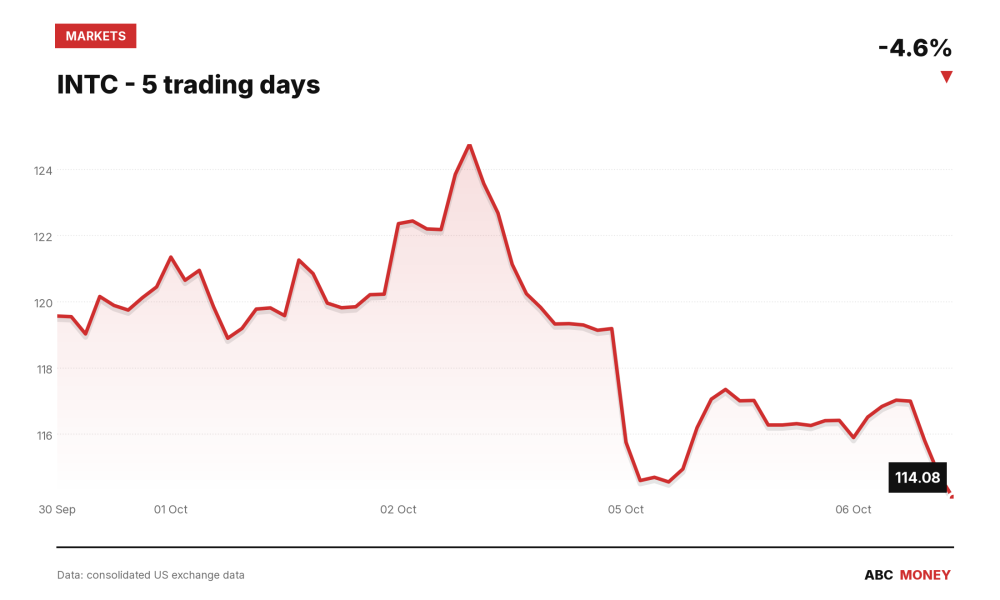
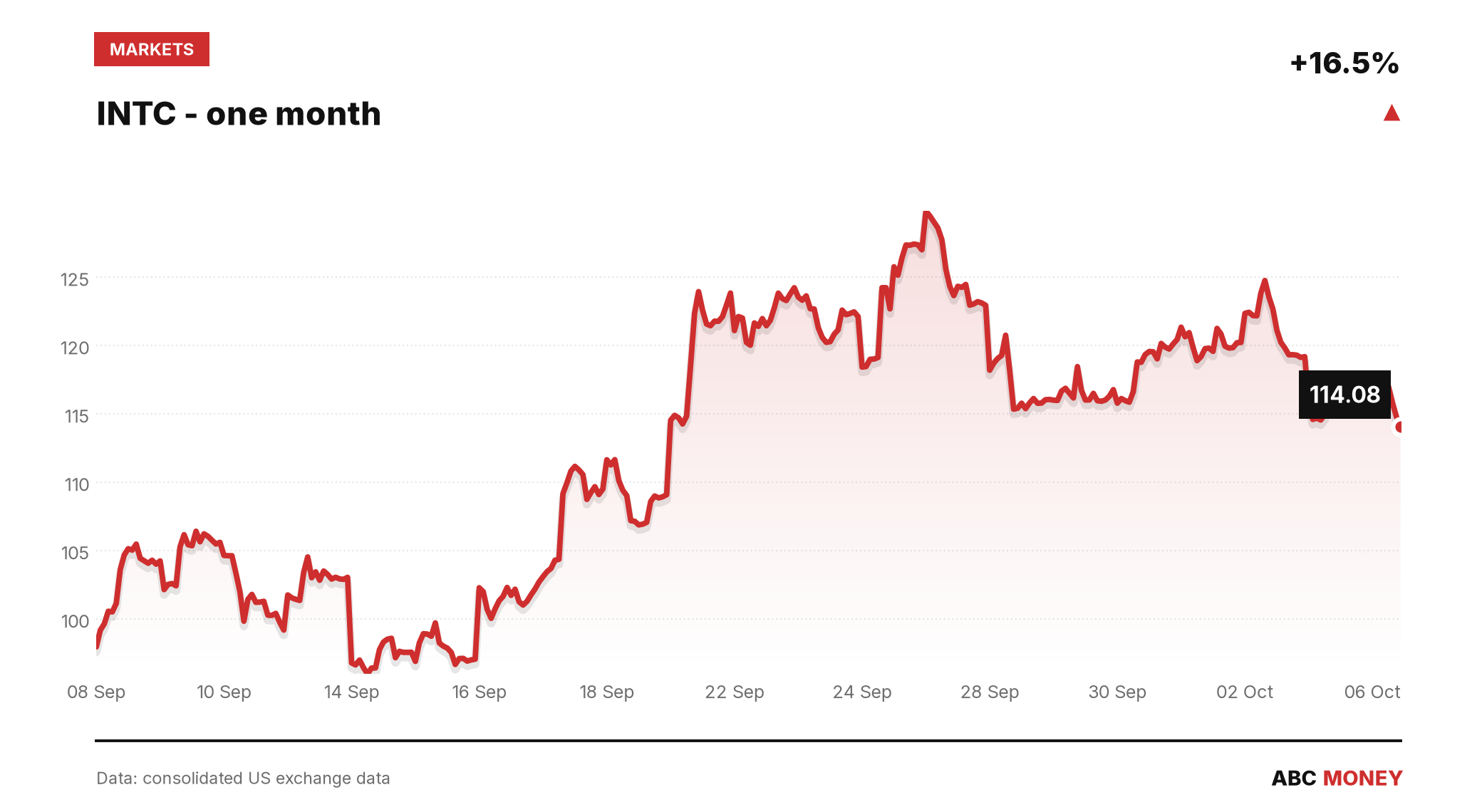
The market’s reaction supports that reading. Intel shares closed at $114.23, down 1.44% on the day, having already rallied 16.72% over the prior 20 trading days. Trading volume ran at roughly 66% of the 20-day average – thin, not a stampede – and the stock remains well below its 20-day high of $129.84. If this were being priced as a step-change in Intel’s manufacturing prospects, volume and price action would normally say so more loudly.
Intel’s earnings swing frames the stakes
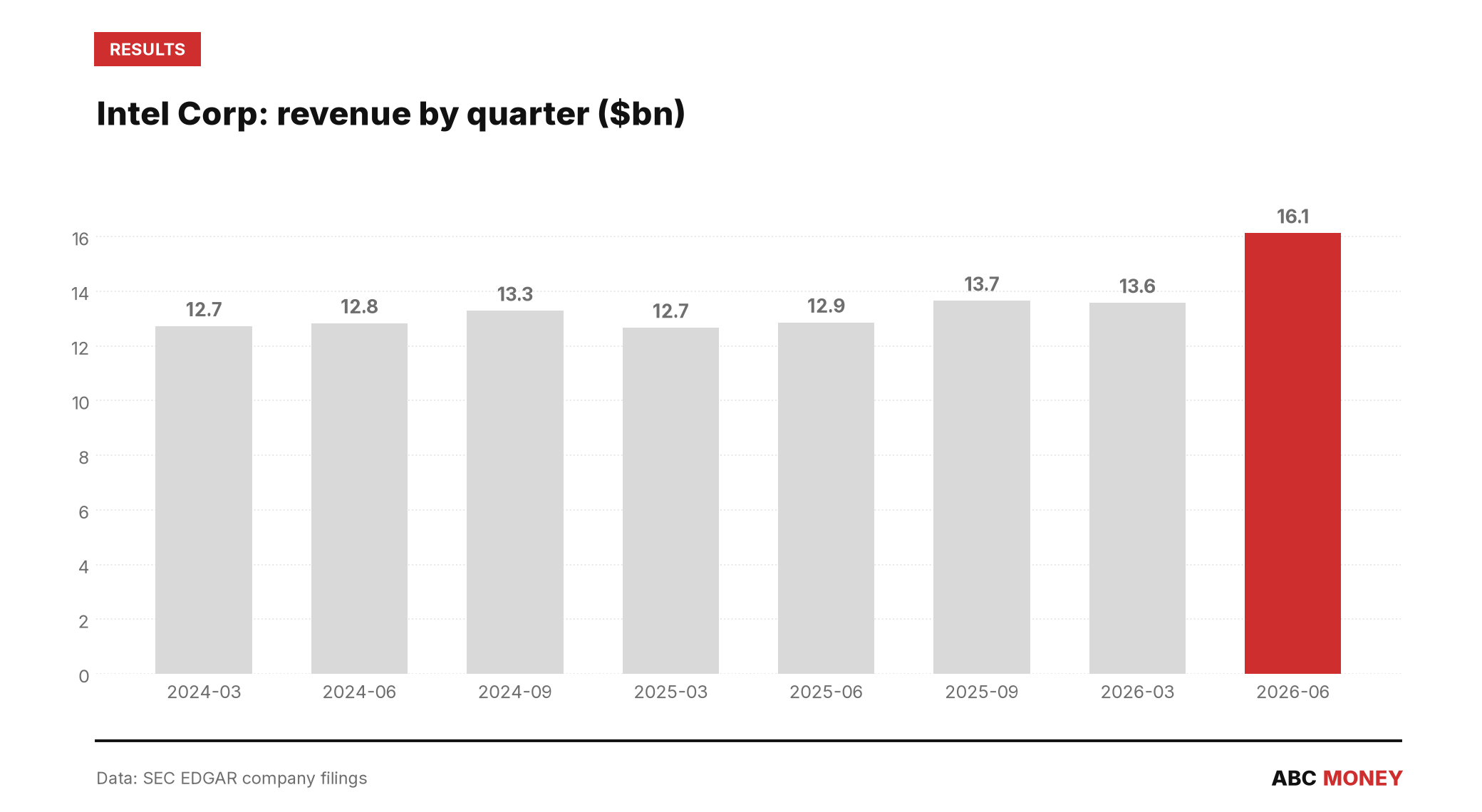
The partnership lands against the backdrop of a chipmaker whose quarterly results have whipsawed between large losses and brief profitability. Intel posted a net loss of $11.033bn in the quarter ended 27 June 2026, according to its 10-Q filing, after reporting net income of $4.063bn in the quarter ended 27 September 2025 – its first profitable quarter in a run that included losses as steep as $16.639bn in the third quarter of 2024, per EDGAR records. Revenue has been comparatively steadier, climbing from $12.724bn in the first quarter of 2024 to $16.128bn in the second quarter of 2026. The gap between that revenue trend and the lurching bottom line is the real story behind Intel’s turnaround narrative, and it is the context against which any manufacturing-partnership announcement has to be judged.
Short-selling activity gives no sign that traders are positioning hard either way on the news. FINRA’s daily short-sale ratio for Intel ranged between roughly 0.38 and 0.60 through the fortnight to 5 October 2026 – ordinary day-to-day noise, with no spike around the announcement window, according to FINRA data.
Two Applied Materials insiders, Adam Sanders and Timothy M. Deane, filed routine Form 4 ownership disclosures with the SEC on 5 October, the day before the announcement – standard paperwork rather than anything that bears directly on the Intel tie-up, though the timing will not go unnoticed by filings-watchers.
Applied’s EPIC Center campaign shows no sign of slowing. With KIOXIA, Besi and Intel already checked off, the open question is whether the next name on the list brings anything more concrete than another ribbon-cutting – or whether Applied’s actual manufacturing-tools order book, due for fuller disclosure at its next quarterly results, tells a different story to the one its press office is currently writing.
This article is for information only and is not investment advice or a recommendation to buy or sell any asset. Markets move quickly; figures are correct as sourced at the time of writing. Always do your own research before making financial decisions.


 Bitcoin
  Ethereum
  Tether
  BNB
BNB  USDC
USDC  XRP
XRP  Solana
  TRON
TRON  Lido Staked Ether
  Cardano
  Gram (prev. Toncoin)
  Avalanche