
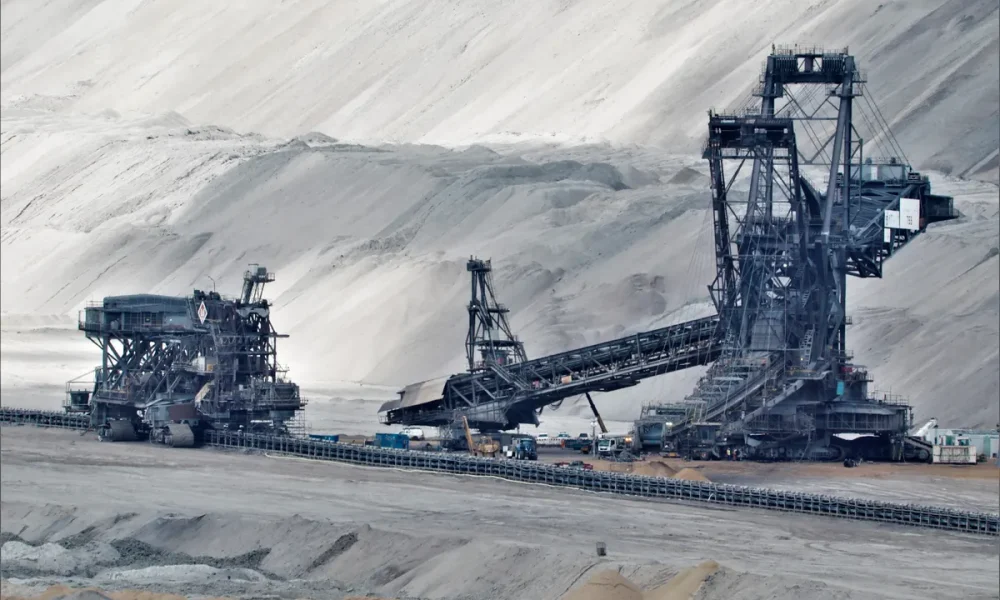
The GCM Resources share price has risen 377% since 13 August, turning a £5,000 position into £23,881 in roughly three weeks, on the back of a Bangladeshi government signal that coal may feature in the country’s future fuel mix. The move is dramatic even by penny-stock standards. The question for anyone still watching the ticker is whether there is substance behind it, or whether this is momentum running well ahead of reality.
What the Bangladesh signal actually said
The rally was triggered by comments from Bangladesh’s finance minister confirming that ‘active consideration’ is being given to coal as part of the country’s future energy mix. That is a long way from a development licence. GCM Resources has held its Phulbari coal deposit in North West Bangladesh for decades, and the company’s own filing notes that a Scheme of Development ‘…was submitted to the Government… in 2005 and still awaits approval.’
The project’s scale is not in doubt. The Phulbari deposit holds 572 million tonnes of coal on a JORC 2004-compliant basis, according to GCM’s 2025 Annual Report. Of that, 288 million tonnes are classified as ‘measured,’ the highest confidence tier. The company estimates the mine would add 1.5% ($3.4bn) to Bangladesh’s GDP annually and provide the foundation for a step-change in the country’s electricity-generating capacity.
On power generation, there is a minor discrepancy worth noting. The company’s website cites 6,000MW of power for Bangladesh over 30 years, while RNS-sourced investor statements reference approximately 6,600MW using energy-efficient technology. Both figures are from GCM’s own materials; the difference likely reflects the inclusion of efficiency assumptions in the higher figure.
GCM Resources share price rally masks a fragile balance sheet
Strip away the project optionality and what remains is a company burning cash with no operating income. At 31 December 2025, GCM held £706,000 in cash against £6.49m of borrowings. The 2025 Annual Report records consolidated accumulated losses of £33,952,000, with a total comprehensive loss of £1,388,000 for the year ended 30 June 2024.
Two equity raises in quick succession underscore the pressure. In January 2026, GCM placed 33,333,333 new ordinary shares of 1 pence each at 3.0 pence per share, raising £1.0 million for working capital, as announced on the London Stock Exchange. A month later, the company raised £1.25m by issuing 15.24 million new shares at an 18% discount to the then-closing bid price of 10p. Shareholders have been diluted twice in under two months.
With no revenue on the horizon until Bangladesh formally approves the project, further fundraisings look inevitable. The broader ambition, building three power stations to consume the coal produced, adds capital expenditure risk that dwarfs any working-capital round.
A Chinese partner, but no green light yet
One structural development that did move forward: GCM and Power Construction Corporation of China (PowerChina) extended their memorandum of understanding for Phulbari by 24 months, from 6 December 2025 to 6 December 2027. Under the existing arrangement, the two companies signed an EPC contract in March 2024 covering mine infrastructure construction and overburden stripping. The RNS announcement history on Investegate confirms the sequence of corporate activity. A credible engineering partner on a signed EPC is a more concrete step than the government’s verbal signals, but it still counts for nothing without Dhaka’s formal approval.
Coal carries its own structural headwinds. Roughly one-third of global electricity is still generated from the fuel, so the demand case for Phulbari’s output is not fanciful. However, financing large-scale coal infrastructure is increasingly difficult: international lenders have largely withdrawn from the sector, which means GCM’s funding path, if approval ever comes, is unlikely to be straightforward.
The setup from here
For investors drawn in by the share price move, the binary is clear. A formal Bangladeshi government approval would be transformational, and the PowerChina partnership means GCM is not starting from scratch on engineering. Against that, the company has been waiting for government sign-off since at least 2005, the balance sheet is thin, and dilution is already the pattern. The share price has already absorbed a good deal of optimism from a single ministerial comment.
The next material catalyst is either a formal project approval from Dhaka or, more likely given the pace of events, another funding announcement. The MOU with PowerChina runs to December 2027: that is the practical deadline before the engineering partnership itself comes back into question.

 Bitcoin
  Ethereum
  Tether
  BNB
BNB  USDC
USDC  XRP
XRP  Solana
  TRON
TRON  Lido Staked Ether
  Cardano
  Gram (prev. Toncoin)
  Avalanche