Medtronic plc (NYSE: MDT) said on 14 October 2026 that its MiniMed exchange offer closed heavily oversubscribed, with the Irish-domiciled device maker accepting 55,032,401 of its own ordinary shares in return for every one of the 252,813,348 MiniMed Group, Inc. (NASDAQ: MMED) shares it still held. The transaction, a split-off in which a parent swaps its stake in a subsidiary for its own stock rather than selling it for cash, severs Medtronic’s last equity tie to the insulin-pump and continuous-glucose-monitoring business it spun out just seven months earlier.
The headline figure most worth lingering on is not the share count but the proration factor – the proportion of each shareholder’s tendered stock that actually gets accepted when a swap offer is oversubscribed. Medtronic’s finance team, confirmed in its own official announcement, applied a factor of 18.289133%. In plain terms, shareholders who tendered Medtronic stock hoping to receive MiniMed shares in exchange had fewer than one in five of those tendered shares accepted, because so many Medtronic holders wanted out of MDT and into standalone MMED that demand swamped the pool of MiniMed stock on offer. Holders of odd lots – fewer than 100 shares – were exempted from the proration and had their tenders accepted in full.
How the maths adds up
The arithmetic is tidy: divide the 252,813,348 MiniMed shares exchanged by the 55,032,401 Medtronic shares accepted and you land almost exactly on 4.5939 – the final exchange ratio Medtronic set for the deal, as recorded in its SEC filing on the ratio determination. That consistency across the press release, the regulatory filings and the ratio calculation leaves little ambiguity about what actually happened, even if the scale of demand is the more interesting half of the story.
The offer itself launched on 14 September 2026, built around a formula set out in MiniMed’s Form S-4 registration statement (Reg No. 333-298914). Before it opened, Medtronic had retained roughly 89.86% of MiniMed’s outstanding common stock, according to an employee communication Medtronic filed with the regulator. That residual stake is now gone. Medtronic has said that, once the exchange and related steps are effectuated, it will hold no equity interest whatsoever in the business it created.
From diabetes unit to Nasdaq name in seven months
MiniMed’s rise to independence has been quick by the standards of corporate carve-outs. The entity was only incorporated on 27 February 2025, before completing an initial public offering of 28,000,000 shares at $20.00 apiece on 9 March 2026 – a float Medtronic chief executive Geoff Martha described at the time as the second-largest in medtech history. The split-off completed this week is the second and final stage of that separation, following the playbook used by several large-cap conglomerates shedding divisions without triggering a capital-gains bill for shareholders.
Not everything about the standalone business has been smooth. MedTech Dive has reported that MiniMed’s US insulin pump sales fell 15% in the first half of its 2026 fiscal year, a decline tied to a delayed launch of its Simplera continuous glucose monitor and intensifying competition – a reminder that investors chasing MiniMed exposure through this offer are buying into a business still finding its footing outside Medtronic’s balance sheet.
Medtronic’s books look untroubled by the clean-up
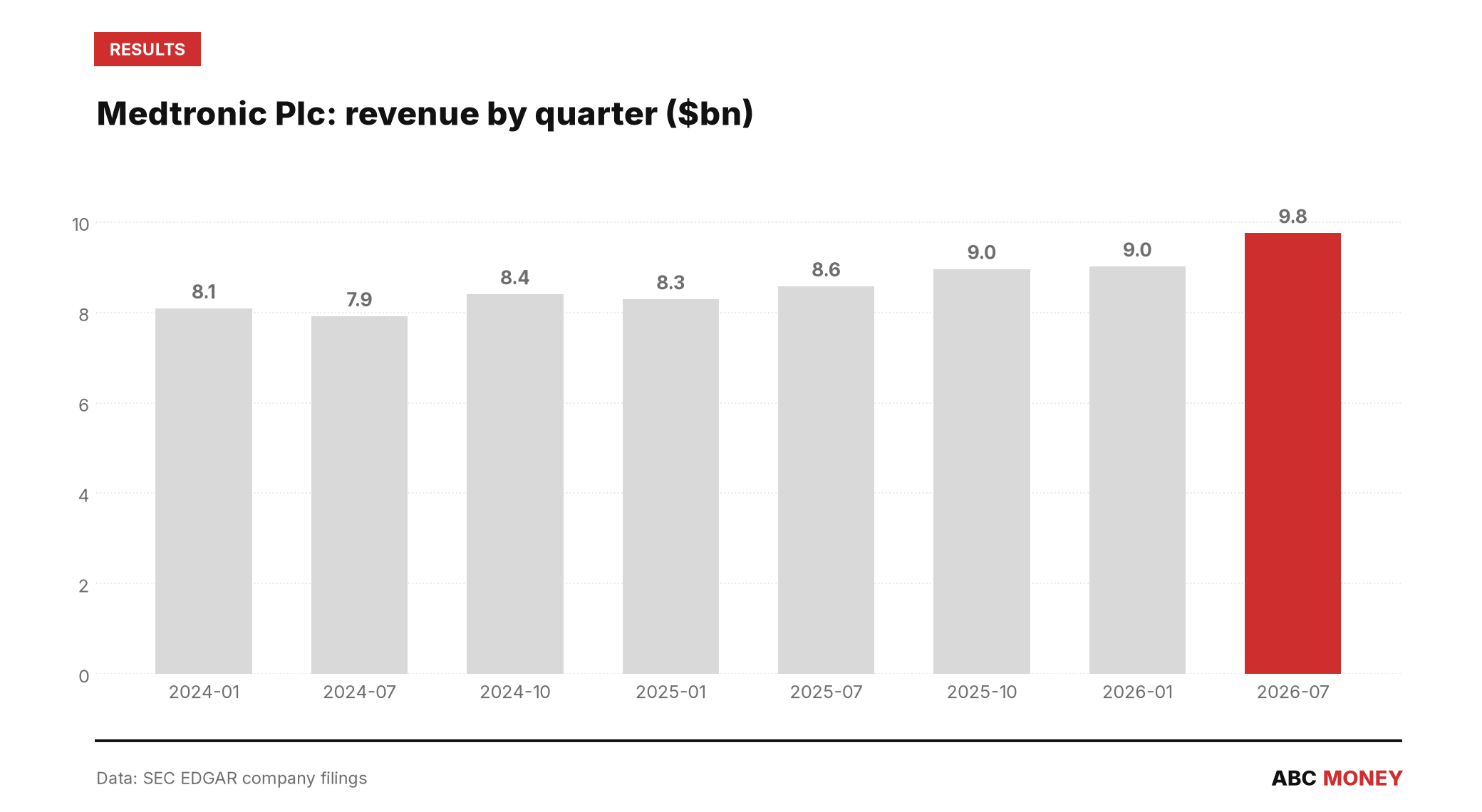
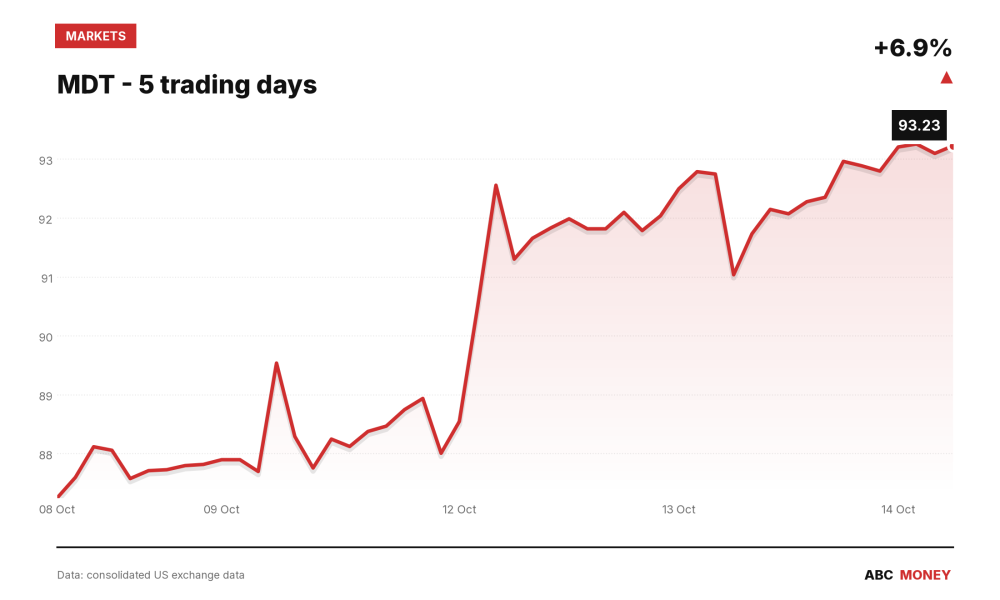
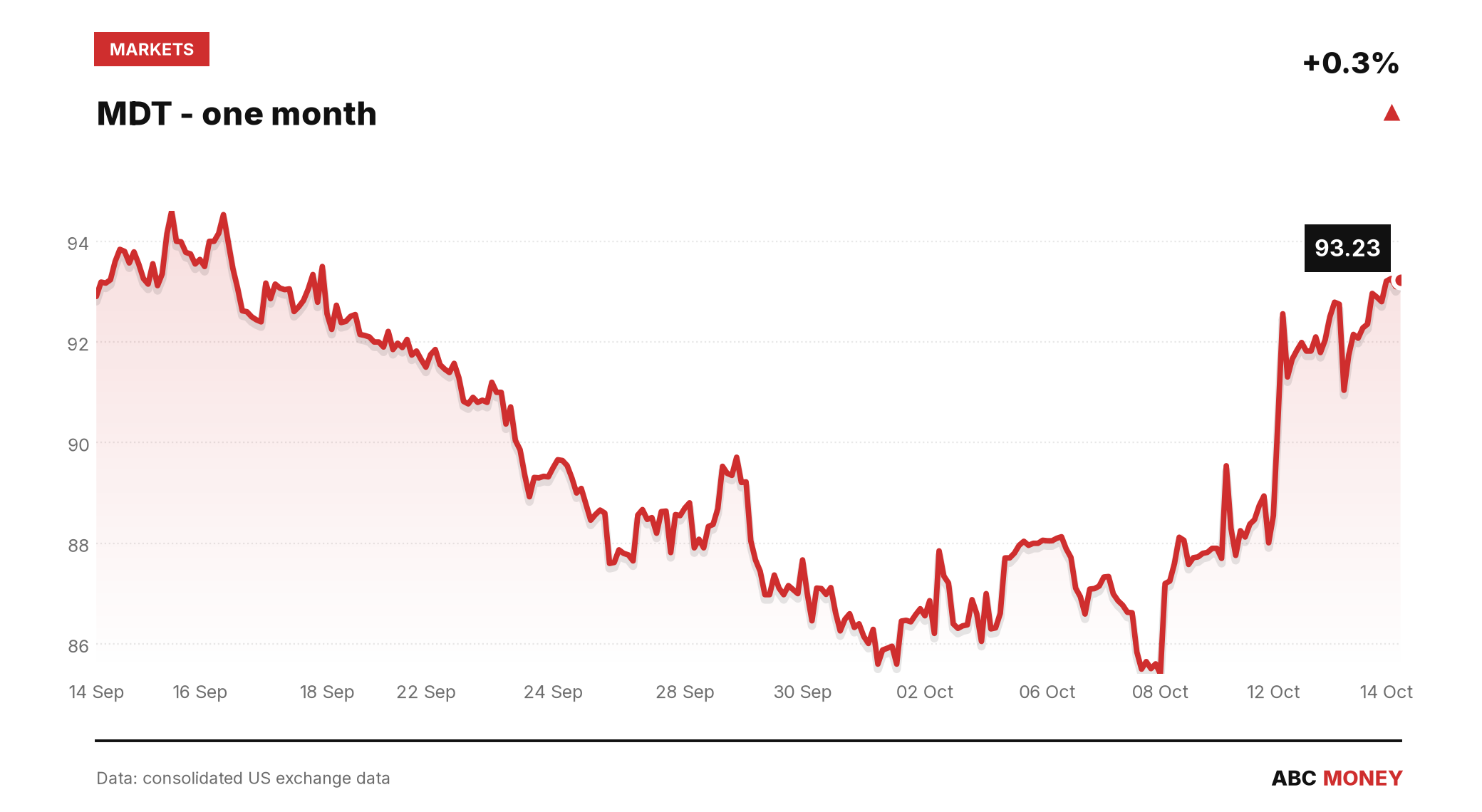
For Medtronic itself, the split-off tidies up a balance sheet that continues to generate steady, if unspectacular, growth. The group’s most recent 10-Q, covering the quarter to 31 July 2026, showed net income of $1.47bn and diluted earnings per share of $1.14, extending a run of quarterly profits that has sat consistently above $1bn for more than two years. Shares closed the session following the final results at $93.45, up 1.19% on the day and 3.02% over the preceding 20 trading sessions, touching a fresh 20-day high on the same mark.
Trading volume around the announcement ran at roughly three-quarters of its 20-day average, suggesting the market had largely priced in the result rather than been surprised by it – consistent with daily short-sale volume data from FINRA, which showed the proportion of Medtronic trading tied to short positions easing from 0.734 on 9 October to 0.466 by 13 October, the day before the final results landed.
Several Form 4 filings from MiniMed insiders landed with the regulator late on 13 October, in the hours before the results were made public, pointing to position adjustments as the separation crossed its final line. With the swap now settled, MiniMed trades as a fully independent company for the first time since its creation, leaving its own operating performance – rather than its parent’s residual stake – as the only thing left for the market to price.
This article is for information only and is not investment advice or a recommendation to buy or sell any asset. Markets move quickly; figures are correct as sourced at the time of writing. Always do your own research before making financial decisions.


 Bitcoin
  Ethereum
  Tether
  BNB
BNB  USDC
USDC  XRP
XRP  Solana
  TRON
TRON  Lido Staked Ether
  Cardano
  Gram (prev. Toncoin)
  Avalanche