
onsemi (NASDAQ: ON) has rewritten the terms of its takeover of Synaptics (NASDAQ: SYNA), ditching an all-stock structure for a straight $123-a-share cash offer worth roughly $5.7bn, after an unsolicited rival bid forced its hand. The revised agreement, dated 1 October 2026, replaces the companies’ original 25 June tie-up and comes with a line both boards are keen to repeat: the new deal is immediately earnings-accretive for onsemi shareholders, not dilutive like the one it replaces.
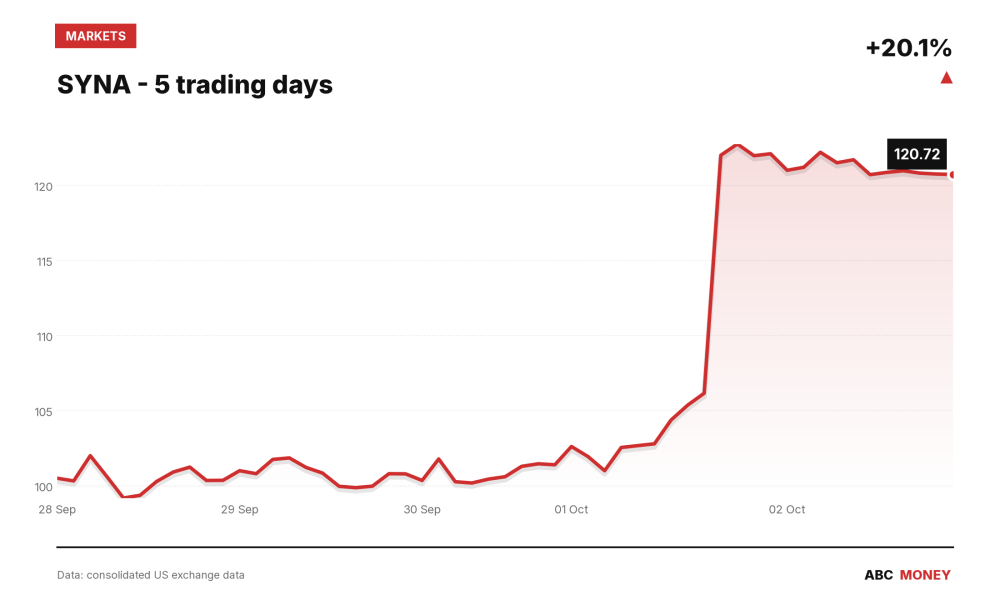
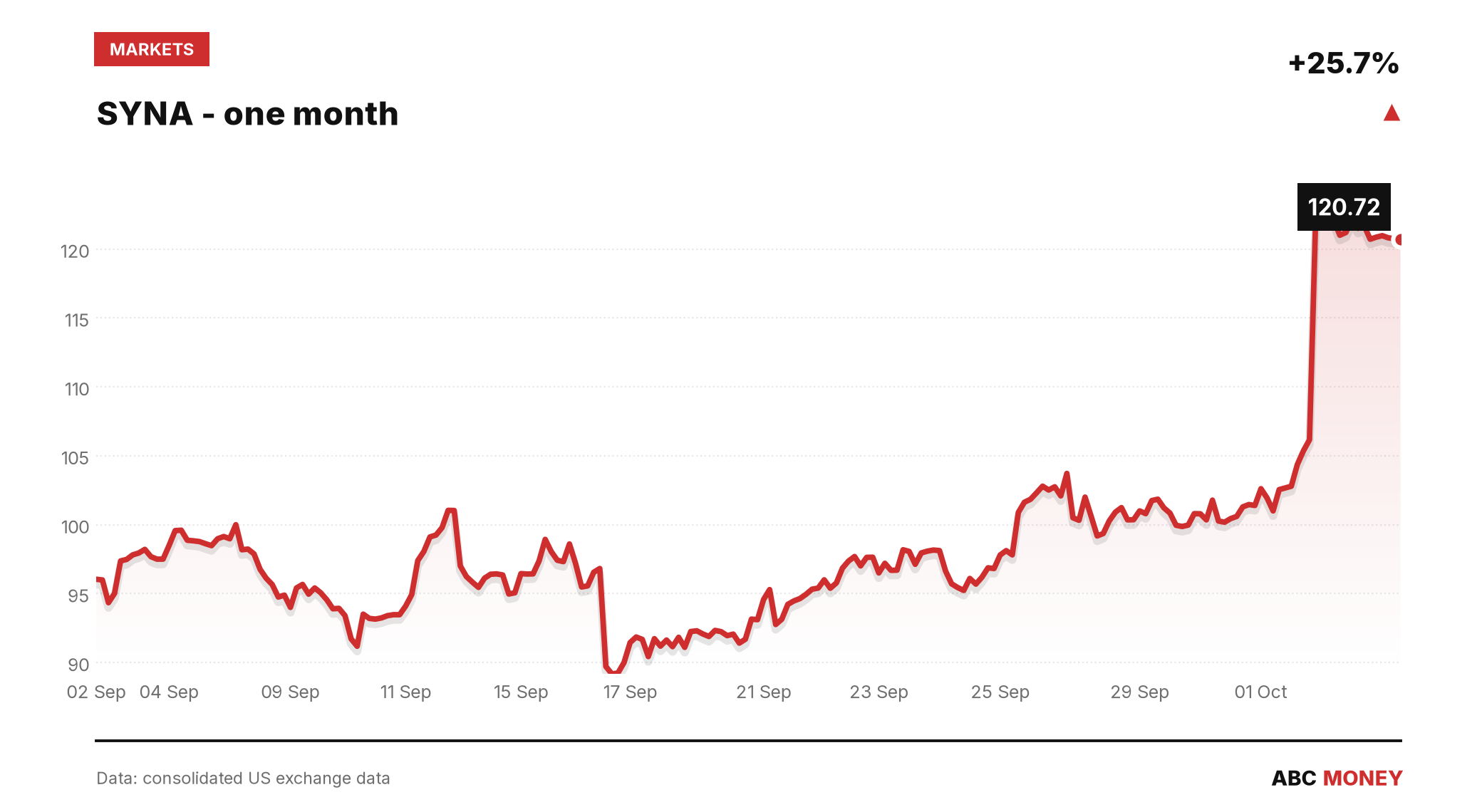
The market’s verdict was swift. Synaptics shares traded at $120.73 by the close on 2 October, up 19.49% over the preceding 20 trading days and on volume 8.29 times the 20-day average, according to consolidated exchange data tied to the announcement. Intraday on 2 October, Synaptics stock jumped 13.74% and onsemi gained 4.45%, Benzinga reported, with onsemi shares also up more than 7% in the premarket session that day. Investopedia confirmed both stocks rallied together, an unusual pairing for an acquirer and its target that signals investors read the amended terms as good for both sides.
What changed, and why it matters for onsemi’s balance sheet
The original deal, struck on 25 June, was an all-stock affair: a fixed exchange ratio of 1.350 onsemi shares for every Synaptics share, valuing the combination at roughly $7bn. Paying in shares is the cheaper route for an acquirer so long as its own stock is well bid, but it comes with a cost shareholders rarely love – dilution, meaning existing holders end up owning a smaller slice of a bigger company once new shares are issued to pay for the deal. An unsolicited competing proposal for Synaptics changed that calculus. Rather than sweeten the stock offer and dilute its own shareholders further, onsemi’s board opted to switch to cash entirely, cutting the headline value from around $7bn to roughly $5.7bn while framing the new terms as “immediately EPS accretion,” per the companies’ own press release.
Synaptics’ board approved the amended agreement unanimously, and US antitrust clearance for the deal has already been secured, according to TipRanks. That removes one of the usual sources of closing risk in large semiconductor tie-ups, where regulatory review can drag on for the best part of a year. onsemi chief executive Hassane El-Khoury has described the restructured terms as a more financially attractive transaction for onsemi shareholders than the stock-for-stock version it replaces.
Synaptics’ numbers explain why a certain exit has appeal
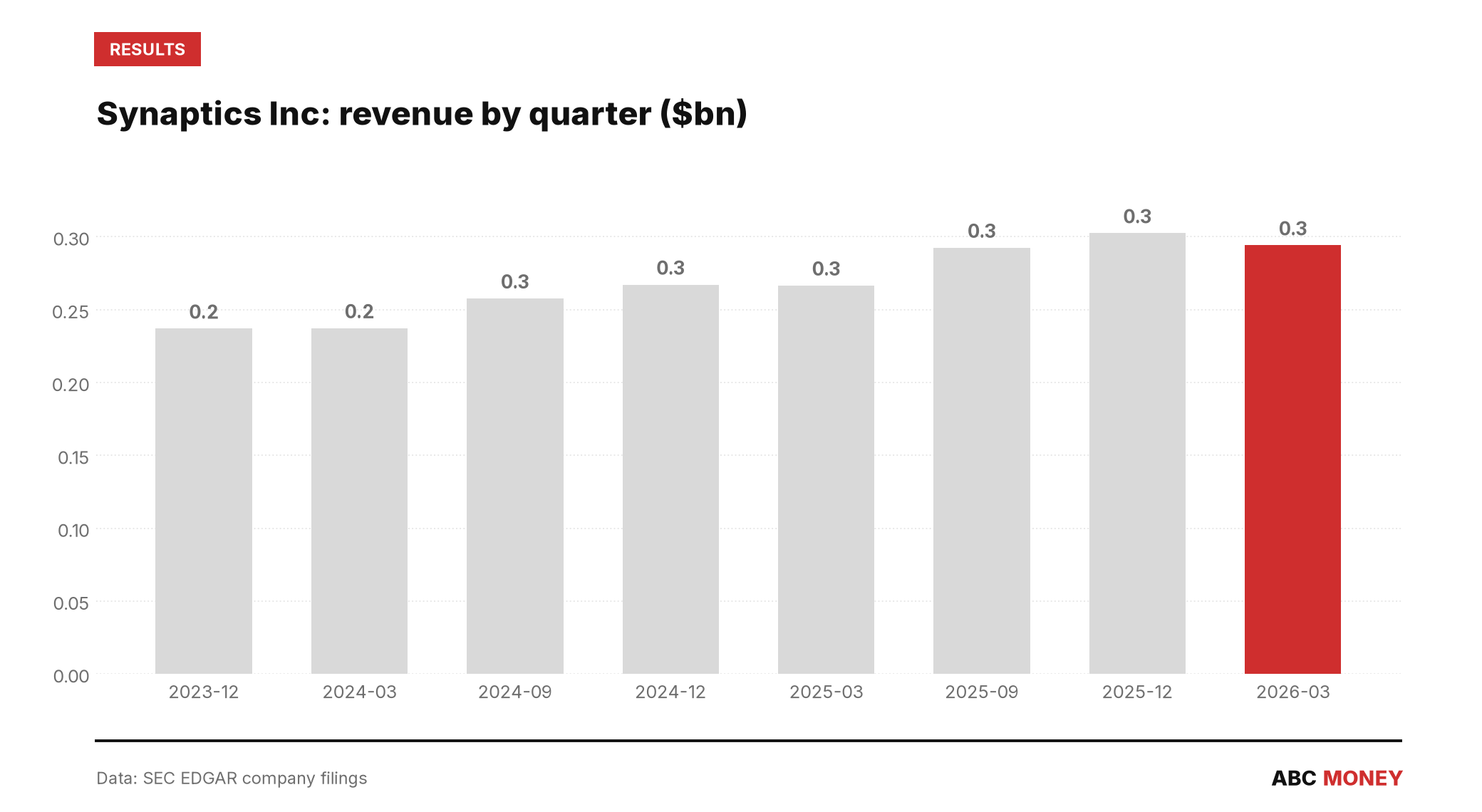
The financial backdrop at Synaptics helps explain why a guaranteed cash payout might land well with its own shareholders, even at a lower headline valuation than the original stock deal implied. The company has posted a net loss in six of its last eight reported quarters, including an $8.0m net loss and $0.21 diluted loss per share for the quarter ended 28 March 2026, according to its most recent 10-Q filing with the US Securities and Exchange Commission. That sits alongside a genuine growth story on the top line: quarterly revenue has climbed from $237.0m in the quarter ended December 2023 to $294.2m in the quarter ended March 2026, based on the same filings. A business growing revenue but still bleeding at the bottom line is exactly the kind of profile where a rival’s bid can do useful price-discovery work for shareholders who’d otherwise have to bet on execution catching up with the growth.
Positioning data shows no late scramble to cover shorts
One thing the run-up to the amendment did not show was a stampede of short-sellers rushing to cover bearish bets ahead of the news. FINRA’s daily short-sale volume data for Synaptics puts the stock’s short ratio – the share of daily trading volume attributable to short sales – oscillating between roughly 0.51 and 0.83 through the weeks leading into the 1 October announcement, a range that suggests positioning was fairly settled rather than skewed by rumours of an imminent deal change. That makes the rally look like a genuine reaction to the terms themselves rather than a squeeze unwinding ahead of the news.
The amended agreement still needs to clear Synaptics shareholder approval before it can close, and the companies have not yet set a firm closing date beyond the terms disclosed in their 8-K filing with the SEC. With US antitrust clearance already in hand, the remaining hurdle is largely a matter of paperwork and a shareholder vote – unless another bidder decides the price-discovery exercise isn’t quite finished.
This article is for information only and is not investment advice or a recommendation to buy or sell any asset. Markets move quickly; figures are correct as sourced at the time of writing. Always do your own research before making financial decisions.


 Bitcoin
  Ethereum
  Tether
  BNB
BNB  USDC
USDC  XRP
XRP  Solana
  TRON
TRON  Lido Staked Ether
  Cardano
  Gram (prev. Toncoin)
  Avalanche