
The Neutron launch delay that Rocket Lab Corp (NASDAQ: RKLB) confirmed on Wednesday was not, on its own, a surprise. The company had been signalling trouble for months. What rattled investors was the finality of it: the medium-lift rocket central to Rocket Lab’s ambitions beyond its small Electron launcher will not fly this year after all, and the firm now says the debut is pushed to 2027.
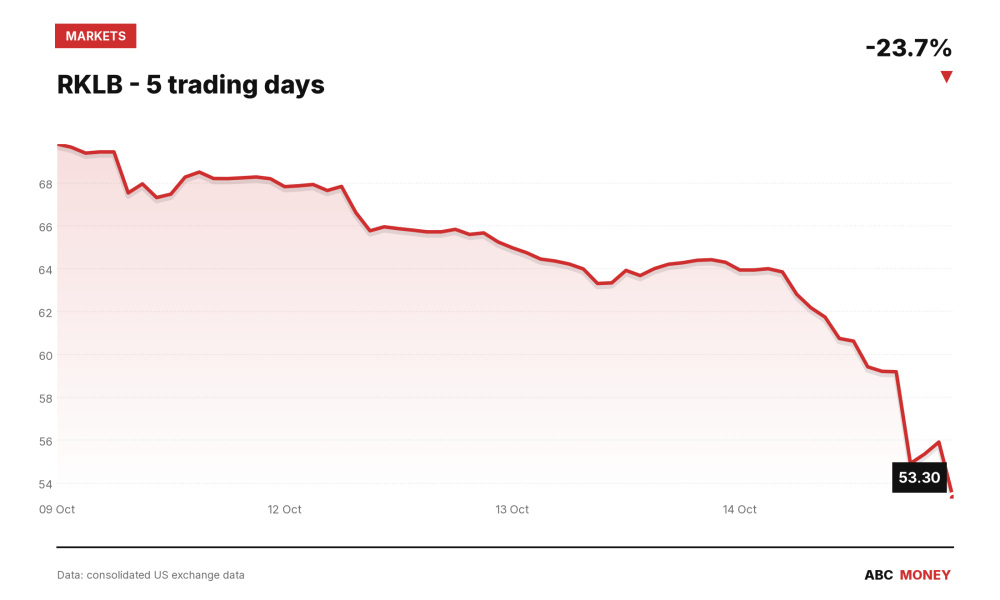
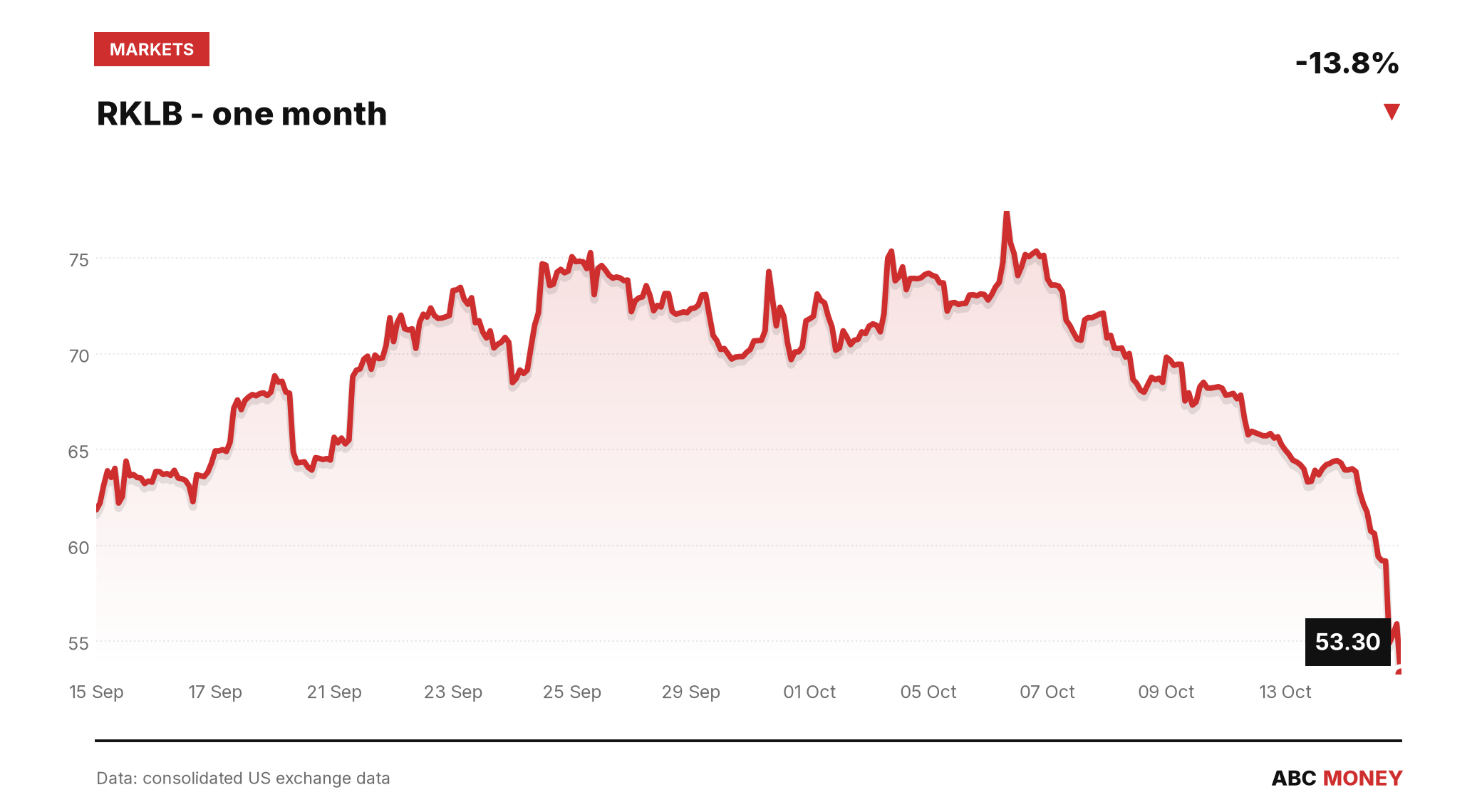
Shares fell hard on the news. Rocket Lab’s stock dropped 12.08% over the 24 hours to 11pm UTC on 14 October, according to consolidated US exchange data, extending a 22.18% slide over the preceding 20 trading days as pressure built ahead of the announcement. Reuters and MarketWatch both reported the stock falling sharply in the regular session, with Reuters noting a further leg lower in after-hours dealing once the scale of the delay became clear.
Rocket Lab itself was blunt about it. “Today we shared an update on Neutron’s development, including adjusting the schedule for flight one to 2027,” the company wrote on X, a statement that followed its own filing with the Securities and Exchange Commission confirming the new timeline.
From “Narrowing Window” to Outright Slip
This is the second time this year Rocket Lab has had to walk the Neutron timeline backwards. As far back as August, the company had already softened its public target from launching Neutron by the fourth quarter of 2026 to simply delivering the rocket to the launch pad by then — a materially lower bar. Spaceflight Now reported at the time that Rocket Lab itself described the window for an end-of-year 2026 debut as “narrowing.”
By October, even that reduced ambition had slipped. Wednesday’s announcement confirmed what the summer’s hedging had implied: there would be no Neutron flight in 2026 at all.
The proximate cause, as Bloomberg reported, is a newly identified issue with how the rocket’s propellant tanks are manufactured — a problem distinct from, but related to, a Stage 1 tank rupture Rocket Lab disclosed in a January 2026 filing, when a tank failed during a hydrostatic pressure qualification test. Tank manufacturing and structural integrity have now been a recurring theme in Neutron’s development setbacks for the best part of a year.
A Delay, Not (Yet) a Verdict on the Business
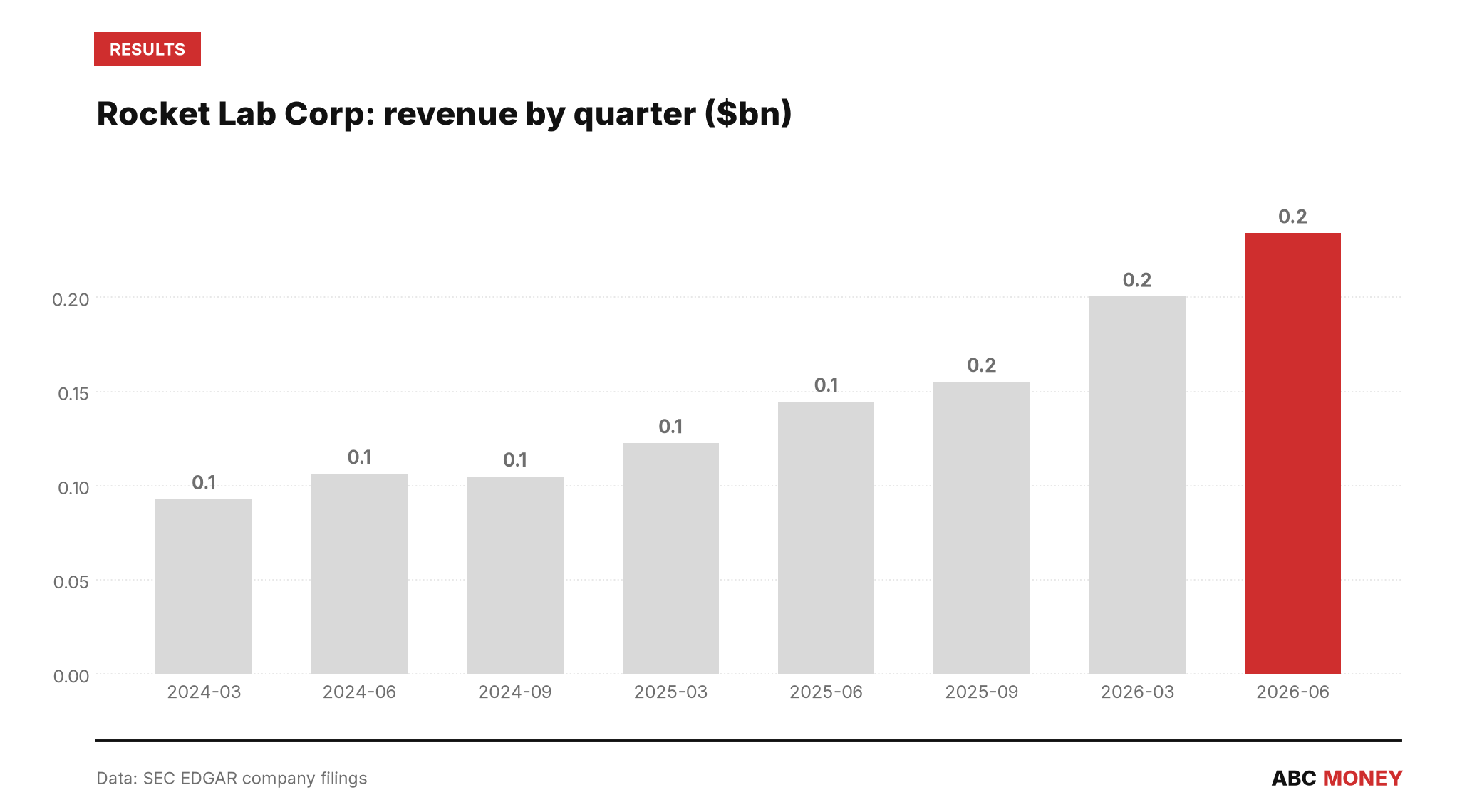
The sell-off is worth separating from the underlying financial picture, which has been moving in the opposite direction. Rocket Lab’s revenue has climbed steadily: $234.066 million in the second quarter of 2026, up from $144.498 million a year earlier — growth of roughly 62% — driven largely by the existing Electron launch vehicle and the company’s space systems business, neither of which depends on Neutron reaching orbit.
Losses have been narrowing even as revenue scales. Rocket Lab posted a net loss of $49.258 million in the second quarter of 2026, down from $66.414 million in the same quarter a year earlier, per the company’s quarterly filings with the SEC. That is still a loss-making business, but the trajectory — faster revenue growth alongside a shrinking deficit — is the kind of profile that had, until Wednesday, helped justify the stock’s premium valuation relative to peers.
Put another way: the market’s reaction looks like a repricing of Neutron specifically, rather than a wholesale loss of confidence in Rocket Lab’s existing launch and satellite-component businesses. Neutron matters because it is the vehicle meant to carry Rocket Lab into the heavier, more lucrative end of the launch market currently dominated by SpaceX’s Falcon 9 — a market Rocket Lab cannot meaningfully contest with Electron alone. Every additional year of delay is a year that opportunity sits with competitors.
What the Positioning Data Shows
One thing that did not happen around the announcement was a spike in bearish positioning. FINRA’s daily short-sale data — which tracks the share of trading volume executed as short sales, a rough gauge of bearish betting — shows RKLB’s ratio running between roughly 0.43 and 0.52 through early-to-mid October, with no discernible jump on or around 14 October. That suggests Wednesday’s fall was driven by long holders reducing exposure and new sellers reacting to the news, rather than a coordinated short-side attack.
The broader market backdrop was unremarkable that week, which reinforces the stock-specific reading. The 10-year US Treasury yield stood at 5.21% on 13 October, barely changed from 5.24% a session earlier, while the gap between 10-year and 2-year yields — a closely watched signal of growth expectations — narrowed slightly to 0.37 percentage points. None of that points to a rates-driven shock hitting growth stocks broadly; Rocket Lab’s move looks like its own story.
What Comes Next
Rocket Lab has not published a more granular timeline within 2027 for Neutron’s debut, leaving investors to watch for further detail in the company’s coming quarterly disclosures and any follow-up statements on the tank-manufacturing fix. Given the rocket’s history of slipping targets — from an original multi-year development plan, to a Q4 2026 launch goal, to a Q4 2026 pad-delivery goal, to Wednesday’s confirmed 2027 debut — the market’s caution about taking the next date at face value is unlikely to disappear quickly. For now, the question hanging over the stock is not whether Rocket Lab’s existing business can keep growing, which it has been doing briskly, but how much longer shareholders will have to wait for the rocket meant to be its next act.
This article is for information only and is not investment advice or a recommendation to buy or sell any asset. Markets move quickly; figures are correct as sourced at the time of writing. Always do your own research before making financial decisions.

 Bitcoin
  Ethereum
  Tether
  BNB
BNB  USDC
USDC  XRP
XRP  Solana
  TRON
TRON  Lido Staked Ether
  Cardano
  Gram (prev. Toncoin)
  Avalanche