
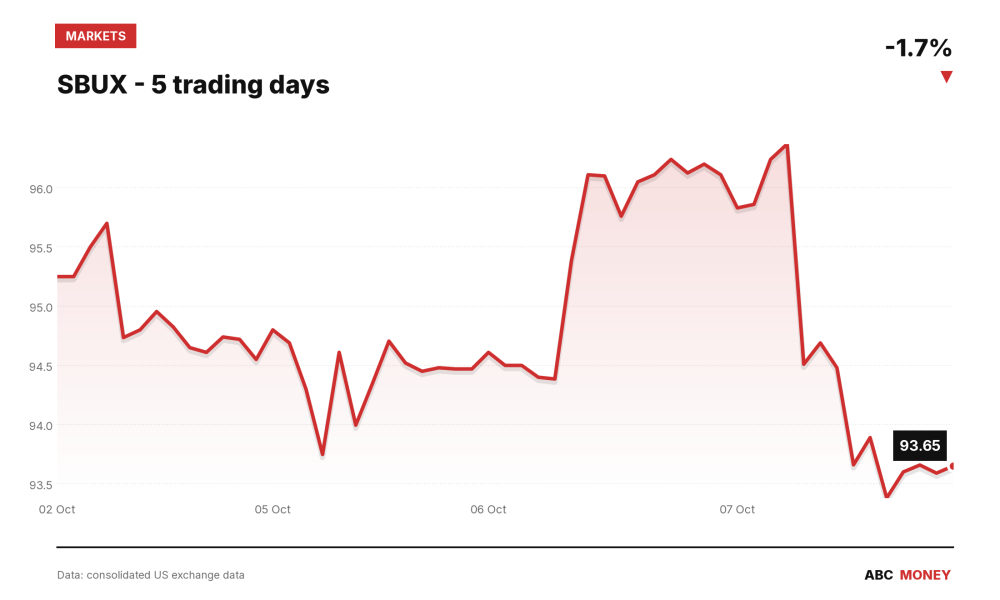
Starbucks (NASDAQ: SBUX) has confirmed a dividend increase, lifting its quarterly payout from $0.62 to $0.63 a share, the company said in a statement on 7 October 2026. The new rate annualises to $2.52 a share and will be paid on 27 November 2026 to shareholders on the register as of 13 November, according to GuruFocus.
It is a modest move in isolation – a rise of roughly 1.6%, per Seeking Alpha’s write-up of the announcement – but the symbolism matters more than the arithmetic. The release itself frames this as Starbucks’ sixteenth consecutive annual dividend increase, a streak confirmed by a mirror of the press release on Stockhouse. Cathy Smith, Starbucks’ chief financial officer, said the move “reflects our continued confidence,” according to a copy of the release carried by FinancialContent.
What the Starbucks dividend increase actually costs
At $0.63 a quarter, the new payout sits against diluted earnings per share of $0.91 for the quarter ended 28 June 2026 – the most recent reported – implying a payout ratio (the share of profit paid out as dividends) of roughly 69%, using figures from Starbucks’ 10-Q filed with the SEC. That is a comfortable cushion on a single-quarter basis, but it understates how uneven the year behind it has been. A year earlier, in October 2025, Starbucks raised the payout from $0.61 to $0.62 and called that its fifteenth straight increase, so this year’s move continues a pattern management has been keen to protect regardless of the quarter-to-quarter earnings picture, per Starbucks’ own investor relations archive.
Earnings took the scenic route to get here
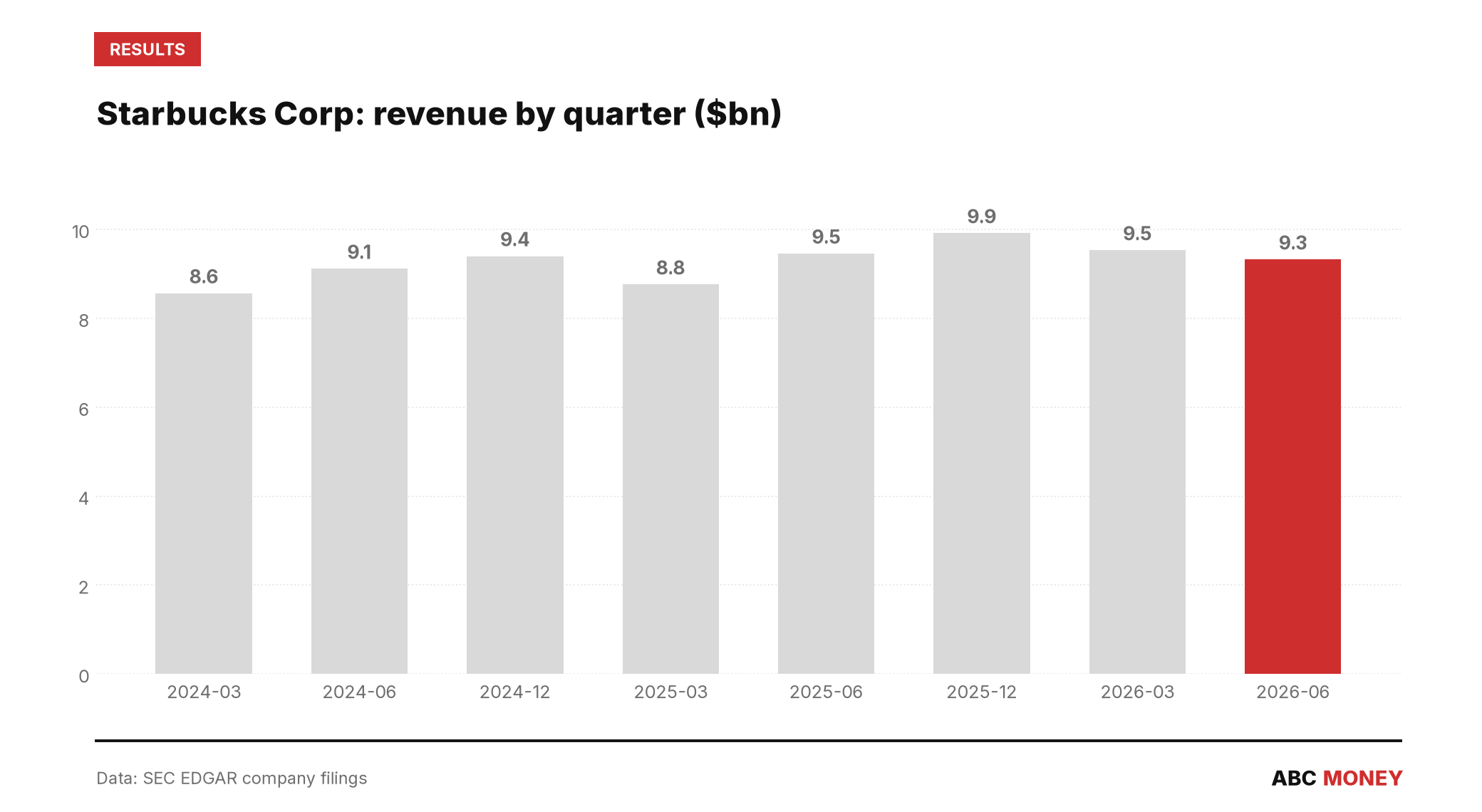
The quarter-by-quarter numbers explain why the “confidence” framing invites scrutiny. Diluted EPS for the first quarter of fiscal 2026 came in at just $0.26, then climbed to $0.45 in the second quarter, before jumping to $0.91 in the third – a recovery large enough to carry the streak, but a long way from steady, based on Starbucks’ sequential 10-Q filings. Revenue over the same run moved from $9.92bn to $9.53bn to $9.32bn – essentially flat to modestly declining, which means the EPS rebound owes more to cost and margin management than to the top line reaccelerating. A board willing to raise the dividend through that kind of quarter is making a statement about commitment to the payout as much as about the underlying trajectory of the business.
None of that makes the $0.63 figure, the payment date, or the annualised rate any less solid – all of it checks out against the company’s own filing and against independent coverage, including Investing.com’s report of the same numbers. The gap worth watching is between the tidy “sixteen years running” narrative and an earnings base that spent much of fiscal 2026 well below its eventual recovery point.
Shares near the bottom of their recent range
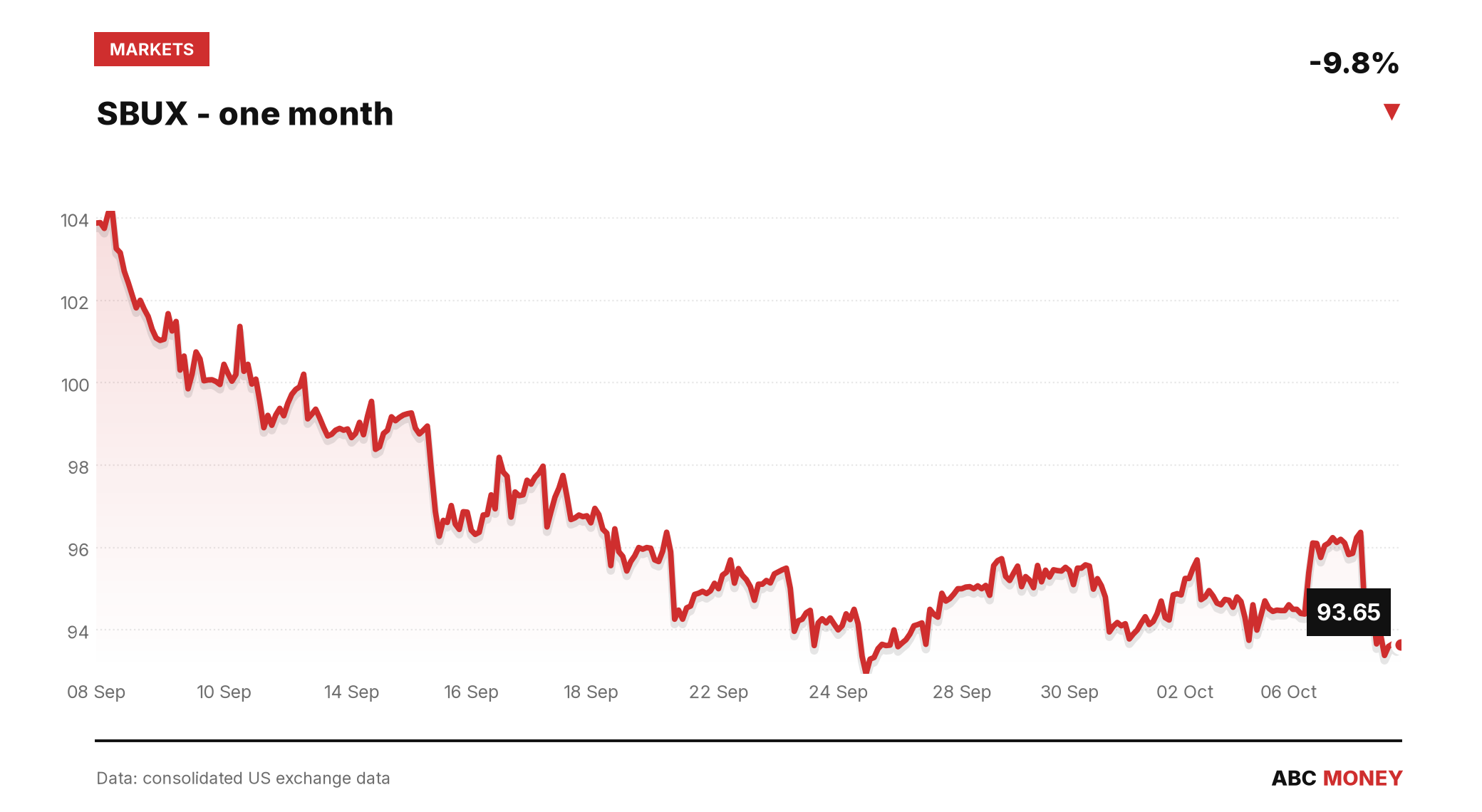
The announcement landed with SBUX stock trading at $93.65, down 0.88% on the day and 4.08% over the preceding 20 trading sessions, close to the low end of that stretch’s $92.93-$97.98 range, according to consolidated exchange data. At that price, the new annualised rate implies a forward yield of about 2.69%, per the Seeking Alpha analysis cited above – a figure that looks less compelling set against a 10-year US Treasury yield of 5.31% as of 5 October, Federal Reserve data show, with the 2-year note at 4.84%. For income-focused investors, the dividend bump narrows but does not close that gap with risk-free returns.
The payment lands on 27 November, two days before the US Thanksgiving holiday weekend that traditionally marks the start of Starbucks’ peak seasonal trading period, with shareholders of record as of 13 November entitled to collect. Whether the earnings recovery that underwrote this year’s increase holds into the holiday quarter is likely to shape how comfortably the seventeenth increase, whenever it comes, gets justified.
This article is for information only and is not investment advice or a recommendation to buy or sell any asset. Markets move quickly; figures are correct as sourced at the time of writing. Always do your own research before making financial decisions.


 Bitcoin
  Ethereum
  Tether
  BNB
BNB  USDC
USDC  XRP
XRP  Solana
  TRON
TRON  Lido Staked Ether
  Cardano
  Gram (prev. Toncoin)
  Avalanche