Bitcoin
 Ethereum
 Tether
 BNB
 USDC
 XRP
 Solana
 TRON
 Lido Staked Ether
 Cardano
 Gram (prev. Toncoin)
 Avalanche
Contributed content: this article was written by a third-party contributor and does not necessarily reflect the views of ABC Money. Editorial and Advertising Policy
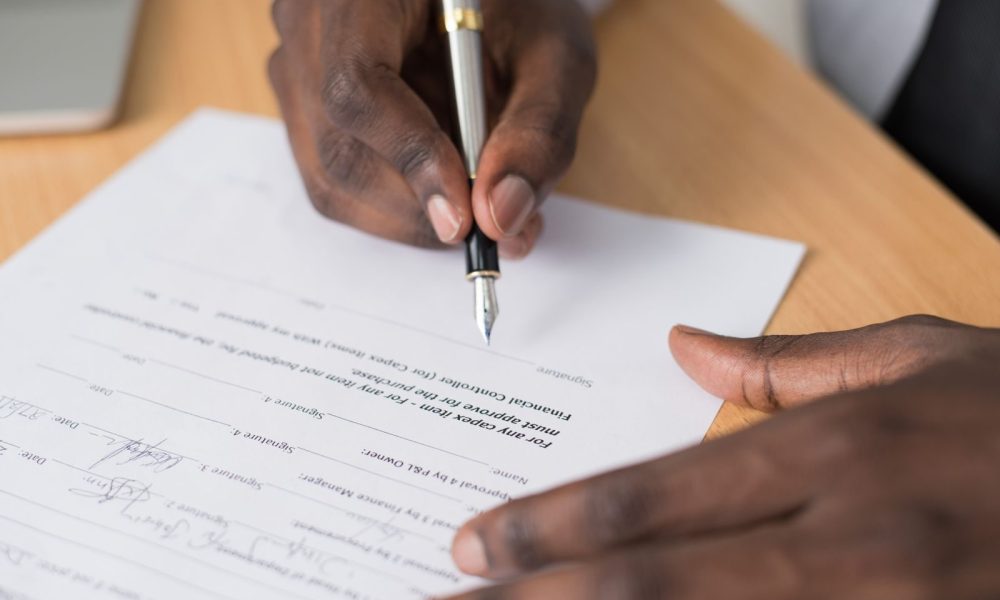
A contract is written for the good days and read on the bad ones. The product inventor and entrepreneur lists the habits that make the difference.
Most founders judge a contract by whether the other side signed it. Steven Capuano judges it by a harder test: what a stranger would conclude from reading it during a dispute, with no knowledge of the relationship and no reason to be generous.
Capuano has built product companies for more than twenty years, taking items from concept to commercial launch and working through supplier deals, licensing terms, and distribution agreements along the way. His habits are not legal advice and he does not present them that way. They are the practices of an operator who has learned which pages matter when a relationship turns. Here are seven.
1. Write down the deal you are actually doing.
Templates borrowed from a previous deal or another company carry terms nobody negotiated. When a dispute arrives, a court generally reads what the document says, not what the parties meant. Capuano’s rule is that every material term should describe the real arrangement, even if that means editing a template line by line.
2. Define the words that carry money.
"Defective," "delivery," "net sales," "exclusive." Each of these can be read several ways, and each controls who pays whom. A short definitions section, he argues, prevents more arguments than any other part of an agreement.
3. Put ownership in a sentence of its own.
Who owns the molds, the tooling, the design files, the improvements made during the relationship? Capuano wants that answered explicitly, because silence on ownership is usually resolved in favor of whoever made the thing, not whoever paid for it.
4. Decide where and how disputes get resolved.
Governing law, venue, and whether disputes go to court or to arbitration are often left as boilerplate. They should not be. A clause choosing a distant venue can make a modest claim too expensive to pursue. A clause choosing arbitration changes the rules, the cost, and the privacy of the process. Groups such as the American Arbitration Association publish their procedures, and founders should read them before agreeing to them.
5. Keep amendments in writing.
Relationships evolve. Prices change, volumes change, responsibilities shift. Capuano’s habit is to confirm every meaningful change in a short signed amendment or at minimum a written confirmation both sides acknowledge. Many contracts include a clause requiring exactly that, and founders routinely ignore it until the other side points to it in court.
6. Date and keep the record.
A signed agreement that cannot be found is barely better than none. Final executed versions belong in one place, with the date, the parties, and every amendment attached. "If you have to search three inboxes to prove what you agreed to, you have already lost time you will pay for," Capuano said.
7. Reread before you renew.
Agreements often renew automatically. Capuano treats each renewal date as a review date, a chance to fix terms that no longer match the business before they lock in for another cycle.
None of these habits require a large legal budget. They require attention at the moment a deal feels least in need of it. That, Capuano says, is the whole trick: the best time to prepare a contract for court is when nobody can imagine it ending up there.