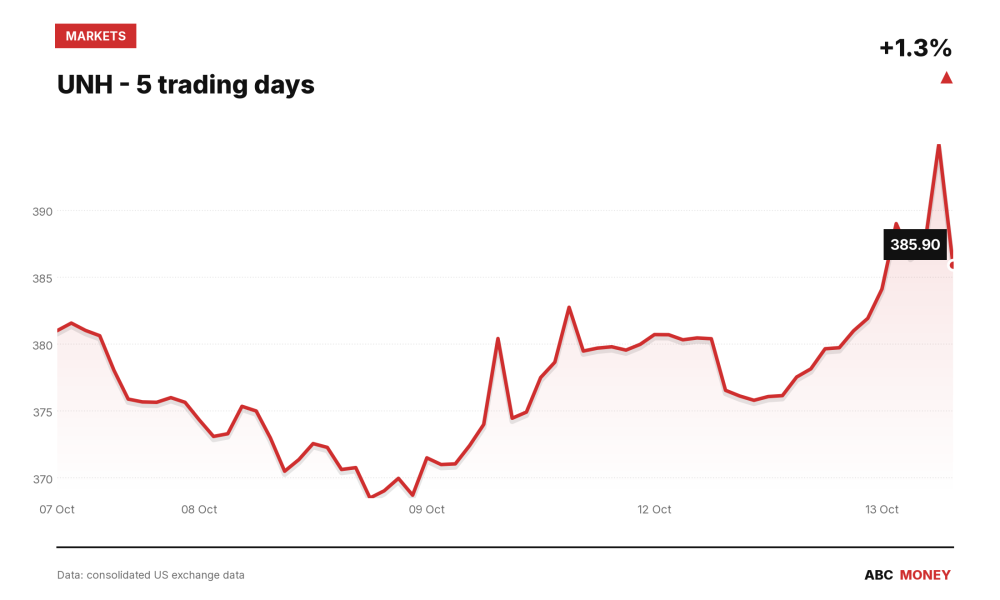
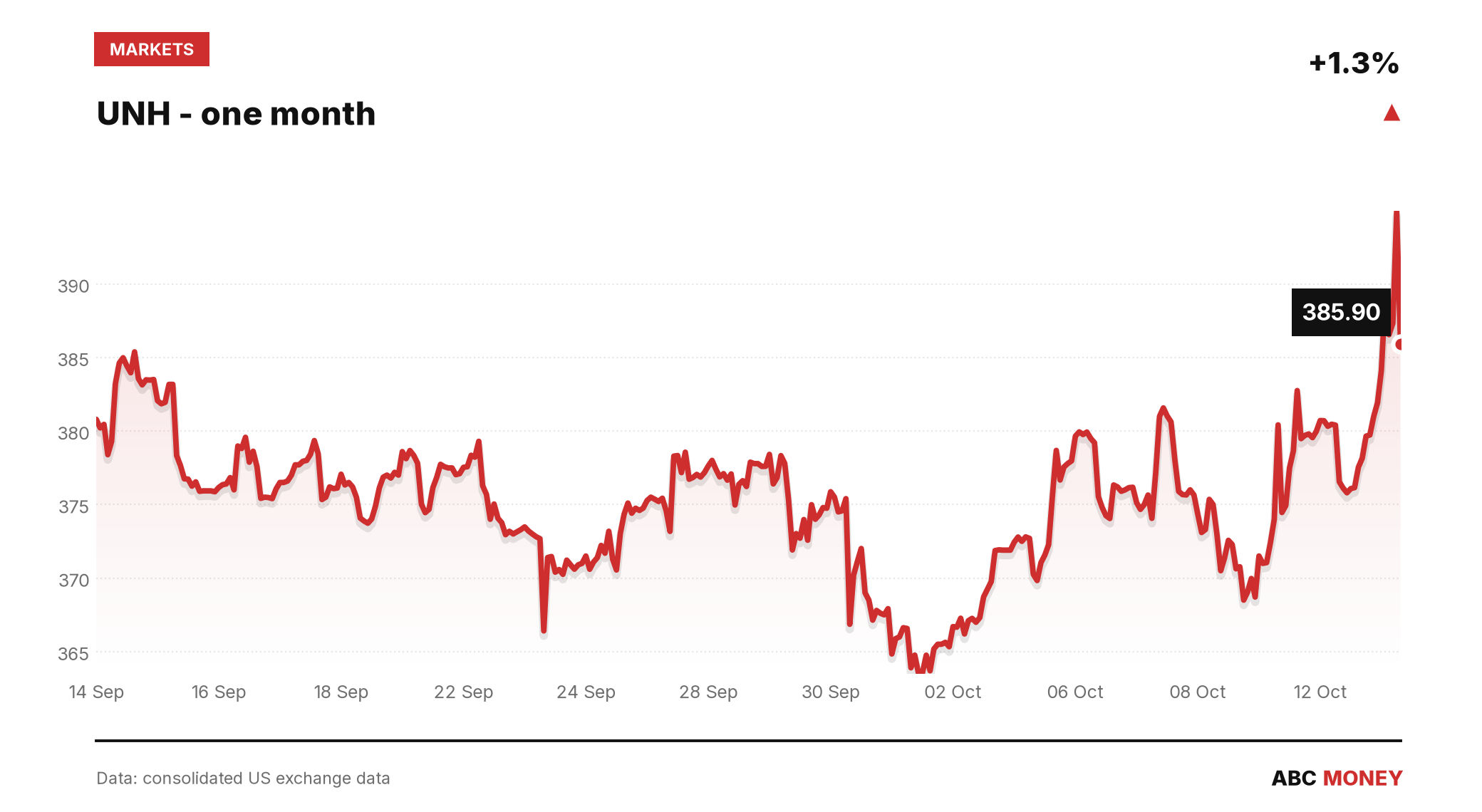
UnitedHealth Group’s (NYSE: UNH) UnitedHealth Q3 2026 earnings landed well clear of where the market had braced for, and the stock rewarded it: shares touched $395.33 on 13 October, up 3.76% on the day and 5.23% over the preceding month, according to UnitedHealth’s own results statement. The insurer also raised its full-year profit guidance for the second quarter running – but the underlying numbers suggest this is a story about clawing back margin that was lost in 2025, not one about the business getting bigger.
The headline figures: revenue of $112.7 billion, GAAP diluted earnings per share of $4.56, and adjusted earnings per share of $4.69, with earnings from operations of $6.6 billion, all drawn from the company’s third-quarter filing with the SEC. Chief executive Stephen Hemsley attributed the quarter to “the discipline and execution our teams are bringing to every part of our business,” language that reads, in context, like a company still working its way back from a rough stretch rather than one declaring victory.
A beat against a weak comparison, not against growth
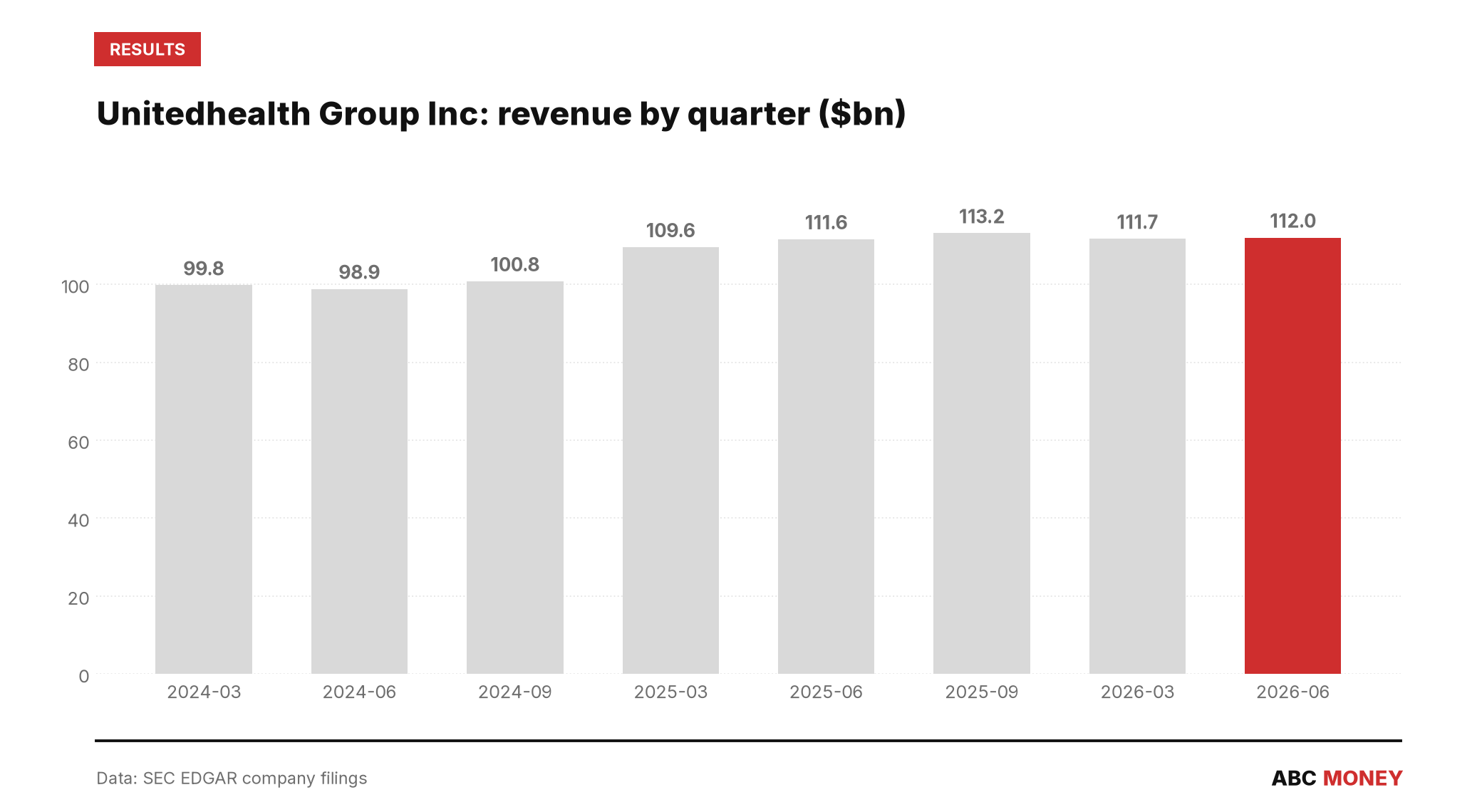
Here is the number that deserves more attention than it is likely to get: Q3 2026 revenue of $112.7 billion was essentially flat against the $113.161 billion UnitedHealth booked in the same quarter a year earlier, per its year-ago quarterly filing. Top-line growth, in other words, has gone quiet. What moved was profitability – diluted earnings per share of $4.56 this time around dwarfs the $2.59 UnitedHealth managed in the third quarter of 2025, when a medical-cost blowup gutted margins across the group. That 2025 quarter was itself a recovery attempt from an even uglier stretch: UnitedHealth posted a net loss of $1.4 billion, or $1.53 a share, in the first quarter of 2024, before swinging back to multibillion-dollar profits through the rest of that year and into 2025.
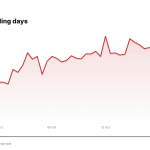
Set against that backdrop, this quarter’s beat looks less like fresh momentum and more like a company normalising off a genuinely depressed base. Gurufocus, which covered the release alongside UnitedHealth’s own filing, reported shares rising in premarket trading on the combination of the beat and the guidance raise, with other outlets putting the premarket pop at four to five%. By the time regular trading was under way, the move had settled to the 3.76% one-day gain reflected in consolidated exchange data – still a solid reaction, just not quite the premarket spike implied.
Guidance keeps climbing off a low base
UnitedHealth had already nudged its full-year 2026 outlook to a range of $18.45 to $18.95 per share when it reported the second quarter, according to that earlier filing. Tuesday’s raise builds on that base again, continuing a pattern of the company walking its numbers up gradually through the year rather than resetting expectations in one move – consistent with management steering through the aftermath of 2025’s cost overruns rather than guiding into a period of expansion. CNBC separately confirmed the beat-and-raise framing, and transcript coverage of the earnings call points to management leaning heavily on cost discipline as the explanation, rather than enrolment or pricing gains.
Quarterly profit has been genuinely choppy across the past two years: from the first-quarter 2024 loss, UnitedHealth swung to $4.2 billion in net income the following quarter, $6.1 billion in the third quarter of 2024, then $6.3 billion and $3.4 billion in the first two quarters of 2025 before the cost pressures hit hardest in the third quarter of that year. The $6.3 billion and $5.5 billion posted in the first two quarters of 2026 suggested the repair job was already under way before this latest print.
Positioning data points to earnings-driven buying
Short-sale activity in UnitedHealth shares gives little indication that Tuesday’s rally was a short squeeze – a rush of bearish traders buying back borrowed shares to close out losing bets. FINRA’s daily short-sale ratio for the stock ranged roughly between 0.32 and 0.56 across the fortnight running into the results, with no sustained build-up or sudden unwind visible ahead of the print. That pattern points to the move being driven by the numbers themselves rather than positioning mechanics. The broader rates backdrop was quiet too: the 10-year Treasury yield sat at 5.22% on 8 October, down slightly from 5.28% days earlier, while the unemployment rate ticked up to 4.2% in September – neither shift large enough to explain a stock-specific move of this size.
The quarter leaves UnitedHealth in a familiar position: profitable again, guiding higher again, but still searching for the top-line growth that once defined the stock’s premium rating. Investors cheering the print on 13 October were, in effect, cheering a return to form rather than a new chapter – and the next test will be whether revenue growth reappears once the easy comparisons against 2025’s cost crisis run out.
This article is for information only and is not investment advice or a recommendation to buy or sell any asset. Markets move quickly; figures are correct as sourced at the time of writing. Always do your own research before making financial decisions.

 Bitcoin
  Ethereum
  Tether
  BNB
BNB  USDC
USDC  XRP
XRP  Solana
  TRON
TRON  Lido Staked Ether
  Cardano
  Gram (prev. Toncoin)
  Avalanche