
Contributed content: this article was written by a third-party contributor and does not necessarily reflect the views of ABC Money. Editorial and Advertising Policy
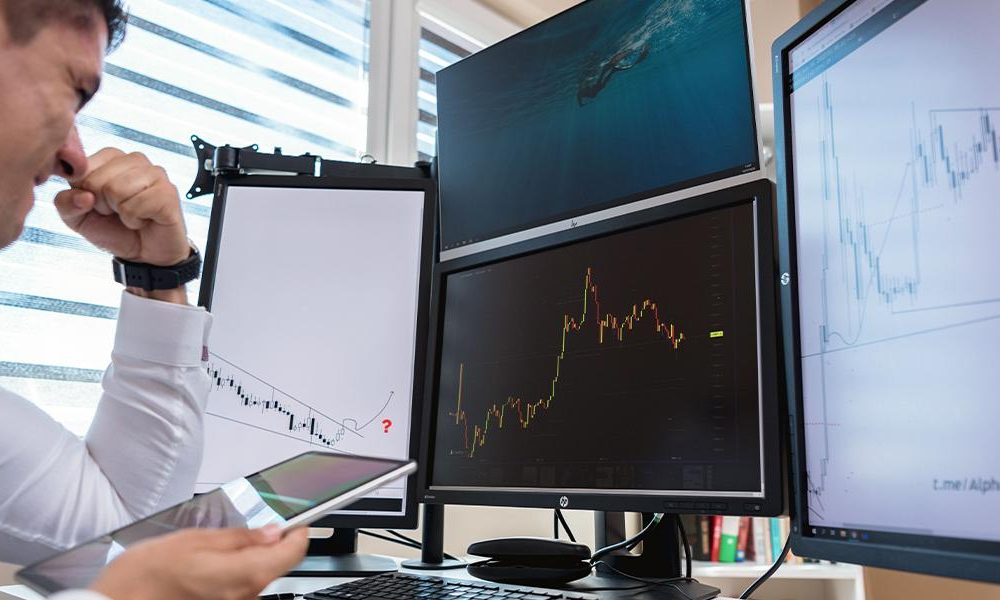
Overtrading means placing more trades, or bigger ones, than your own plan calls for. It rarely feels like a mistake in the moment. It feels like taking one more good opportunity, right up until the account shows what that opportunity actually cost.
Where overtrading comes from
Fear of missing a move pushes traders into setups that never met their rules in the first place. A string of losses pushes traders to trade more, trying to win the money back quickly instead of waiting for a proper setup. Forex markets move around the clock, which creates a constant sense that a good trade is always one screen refresh away.
A strategy built and tested to take a handful of trades a week does not become more profitable by taking three times that number. Extra trades outside the plan usually carry a worse win rate and a worse risk to reward than the trades the plan was actually built around.
Signs it is happening to you
- Your trade count jumps well past your normal number for no clear reason
- You close a trade and immediately think it should never have been opened
- You feel restless away from the charts and drained while watching them
- You struggle to explain a trade beyond "it looked good"
Five ways to stop
1. Set a hard limit on trades per day
Pick a small number, often between one and three, and stop once you hit it regardless of how the market looks afterward. The limit forces you to pick from your best setups instead of trading every one that appears.
2. Set a daily loss limit that ends the session
Decide in advance how much loss ends your trading day, commonly around 1% to 2% of the account. Traders working inside a Best Prop Firm style evaluation already trade under a limit like this. Building the same habit into a personal account closes the gap between how you trade for yourself and how you would trade under firm rules.
3. Set a daily profit target and take the win
A target of 1% to 3% for the day gives you a reason to stop on a good day instead of pushing for more and giving profit back on a weaker trade. Locking in the win is not leaving money on the table. It is protecting a day that already went well.
4. Trade a higher timeframe
Moving from a five minute chart to a four hour or daily chart naturally produces fewer signals. The timeframe itself slows the pace, so the temptation to act on every small wiggle mostly disappears along with the noise.
5. Limit your screen time
Check the charts at set times rather than constantly. Traders who watch price all day find far more reasons to act than traders who check in twice, since idle screen time invents opportunities that a fixed schedule never sees.
Why this matters more with rules attached
A personal account absorbs overtrading slowly, through a shrinking balance. An evaluation account often ends the moment overtrading pushes past a drawdown limit. A no evaluation prop firm account still carries ongoing risk rules once trading begins, so the habit of a fixed daily limit protects the account either way, evaluation or not.
What overtrading actually costs
Every extra trade pays the spread again, and a string of marginal trades can lose more to costs alone than a single clean loss ever would. Beyond the direct cost, each low quality trade eats attention that a better setup later in the day would have deserved more.
The damage rarely shows up as one dramatic loss. It shows up as a slow leak, a little bit of edge given back on every trade that never should have been taken.
The pattern behind all five fixes
Every one of these limits removes a decision from the moment it is hardest to make well. Set the boundary before the session starts, while you are calm, and let it do the discipline work a tired or frustrated mind cannot always do on its own.


 Bitcoin
  Ethereum
  Tether
  BNB
BNB  USDC
USDC  XRP
XRP  Solana
  TRON
TRON  Lido Staked Ether
  Cardano
  Gram (prev. Toncoin)
  Avalanche