
 Bitcoin
 Ethereum
 Tether
 BNB
 USDC
 XRP
 Solana
 TRON
 Lido Staked Ether
 Cardano
 Gram (prev. Toncoin)
 Avalanche
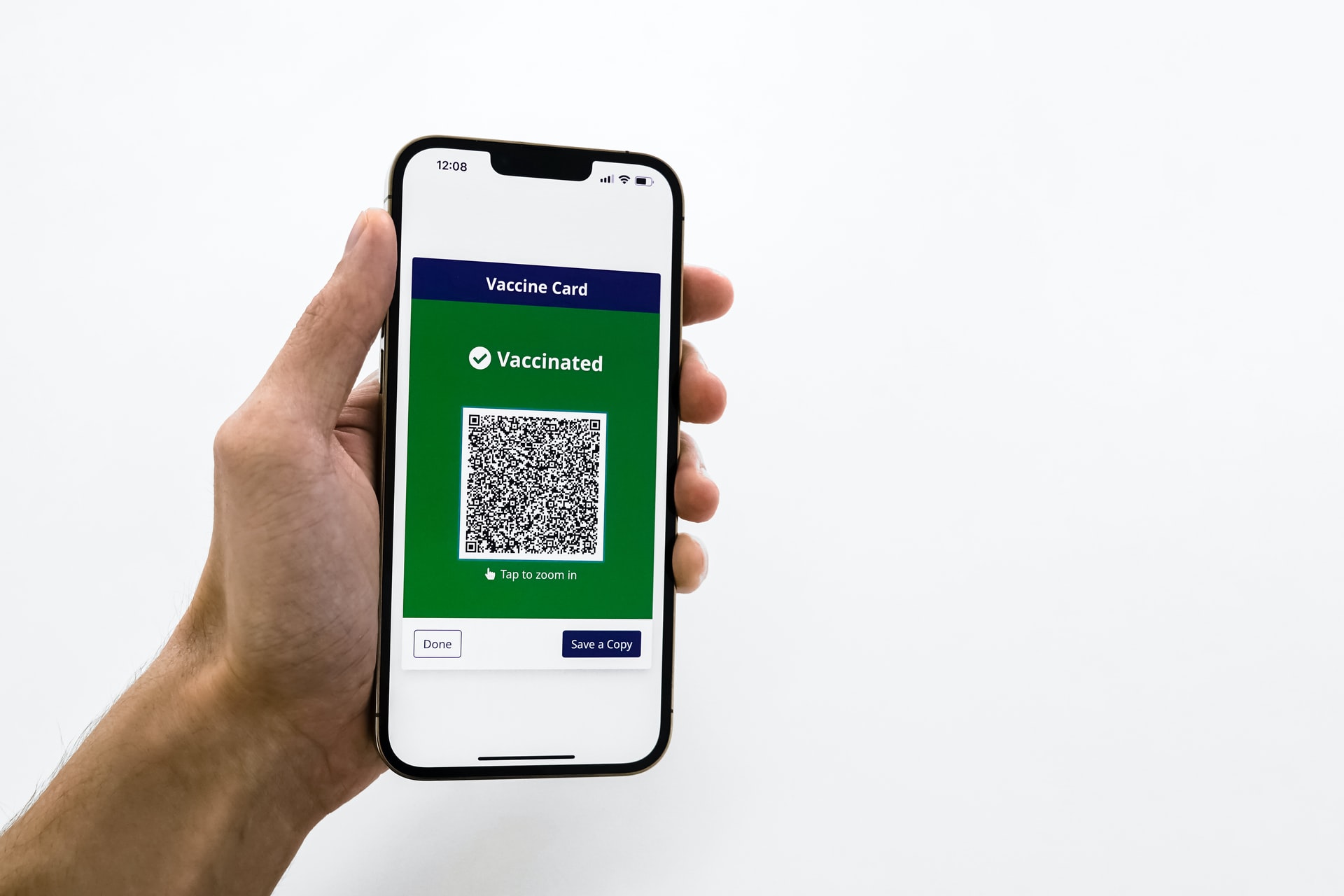
The lesson of vaccine passports: is a cashless economy the next step towards mass surveillance?

French prime minister Jean Castex announced in December new legislation that would change the country’s current Covid-19 health pass, which gives proof of a negative Covid-19 test, proof of vaccination, or proof of having recovered from the illness — into a vaccine-only pass.
Without a valid pass, entrance to cafés, cinemas, and crowded events is already barred. But the French government is exploring ways to make life more and more difficult for the unvaccinated, with the nation’s president, Emanuel Macron, raising eyebrows with particularly provocative language on the subject.
In the UK, both the public and the Conservative-run government are largely opposed to such constraints on personal freedoms. There, the preference is for ‘track-and-trace’ initiatives, whereby the public signs into locations, like bars and restaurants, via a QR-code-based government system. This allows contacts with confirmed cases of the virus to be notified and ordered to preventatively self-isolate.
Some people would argue that both options come with the risk of contributing to backsliding on democratic values, like the right to privacy.
“These systems need some degree of access to sensitive health information in order to function, and that creates an unavoidable vulnerability,” notes Reason magazine’s J.D. Tuccille.
In particular, passes necessarily contain digital information about the bearer, such as their name, date of birth, when or perhaps where they were vaccinated — and this personal data needs to be protected from illegitimate use.
The normalisation of privacy loss
Experts suggest that measures taken during the health crisis are a litmus test for what can be expected on many of the other frontiers where policy meets technology. Whether one is for or against them, vaccination certificates are a telling case. Lawmakers seek a balance between protecting public health and protecting citizens’ privacy — specifically, through individual data sovereignty.
As researchers have noted in the field of artificial intelligence, the effectiveness of digital solutions can be inherently opposed to the protection of personal data. While data is the fuel of much of our modern technology, a zero-sum relationship can exist at times between safeguards and effective solutions. With greater privacy, technology can suffer from reduced efficacy; with a more powerful solution, leveraging more data, privacy is put at greater risk.
Depending on where one stands in the privacy debate, with the pandemic running roughshod over conventional measures of mitigation, rightly or wrongly, exceptions have been made to protect the public: exceptions being the operative word.
Eric Abetz, an Australian senator, argues that we need to be particularly careful with such programmes to avoid scope creep as the pandemic drags on.
“How many vaccinations and booster shots or other medical procedures will be required on a person’s vaccine passport to allow them to participate as full citizens? This is a slippery slope,” he says.
The risk is that the public becomes accustomed to the loss of privacy and stops demanding, or loses the ability, to keep the government in check.
“One of the things that we don’t want is that we normalise surveillance in an emergency and we can’t get rid of it,” concludes Jon Callas, director of technology projects at the digital rights group Electronic Frontier Foundation.
The risks of cashless economy
Callas’s point cuts to the centre of the issue over digital economics too. By definition, a cashless society aims to use technological mechanisms to be orderly, efficient, and dependable: the precise opposite of a crisis. Clearly, there would be nothing temporary about it.
What makes this potentially more hazardous for society is that data exploitation stemming from a cashless economy has far greater breadth and reach than that relating to Covid vaccines.
Unlike payments made in cash, digital payments carry a lot of meta data, along with being linked to accounts and troves of personal data. These qualities put an individual’s privacy at risk, and the privacy loss increases relative to dependency on digital payments and third-party facilitators.
When we pay with cash no one is recording the transaction, beside ourselves and the other party. There are no third parties that need to give us the green light. In this way, cash payments offer a form of financial freedom that cannot exist in the digital economy, and they protect us from unwanted breaches of privacy.
In a cashless society, every purchase a citizen makes is “authorised and recorded by a privately run commercial bank, giving it a transaction-by-transaction history of your entire commercial life,” warns The Guardian’s Brett Scott.
If the recent epidemic of data loss and high-profile hacking incidents is anything to go by, data is never particularly secure. More importantly, data is traded in opaque markets, making it difficult for consumers to know who, or rather what, has information on them.
While technology brings companies greater and greater power to scrutinise the daily lives of individuals, we are losing our capacity to hold such organisations accountable. The asymmetry this creates in information is a dangerous phenomenon in modern democracies. Perhaps it is no surprise that countries with poor human rights records and weak or non-existent democratic institutions have moved furthest along on this path: namely, Iran, Nigeria, Russia, and China.
“Countries which have had to endure dictatorships, and have recovered, are more likely to be cautious with the power they give their governments over their lives,” write the editors of Cashless Economy, a website dedicated to curating articles on the dangers of an all-digital economy.
Whether or not vaccine passports are justified in the fight against Covid-19, they do not reduce concerns over other technologies that diminish privacy. What society chooses in an emergency might not be the best model for our behaviour the rest of the time.

