
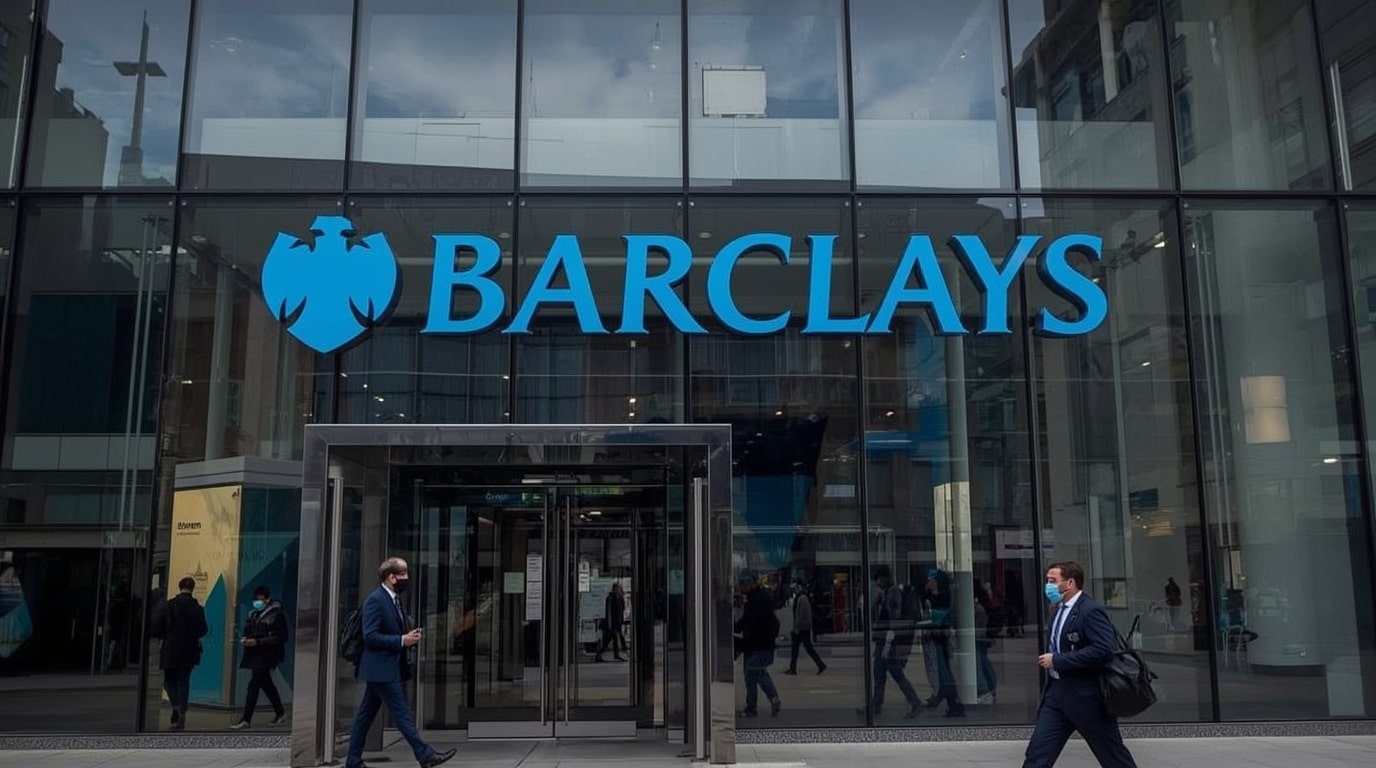

To the delight of the UK financial sector, shares in Barclays PLC soared 1.6 per cent on Tuesday, rising to 436.40p, which was driven by the recent stress test outcome of the Bank of England and a groundbreaking reduction of capital requirement among the big lenders.
The decision, which was announced together with the half-yearly financial stability report of the central bank, is an indication of an increased faith in the strengthening of the banking giants within Britain in the face of a backdrop of a slowing inflationary trend and an expected recovery of the economy.
The FTSE 100, which hit the close of the session at a flat level of approximately 8,200 points, struck equilibrium due to financial stocks’ gains compensating for the failures in gold miners and consumer staples.
The top performers among the peers were headed by Barclays, whose performance was strong, hence highlighting the overall revival in the industry. To investors, this regulatory green light is being viewed as the trigger in spurring on lending and shareholder returns, which may continue to power the end-of-year rally.
Bank of England Stress Test vindicates Barclays’ Fortress Balance Sheet
The 2025 annual stress test of the Bank of England exposed seven of the largest lenders in the UK, including Barclays, to an excruciating economic shock, a 5% UK GDP downturn, a 28% house price drop, a 300% rise in the cost of gas and a Bank rate of 8%.
In spite of these misfortunes, the balance sheet of Barclays has not been affected as the Common Equity Tier 1 (CET1) ratio stands at 9.3 per cent, a stressful level following strategic management measures, far more than the 7.2 per cent minimum level.
This result is an addition to the already strong capital position of Barclays, which currently has an actual CET1 ratio of 14.1% as of the third quarter of 2025, which is well within its target range of 13-14.
The judicious management of its balance sheet has formed a part of the recovery story of the bank, which has metamorphosed into a high-performing bank after being a laggard in the post-financial crisis. Barclays’ stock has been flying 200% over the last five years, far ahead of the FTSE 100, and the stock currently is showing a forward price-to-earnings ratio of only 11.9 -compared with the index average of 17.
Analysts explain this valuation appeal by the diversification of revenue streams of Barclays, which includes the investment banking, consumer lending and wealth management. Not only did the stress test confirm the bank was capable of enduring the recessionary environment, but it also brought to the fore its aggressive expansion programs.
As pre-tax profits currently stand to exceed PS8.4 billion this year, the largest in its history, Barclays is making itself a dividend king. The bank steadily raised payouts as it continued to experience a rise in interest income.
Regulatory Tailwinds: Relaxed Capital Regulations Open the Lending Floodgates
The centre of the market response on Tuesday was the action of the Bank of England to loosen capital buffers of systemic banks, which was aimed at bouncing up the economy without causing instability.
This recalibration will lessen the regulatory drag on lending that will enable financial institutions such as Barclays to roll out an estimated PS10-15 billion of loans within the next two years. In the case of Barclays, which is aggressively enlarging its retail presence in the UK by deploying digital innovations and branch streamlining, it might mean faster financing of mortgages and small businesses, which are the pillars of domestic growth.
In a press briefing, Governor Andrew Bailey said that the modifications are indicative of a growing post-pandemic world, in which lenders have restored buffers to all-time highs. The change in policy will also be timely as OECD estimates that the UK GDP will increase by 1.2 to 0.8% in 2026 and 2021, respectively, with fiscal stimulus in the recent budget by the new Chancellor, Rachel Reeves.
Reduced inflation, which is expected to hit a low of 2.5 next year, serves as added pressure to the borrowers, and it may reduce the number of loan defaults, thus strengthening the net interest margins.
It will be to the advantage of Barclays, especially, to have been exposed to the housing market rebound. As the UK house market has levelled and builder confidence is increasing, as shown by optimistic forecasts by Taylor Wimpey and Persimmon, the bank may experience a boom in demand for its competitive mortgage products. CEO C.S. Venkatakrishnan already indicated intentions to increase buy-to-let and first-time buyer programs and use the regulatory headroom to take market share from competitors.
General Implications of UK Investors and the Economy
The impact of these developments has a far-reaching effect that goes beyond the trading floor of the Barclays company. The banking industry as a whole gained with a rise of 2% to 97.36p in Lloyds Banking Group and 1.3% in NatWest, pushing them closer to the psychologically important PS1 mark. Standard Chartered, which has an international orientation, was up as well, by 1.2% as there is hope of revival in global trade.
To the retail investor, it is an opportunity to cry. The low valuation of Barclays and its high dividend yield of 4.5% make it an attractive business to hold in income-based portfolios. This is the additional value accretion of the PS2-billion share buyback program that the bank is currently undertaking, which will be further accelerated after the completion of the stress tests, which could increase the earnings per share by 5-7% in 2026. Still, there are threats around the corner: the ongoing geopolitical instability and the possible AI-driven stock bubble that seems to be warned about by the BoE stability report may give rise to instability.
Ahead of the decision of the December Bank Rate decision, the markets are pricing in 90% of the possibility of the next quarter-point reduction of the Bank Rate to 4.25. This type of dovish pivot would increase the positive effects of relaxed capital regulations, triggering a vicious circle of reduced borrowing and increased consumer expenditures. Analysts believe that with its loan book of PS300 billion, Barclays will be in a position to surf this wave.
Barclays is the success of 2013, a year of fiscal restraint and monetary normalisation, and it may be considered as an example of banking renaissance in the UK. With the economy gaining momentum towards sustainable growth, the share in this FTSE 100 giant may have a lot more to do with gravity as it once again pays off the patient investors with higher returns. As the holiday season is on the horizon and the year-end bonuses are right around the corner, Canary Wharf passes the message: stability is the key to prosperity.



 Bitcoin
  Ethereum
  Tether
  BNB
BNB  XRP
XRP  Wrapped SOL
  USDC
USDC  TRON
TRON  Lido Staked Ether
  Cardano
  Avalanche
  Toncoin