
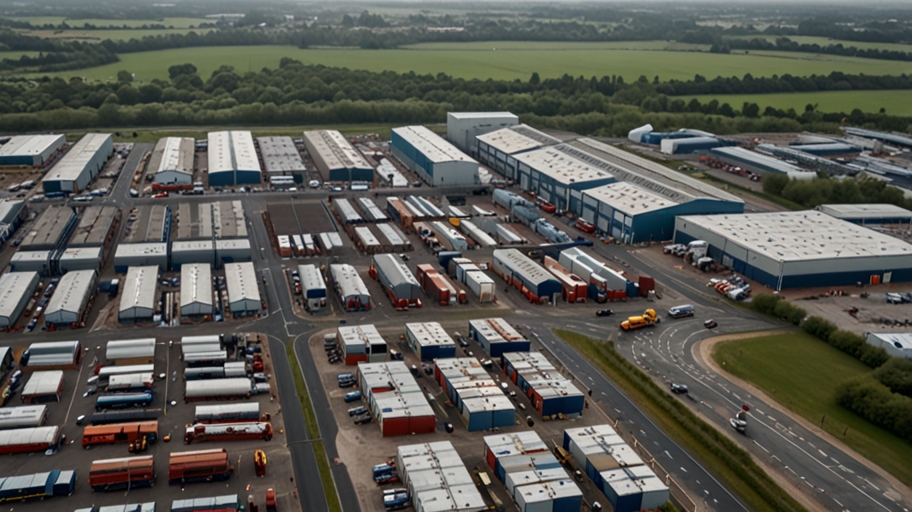
A rising number of Amazon sellers are quietly discovering that fulfillment isn’t just a back-end cost—it’s the linchpin of profitability. Every carton that sits too long, every package shipped too far, every minute lost picking inventory in a cluttered warehouse chips away at the bottom line. The challenge is clear: cut costs, not corners. Customers still want their orders fast, sometimes faster. Sellers who figure out how to make both happen are the ones still scaling.
Across warehouses, smart logistics is reshaping the way sellers think about operations. High-speed doesn’t need to mean high-cost. It starts with tightening inventory—not in the sense of restricting stock, but refining its location and movement. When sellers can predict demand and route orders to the closest fulfillment center, they not only save on shipping but also sidestep the anxiety of delayed delivery promises. Amazon product fulfillment services, particularly when layered with third-party OMS systems, offer an exceptional level of visibility. That visibility, when used correctly, turns guesswork into data-backed decision-making.
I once watched a seller slash their expedited shipping bills in half—not by cutting corners, but by moving their ten top-selling SKUs to a regional 3PL warehouse. It was a small shift in geography, but a big shift in mindset. They let speed come from proximity, not urgency.
Inside the warehouse, efficiency isn’t about speed alone—it’s about consistency. Barcode scanners, pick-to-light systems, and packing tables that minimize movement all contribute to faster throughput. Batch picking, where multiple orders are assembled in a single pass, saves time and reduces repetitive steps. Even rearranging inventory so the fastest-moving items are closest to the packing area can trim hours of labor each week. It’s the kind of small fix that rarely makes headlines, but steadily improves margins.
Shipping costs remain a giant lever, often miscalibrated. Too many sellers default to the same carrier without questioning rates, zones, or volume deals. But those who regularly negotiate or tap into multi-carrier software often find surprisingly affordable alternatives. Regional carriers, for instance, are particularly effective in dense delivery areas. They’re nimble, competitive, and increasingly reliable. For some zones, USPS flat-rate boxes still beat the big guys.
Packaging, often overlooked, is another decisive factor. The rise of dimensional weight pricing means that air inside your box is essentially charged rent. A box that’s just one inch too big in one dimension can drive up shipping costs significantly. That’s why standardizing packaging sizes, switching to poly mailers for soft goods, or reducing box height can yield savings that add up. This isn’t a design conversation—it’s a numbers one. Smart sellers measure and test.
Automation isn’t reserved for warehouses with robot arms. Even simple workflows—like auto-generating labels, syncing tracking info, or using AI-based routing—can be remarkably effective. When fulfillment logic is driven by real-time order volume, stock level, and shipping windows, sellers stay agile without overcommitting resources. AI has made it possible to route around storms, detect which SKUs are trending locally, or avoid the carrier most likely to miss a deadline this week. These tools are no longer luxury—they’re insurance policies for your delivery promise.
Of course, fulfillment doesn’t need to be done alone. Outsourcing to a logistics partner often improves speed and cost. The best 3PLs bring infrastructure that individual sellers can’t replicate, from discounted shipping rates to streamlined packaging stations. But even here, vigilance matters. Compare storage fees, carrier contracts, and SLA terms regularly. What worked last quarter might be less efficient this one.
Every touchpoint in the process—storage, pick, pack, ship—is a chance to improve. Sellers who review their cost per order monthly tend to catch inefficiencies early. They’re also the ones who stay calm during peak season, confident their systems will flex as needed.
There’s an irony to all this: what feels like operational tinkering is often the backbone of great customer experiences. Buyers rarely notice fast delivery unless it fails. But behind every successful Prime order is a series of strategic moves that quietly made it possible—and profitable.



 Bitcoin
  Ethereum
  Tether
  BNB
BNB  USDC
USDC  XRP
XRP  Solana
  TRON
TRON  Lido Staked Ether
  Cardano
  Gram (prev. Toncoin)
  Avalanche