
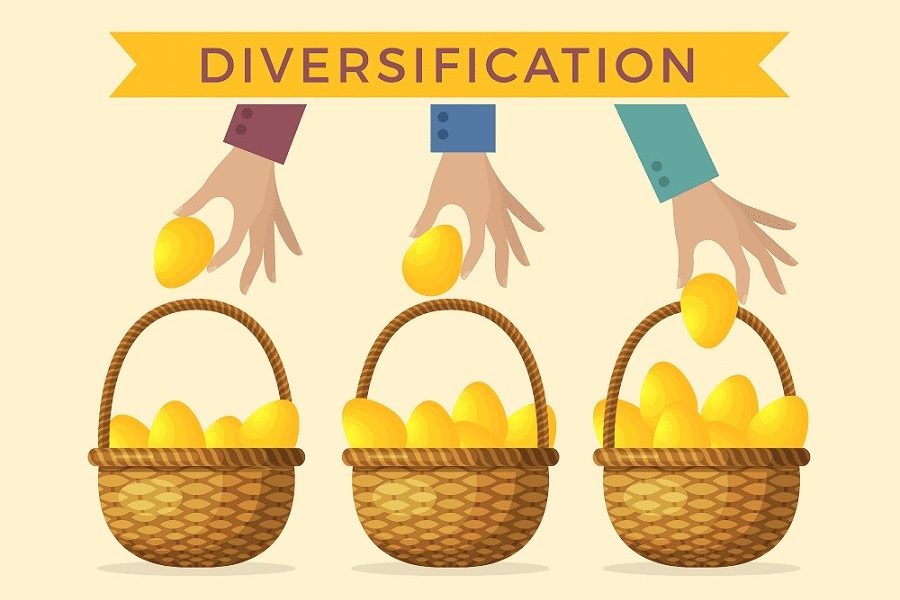
Markets have a habit of revealing their lessons slowly, then all at once. In the UK, diversification was once discussed as a technical footnote, something advisers mentioned politely while attention drifted back to headline returns. That changed after a series of uncomfortable moments when familiar assumptions stopped working. Shares dipped together, property stalled in places assumed to be immune, and cash lost purchasing power in plain sight. The idea of spreading risk stopped sounding academic and began to feel practical.
Many UK investors grew up with a sense of geographical comfort. Domestic equities felt understandable. Property felt solid. Pensions felt distant. That familiarity bred concentration, often without conscious intent. A portfolio could look varied on paper while still leaning heavily on one outcome: a stable UK economy, predictable rates, rising asset prices. When those conditions wobbled, the gaps became obvious.
Diversification UK discussions now sound less like theory and more like conversation. People talk about overlap, correlation, and exposure in everyday terms. It shows up in small decisions: holding overseas funds alongside domestic ones, questioning how much property is too much, or recognising that employer pensions already tie income and investments to the same economic cycle. These are not dramatic shifts. They are cautious recalibrations.
Risk management, when done properly, rarely feels exciting. It is often uncomfortable because it asks investors to accept lower highs in exchange for fewer shocks. That trade-off used to be a harder sell. After several years of market stress, it has become easier to explain. Diversification does not eliminate loss, but it can reduce the damage when one assumption fails.
One of the more revealing changes has been how UK investors talk about bonds again. For a long time, bonds were dismissed as dull or obsolete. Rising interest rates rewrote that narrative abruptly. Suddenly, bonds were not just ballast but income, and sometimes relief. The lesson landed quietly: assets fall out of fashion, then return with purpose.
Property remains a particularly emotional part of UK investment planning. Home ownership is cultural as much as financial. Buy-to-let, once treated as a near-guarantee, now carries regulatory, tax, and liquidity risks that are harder to ignore. Diversification does not mean abandoning property, but it does mean recognising how much of one’s net worth already lives in bricks and mortar.
There is also a generational shift underway. Younger investors, shaped by volatility rather than stability, often diversify instinctively through global funds and digital platforms. Older investors, with longer memories of defined benefit pensions and steady returns, sometimes adjust more slowly. Advice flows both ways now, with each group learning from the other’s blind spots.
Currency exposure has become another quiet teacher. Sterling’s fluctuations no longer feel abstract when overseas investments move independently of domestic news. Some investors discovered, to their surprise, that global exposure cushioned UK-specific shocks rather than amplified them. Diversification UK strategies increasingly acknowledge that risk does not respect borders.
I remember noticing how calm one long-term investor sounded when describing a market dip, as if the outcome had already been rehearsed.
That calm is not accidental. It comes from structure. A diversified portfolio offers psychological benefits alongside financial ones. When not everything moves in the same direction, decisions become less reactive. Investors are less tempted to sell at the worst moment or chase the latest outperformer. Discipline becomes easier when outcomes are less extreme.
This does not mean diversification is a cure-all. Poorly constructed portfolios can give the illusion of spread while masking concentration. Multiple funds can hold the same assets. Different labels can disguise similar risks. True diversification requires attention, not just variety. It asks uncomfortable questions about why something is held and what role it plays.
Risk management, at its best, is forward-looking without pretending to predict. It accepts uncertainty as a feature, not a flaw. UK investment planning has matured in this respect. There is less confidence in forecasts and more respect for resilience. People talk about scenarios instead of certainties.
Another subtle change lies in time horizons. Diversification encourages patience. When investors understand that different assets perform at different times, short-term disappointment feels less like failure. Long-term planning becomes more credible when it is not dependent on one outcome arriving on schedule.
Technology has helped, but it has not solved the problem. Tools make diversification easier to implement, yet temptation remains. The same apps that offer global exposure also make speculation frictionless. The discipline still sits with the individual. Diversification is a choice that must be maintained, not a box ticked once.
What stands out is how unglamorous the argument has become. No one promises protection from loss. No one claims perfect balance. Instead, there is an acceptance that investing is about managing disappointment as much as seeking reward. That honesty feels overdue.
UK investors are not becoming more pessimistic. They are becoming more deliberate. Diversification matters now because it aligns with lived experience. It reflects a world where shocks are frequent, correlations shift, and confidence is earned slowly. The spread is not about fear. It is about staying in the game long enough for patience to matter.
Risk, once something to be minimised or ignored, is now treated as something to be shaped. Diversification UK strategies sit at the centre of that shift, not as a slogan, but as a habit formed through repetition, memory, and the quiet lessons markets leave behind.


 Bitcoin
  Ethereum
  Tether
  BNB
BNB  USDC
USDC  XRP
XRP  Solana
  TRON
TRON  Lido Staked Ether
  Cardano
  Gram (prev. Toncoin)
  Avalanche