
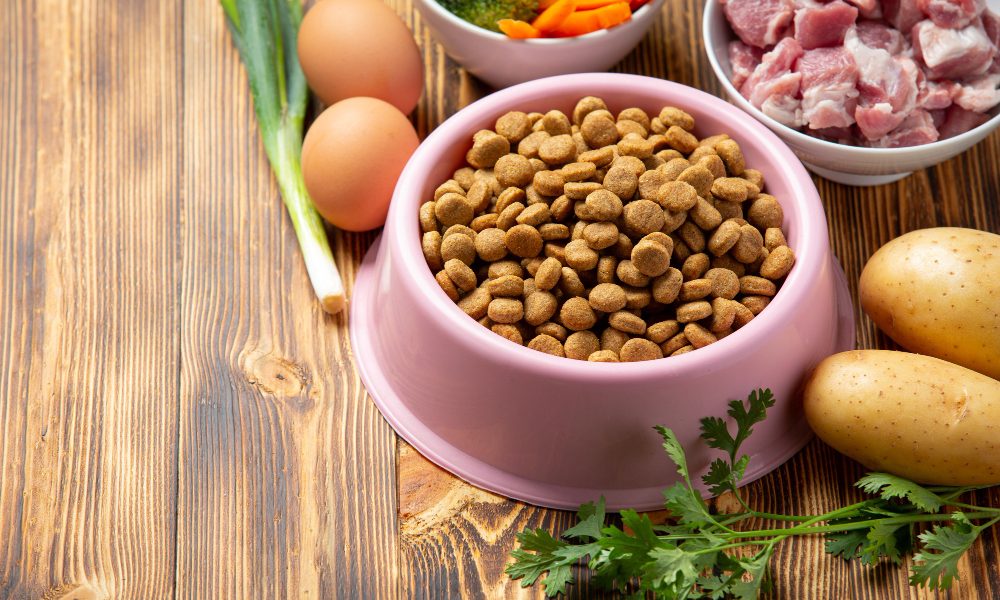
We thought the brown bits in the bowl were completely safe for decades. The packaging’s image of glossy-coated retrievers running across grassy fields subtly suggested scientifically supported nutrition. However, new research presents a very different picture, exposing hazards that have mostly gone unnoticed.
The Clean Label Project conducted independent testing on 79 of the most popular dog foods available in the US, covering all of the main categories: fresh, frozen, wet, dry, and freeze-dried. They found something subtly concerning in their analysis. The most popular and convenient type of dog food, dry food, had noticeably higher concentrations of harmful heavy metals like arsenic, lead, cadmium, and mercury. Compared to their fresh counterparts, some samples had up to 20 times as much.
| Category | Information |
|---|---|
| Most Common Types | Dry kibble, wet canned food, fresh cooked meals, air/freeze-dried options |
| Health Risk Factors | Heavy metals (lead, arsenic), acrylamide, pesticides, plasticizers |
| Noteworthy Certification | Freshpet earned Clean Label Project Purity Award across its U.S. range |
| Key Contaminant Sources | High-heat processing, concentrated dry formulas, long-term exposure risks |
| Emerging Alternatives | Insect-based protein, gently cooked meals, hybrid sustainable formulas |
| Regulatory Oversight | AAFCO/NRC guidelines exist, but no federal toxic metal limits for pet food |
| Study Source | Clean Label Project – cleanlabelproject.org |
Although these metals are found in nature, their persistent buildup is the cause for concern. Small, frequent doses of harmful substances can be unintentionally absorbed by dogs, especially those fed a single brand for many years. This involves regular exposure incorporated into a daily routine rather than merely sporadic contamination. I remember wondering what we had all missed as I gazed at my dog’s kibble bag.
Higher concentrations of acrylamide, another substance linked to high-heat cooking, were discovered in dry food. Although dogs are not humans, their biological systems are similarly susceptible to this known probable human carcinogen. However, there are no set limits for acrylamide or heavy metals in pet products, unlike with baby food or drinking water.
Freshpet is unique for another reason. Its dedication to openness and hygiene earned it a Clean Label Project Purity Award, the first of its kind for any dog food company in the United States. The lowest levels of contaminants found in their food were found in their gently cooked meals. That’s especially helpful for owners who are worried about their health and want to feel reassured.
The surprising thing is that, in contrast to our own groceries, we hardly ever inquire about pet food. Few consumers read the fine print or look into the manufacturing process; instead, they mainly rely on branding and emotional cues, such as terms like “natural” or “grain-free.” This disconnect between reality and perception can be inadvertently harmful.
It’s interesting to note that dry food’s efficiency is one factor causing its toxin concentration to rise. Due to its low moisture content and dense packing, kibble concentrates calories—and, regrettably, contaminants. Naturally, fresh and frozen foods are more diluted because their water content is closer to what dogs evolved to eat. From the perspective of toxin accumulation, this appears to be significantly safer, even though it necessitates dogs eating more in volume.
Pet owners are increasingly looking into more modern options, such as protein derived from insects. Meals prepared from black soldier fly larvae were not only well-tolerated but also eagerly consumed in a recent study. Owners expressed great satisfaction with overall acceptance, digestibility, and aroma. It felt particularly inventive and useful, serving as a reminder that unexpected sources frequently lead to breakthroughs in nutrition.
I noticed something subtle but real when I started giving my own dog a refrigerated formula. Her energy levels seemed more consistent throughout the day, and her coat looked glossier. Although anecdotal, it reflected the trend of many dog owners switching to fresher options instead of processed staples.
Cost is still a significant obstacle, though. Toxin testing adds several dollars to the cost of each bag, according to Cornell University’s Dr. Joseph Wakshlag. This premium can seem high to households on a tight budget. However, it becomes a preventative rather than a curative issue when weighed against the rising costs of pet healthcare, including the treatment of chronic diseases linked to poor diets.
The pet food industry has undergone a rapid, albeit uneven, evolution in recent years. Although regulatory organizations such as the AAFCO offer nutritional minimums, their thresholds for toxic exposure are not up to date. Additionally, the NRC guidelines do not provide specific protection against low-dose, long-term exposure. A forward-thinking, safety-first framework that reflects our approach to human nutrition is what’s lacking.
Consumer behavior is in charge until then. Dog owners can exert pressure where it counts most by requesting clean labels, endorsing certified brands, and varying their pets’ diets. Although they are not infallible, feeding variety, protein switching, and brand rotation are very effective strategies to lower the risk associated with any one formulation.
Trust is the foundation of the human-dog bond. They keep a close eye on us, wagging their tails and keeping their eyes open as they wait for that bowl to fall to the ground. Making sure that what we’re providing is safe, not just delicious or practical, is the least we can do.
That change has already started. The bar for what’s acceptable may progressively rise as more brands submit to open testing and third-party validation. Purity will no longer be merely a marketing gimmick but a badge of trust.
The pet food industry can undergo a remarkable transformation with awareness, choice, and perseverance—toward safety, toward clarity, and toward a future where that wagging tail is fed by something other than convenience.



 Bitcoin
  Ethereum
  Tether
  BNB
BNB  USDC
USDC  XRP
XRP  Solana
  TRON
TRON  Lido Staked Ether
  Cardano
  Gram (prev. Toncoin)
  Avalanche