
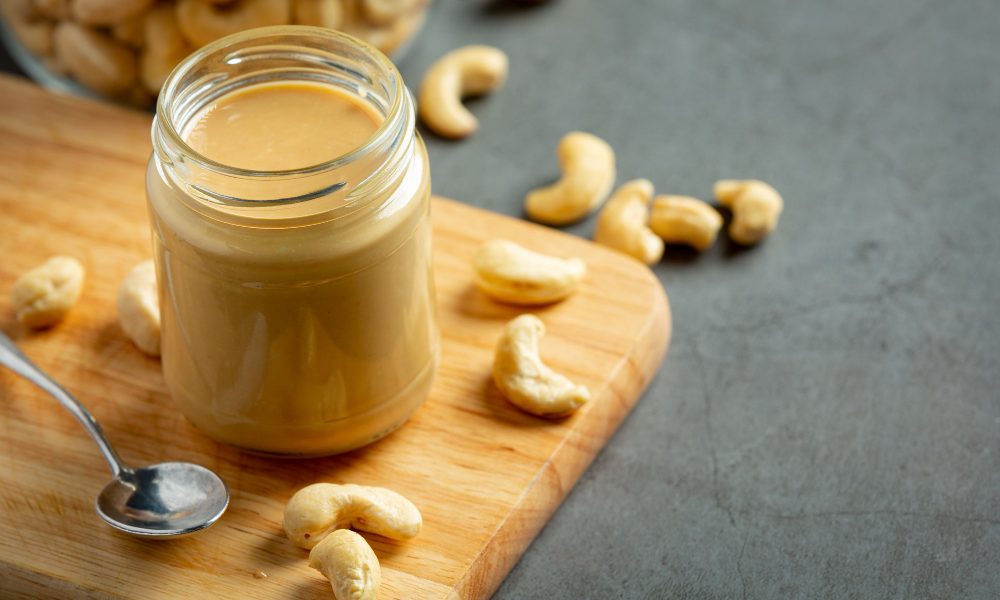
Unnoticed on a cafeteria tray, the tiny plastic cup’s foil lid reflected fluorescent lights above. It appeared to be peanut butter, the type that is distributed with crackers or apples. Americans have unquestioningly trusted those sealed containers for decades. However, something unexpected crept into that well-known routine at some point last year, thousands of miles away, inside a food production facility.
Following a routine inspection at Ventura Foods, the discovery led to a recall that has since spread to over 22,000 peanut butter products sold in 40 states. It was categorized as a Class II recall by the U.S. Food and Drug Administration, which means that while serious harm is unlikely, the contamination may have short-term health effects. Although the technical language seems comforting, customers seem to understand something completely different: one of America’s safest foods went awry.
| Category | Details |
|---|---|
| Recall Authority | U.S. Food and Drug Administration |
| Manufacturer | Ventura Foods |
| Recall Classification | Class II Recall |
| Products Affected | Over 22,000 single-serve peanut butter items |
| Contamination | Blue plastic fragments found during production |
| Distribution | 40 U.S. states |
| Common Locations | Schools, hotels, airlines, restaurants |
| Brands Included | House Recipe, Katy’s Kitchen, Flavor Fresh, Poco Pac |
| Recall First Initiated | April 2025 (Updated February 2026) |
| Official Recall Info | https://www.fda.gov/safety/recalls-market-withdrawals-safety-alerts |
In American culture, peanut butter has a peculiar place. It is present everywhere. Before school, in quiet kitchens, spread over toast. Contained within lunchboxes. distributed in the snack areas of hospitals. This recollection may be unnerving precisely because of its familiarity. Peanut butter is rarely questioned.
Most customers couldn’t see the contamination itself. It was previously captured within a manufacturing filter. According to reports, workers discovered pieces of blue plastic that were probably from equipment. The business took prompt action, alerting distributors and stopping shipments. Nevertheless, the goods had already left the house and entered supply chains for restaurants, cafeterias, and warehouses.
One gets a sense of how big and unseen the contemporary food system has grown as you see how far those little containers traveled.
Typically, Ventura Foods does not sell directly to consumers. Its peanut butter is frequently sold under private labels like Flavor Fresh, House Recipe, and Katy’s Kitchen before being distributed by big-box retailers like Sysco. These vendors supply eateries, educational institutions, and airlines. It’s still unknown how many individuals came into contact with tainted products or if the majority were eliminated before they could be consumed.
Grocery managers conducted discreet inventory checks in the days following the recall announcement. Employees of the restaurant went through supply boxes. To be safe, some cafeterias threw away entire cases. Seldom do these insignificant, nearly imperceptible moments garner media attention. However, they show how profoundly memories affect day-to-day existence.
Food recalls are tense in a subtle way.
The FDA’s classification implies limited danger on paper. effects that are temporary and reversible. However, the presence of plastic in food raises issues that cannot be adequately addressed by statistics. How did it arrive? For what duration was it occurring? Could it occur once more?
It’s difficult to ignore how frequently plastic shows up in inappropriate places.
Microplastics have already been found in human blood, seafood, and drinking water. The long-term effects are still being studied by scientists, and there is still uncertainty. The visible fragments of the contamination in this instance might be less worrisome than the microscopic ones that people never see.
According to Ventura Foods, it moved quickly. The business stressed that safeguarding customers is still its top priority. Such statements are expected. essential. However, it seems that once trust is damaged, it doesn’t always come back.
Food recalls are not uncommon in and of themselves.
Snack bars, frozen meals, and lettuce are among the hundreds that happen each year. Most go unnoticed by anyone except industry insiders and regulators. Peanut butter, however, has a distinct texture. It has emotional significance. recollections from childhood. everyday coziness.
It is evident from seeing this happen that food safety is primarily a faith-based endeavor.
The recall also highlights the extent to which most people are unaware of the systems that underpin modern eating. Continuously moving production lines. Debris is caught by filters. Inspectors are going over reports. Unless something gets past them, these imperceptible safeguards hardly ever get any attention.
The precise way the plastic got into the manufacturing process is still unknown. wear caused by machines. damage to the equipment. human error. All of these scenarios seem likely.
A minor malfunction happened somewhere in a building with conveyor belts and other equipment.
And it came up in a recall notice a few weeks later.
Peanut butter is still found on the shelves of eateries and kitchens all over the nation. It’s safe for the most part. For the most part, it always was. However, it seems that people now give those tiny, sealed cups two quick looks before opening them.
For a moment, something commonplace had turned ambiguous. And even the most basic foods never look quite the same after that.



 Bitcoin
  Ethereum
  Tether
  BNB
BNB  USDC
USDC  XRP
XRP  Solana
  TRON
TRON  Lido Staked Ether
  Cardano
  Gram (prev. Toncoin)
  Avalanche